
“You don’t speak my language” - listening to neurodiverse students

“Basically, you don’t speak my language” said a student during the Open University Law School Student Voice Festival held in December 2024.
The festival provides an opportunity for students, through their lived experiences, to suggest how the Law School could improve its practice to provide a more inclusive learning environment.
A neurodivergent student shared their challenges of studying and completing assessments. This left the project team thinking about the student experience and whether we fully supported neurodiverse students.
What is neurodiversity?
Neurodiverse is a blanket term used when someone’s brain processes, learning methods, and behaviour is different from what is considered the norm (The Brain Charity). The term covers a wide range of both diagnosed and undiagnosed conditions, including autism spectrum disorder (ASD), attention deficit hyperactivity disorder (ADHD), dyslexia, dyspraxia, dyscalculia, Tourette syndrome, and sensory processing disorder (SPD). Clouder et al (2020) has noted that there is an increasing number of neurodiverse students entering higher education (HE), which can only be a positive. However, work undertaken by Griffin and Pollak (2009) identified that neurodiverse students are less likely to enjoy their university experience compared to neurotypical students. As academics we need to respond to this and support neurodiverse student needs better.
What we did
Our project set out to explore whether the summative assessments used on our Law degree were clear for neurodiverse students. We obtained funding from SCiLAB to employ a number of student reviewers. A key requirement for this role was ‘lived experience of neurodiversity or experience of supporting people with a neurodiverse condition’. Their role was to look at the summative assessments for the module allocated to them and provide feedback either in a written or verbal format, outlining the strengths and weaknesses of the assessment from a neurodiverse viewpoint. Funding was also obtained for a tutor to oversee the work, thereby providing a bridge between the managers of the modules and the students which we hoped would allow for an open and frank discussion. Again, a requirement for the tutor was to have ‘lived experience of neurodiversity or experience of supporting people with a neurodiverse condition’. When planning the project, we were mindful of the student’s comment, “you don’t speak my language,” hence the decision to ensure the student reviewers and overseeing tutor had experience of neurodiversity.
Enablers of effective assessment
The student reviewers identified that there were, within our summative assessments, some practices that supported neurodiverse students in completing the assessment process, as shown below.
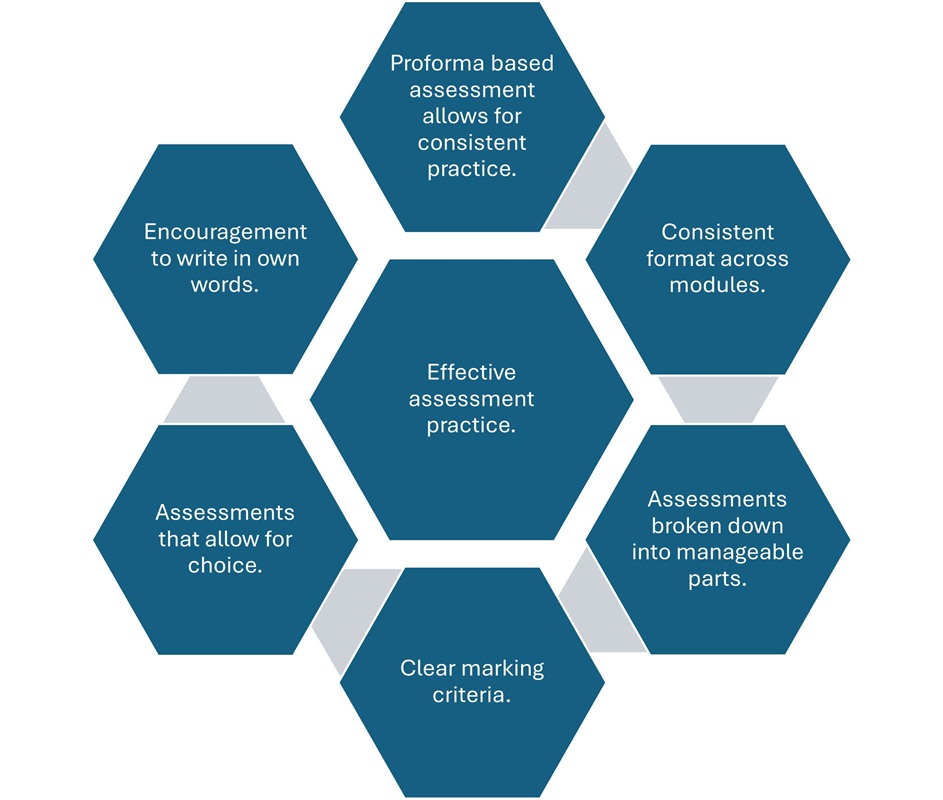
Figure 1: Diagram showing effective assessment practice
Consistency, assessments being broken down into clear segments and clear, meaningful criteria, have long been seen as good practice within assessment design. If students are to achieve their potential it is important assessment briefs are clear and the students can see the value in the activities in supporting their learning. While differentiated summative assessment is perhaps more difficult to achieve, it does recognise that each student is different but that they are all working to the same goal. Flint and Johnson (2011 cited in McArthur (2018)) suggest that students consider assessment to be fair if it allows them to demonstrate their knowledge and abilities. A one size fits all approach to assessment does not allow this to happen and therefore could be argued to be unfair. Differentiation can be achieved by providing students with choices about how they present the answers to an assessment; for example, essay, podcast, poster.
The barriers to effective assessment
As expected, the student reviewers did identify a number of barriers to assessment for neurodiverse students, as shown in the diagram below.
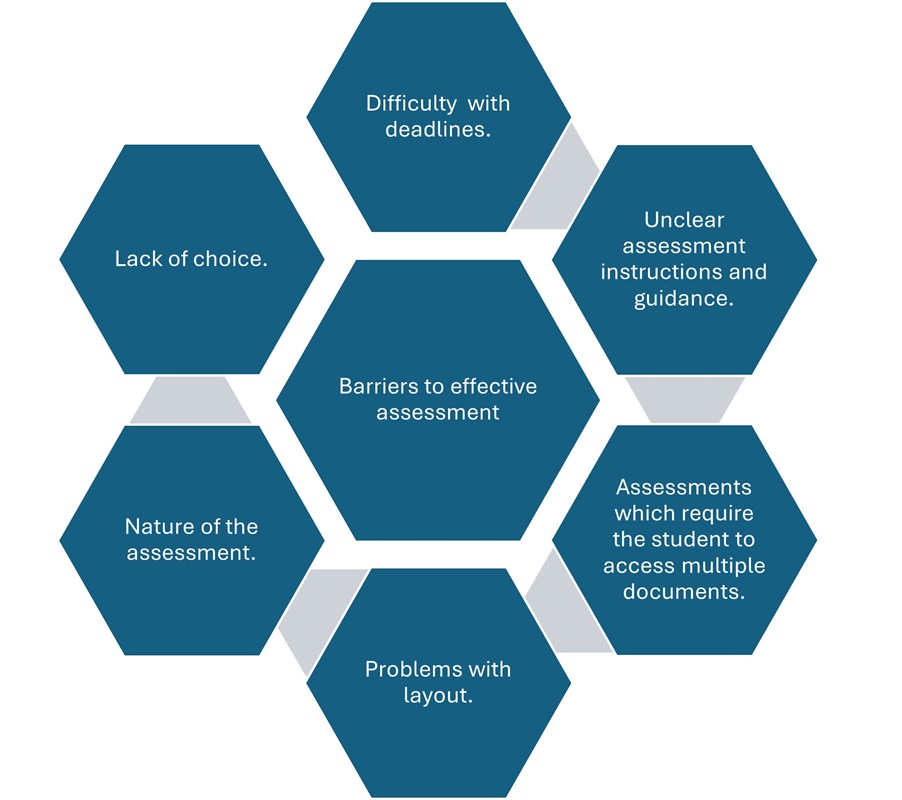
Figure 2: Diagram showing barriers to effective assessment practice
As the diagram shows, the student reviewers identified many barriers for neurodiverse students. It was noted by the project team that some of these barriers could apply to neurotypical students equally hence addressing them could benefit all students. The student reviewers were clear that all of these barriers impacted on motivation and led to procrastination, resulting in neurodiverse students not always showcasing their knowledge and understanding to their full potential. For the student, it can result in poorer marks than they can achieve if given the right conditions. As educators, we need to be concerned both for the individuals affected but also the impact on module and programme retention and outcomes. As assessment writers, it is easy to become so focused on pedagogy and achieving the learning outcome that we lose sight of the students who will be completing the task.
We could have written much more about these barriers but decided our word count might be better used sharing some of the guidance student reviewers gave us about what worked well.
Top tips in writing assessments to aid a neurodiverse student
- Ensure there is a common, consistent layout across all summative assessments within the module and programme. The student reviewers explained that a consistent layout helps them process the requirements more quickly and improves accessibility.
- Use appropriate language and format for the assessment. The student reviewers asked for the use of simple language, with academic terminology kept to a minimum. Tasks, advice/guidance, and marking criteria should be clearly identified with headings. Try to break the text up and use charts, pictures, and textboxes to break the document up.
- Avoid multiple documents within the assessment. Where this is necessary, for example when creating an authentic task, provide clear instructions and link to the relevant documents.
- Provide a clear student-facing marking scheme. Provide clear marking schemes that are written in a student-friendly way, explaining what the student needs to achieve for each marking grade. Ensure the mark scheme complies with the guidance that is provided to students.
- Be aware of challenges posed by collaborative and oral assessments. Think about the nature of the assessment. While group work and presentations can provide valuable life skills and, sometimes, a positive experience, be prepared to offer alternatives for students who find this way of working a challenge.
- Think about whether a fixed deadline is needed. Is there a possibility of offering flexible deadlines? This would not only help some neurodiverse students who find working to a deadline a challenge but support many other students who struggle due to life circumstances.
- Can you offer a choice of assessment methods? Asking the students to select the method by which they are going to present the information (for example, a poster, leaflet, podcast) allows students to play to their strengths and present themselves in the best light.
- Provide a pro-forma template for the assessment. The student reviewers said that a pro-forma or template helps with structuring answers and provides confidence. However, these are only of value when the guidance is clear. Alternatively, providing a model answer after the assessment can help students understand how the answer should look, thereby allowing students to compare their work with the model which can inform future assessment practice.
- Consider providing the assessment in a range of formats. Student reviewers have identified that the written document is not suitable for all, so consider providing the assessment also in a recorded format, allowing the student to listen as well as read.
- Ensure your assessment draft is reviewed. Share your draft assessment with colleagues, particularly those who may consider themselves neurodiverse or have experience of supporting others with neurodiversity. Ask for feedback and respond positively to their suggestions.
Following our ten top tips, informed by our student reviewers, will result in more neurodiverse friendly summative assessment that allows students to achieve their potential.
This project was funded and supported by The Open University’s Centre for Scholarship and Innovation (SCiLAB) in the Faculty of Business and Law (FBL), Project Reference Number 242513.
References
- The Brain Charity (n.d.) Workplace neurodiversity training from The Brain Charity. Available at Workplace neurodiversity training from The Brain Charity (Accessed 2 January 2025)
- Clouder, L., Karakus, M., Cinotti, A. et al. (2020) Neurodiversity in higher education: a narrative synthesis. Higher Education 80, 757–778 doi.org/10.1007/s10734-020-00513-6
- Griffin, E. and Pollak, D. (2009), Student experiences of neurodiversity in higher education: insights from the BRAINHE project. Dyslexia, 15: 23-41. https://doi.org/10.1002/dys.383
- McArthur, J, Assessment for Social Justice – perspectives and practices within Higher education (Bloomsbury 2018)

Carol Edwards
Carol is a Senior Lecturer in Legal Online Pedagogy, Lead for Retention and Outcomes (Law) and Student Experience Manager. She is actively involved in the scholarship relating to online teaching pedagogy and has presented and published on this area. She has a very keen interest in tackling student and staff isolation and is actively involved in several projects attempting to address this. These include the online mentoring programme and The Belonging Project, with particular focus on developing student confidence. She is part of a pan-university team exploring belonging across the Open University.

Bryony Gilbert
Bryony is a Student Experience Manager and Lecturer within the Law School and has undertaken a number of projects focused on developing the student and associate lecturer experience.
Mel Holmes
Mel Holmes previously worked as an inhouse solicitor, joining The Open University in 2000, as an Associate Lecturer on Access and Level 1 Law modules. She is Head of Academic Student Experience and Senior Lecturer in the Law School, which includes bringing the student perspective to developing module/programme teaching and learning design. As the first person in her family to attend university, she is particularly interested in how universities can best support all students to achieve their study goals. Mel is working on projects focused on developing study skill resources and support, and on how best we can collaborate with students.

Blog posts



Explore

Undergraduate
Postgraduate
Policy
-
Follow us on Social media
-


