
What is Netnography and how it is done in the age of AI generated social media content?

Researchers are actively debating how, when, and when not to use AI for their academic work. There is now a growing body of guidelines, opinion pieces, reflective blogs, and even conferences exploring the ethical implications of generative AI in academic work (including writing, peer reviewing, publishing, and teaching).
Recently, one of our research team members wrote about the ethical discomfort in co-creating academic work with AI. That reflection led us to pause and think whether some of the material that we are analysing in our current project had been produced by AI and what it means to treat digital text as research evidence in this new landscape. This blog extends that line of enquiry, turning the lens onto the research field itself, at a moment when AI is increasingly shaping the very data we study.
AI as a research context
Our research focused on a private online community in the Middle East and North Africa (MENA) region, where women connect to build and sustain both practical and relational networks that support their business activities. The study was based at The Open University, UK, and conducted in collaboration with a researcher from King Faisal University, Saudi Arabia. We aimed to understand how members construct legitimacy and networks through their everyday interactions on the platform.
As we examined the posts and exchanges, a new question emerged: had participants actually written these posts themselves? With AI tools increasingly embedded in digital communication, some of the content we observed could have been shaped, or even generated, by AI. This raised important questions for interpretation: what can we legitimately take from the words we see, and how should we understand them as evidence of human experience? These reflections prompted us to think of AI as a contextual factor actively shaping the data itself, and therefore influencing how digital interactions are produced, communicated, and interpreted.
What is Netnography?
To study this online community, we used Netnography, short for digital ethnographic research. But what is ethnography in the first place? Traditional ethnography is a method used by researchers to study people in their natural environments, observing behaviours, interactions, and social practices to understand how communities create meaning and make sense of the world. Netnography adapts these principles to online and digitally mediated settings. It enables researchers to study naturally occurring interactions in social media platforms, including public and private groups or forums.
This form of research methodology consists of examining how social meanings, norms, and relationships are constructed through text, visuals, or video content. For example, researchers might look at text-based interactions, such as sports fans debating a last-minute goal in an Instagram fan page; visual content, like members of a Facebook neighbourhood watch group posting photos of a speeding car seen on their street; or video content, such as professional groups on LinkedIn sharing short clips demonstrating a new skill or technique. Netnography helps us to understand how everyday social interactions and networks are created, shared, and maintained in online spaces.
A reflection from our weekly project meetings
During our weekly project meetings, the team often reflect on emerging patterns in the data. One team member, who participates in Facebook mums’ groups, noted that posts there tend to feel raw, informal, and clearly human-generated. By contrast, content on the private networking platform that we are studying appears more polished and structured, which fits given that most users are professional women entrepreneurs or angel investors. Some posts, however, include emojis or stylistic cues often associated with AI-generated or AI-assisted content, raising the possibility that generative tools were being used to support participation, especially in posts designed to build credibility, visibility, or professional legitimacy.
Our analysis draws on Kozinets’ (2019) six-step netnographic framework, which provides a structured approach to collecting and interpreting online interactions. This framework assumes that content reflects human-based meaning-making, grounded in lived experience and social context. The possibility that AI tools might be shaping some posts prompted the team to pause and reflect. Because we had not anticipated this methodological question, no criteria were established to identify AI-generated or AI-assisted content. As a result, we found ourselves reflecting on how to maintain authenticity and rigor in interpreting members’ interactions when the boundaries between human and machine-assisted expression are unclear.
Although we cannot verify AI use, and presently have no criteria to identify AI-assisted content, this observation highlighted a key methodological question: traditional netnographic assumptions about human authorship may not fully hold in digital spaces where AI is increasingly present. Reflecting on this helped the team think about how platform norms, audience expectations, and AI tools interact to shape online expression, which is a fascinating and rich lens for exploring digital interactions.
Why does this matter for researchers?
Traditionally, qualitative, linguistically oriented research assumes that texts are emerging from how individuals make sense of their worlds, shaped by their everyday experience and the cultural norms surrounding them. However, the presence of AI- generated or AI-assisted content challenges this assumption.
As AI tools become increasingly embedded in everyday digital communication, netnographic research will inevitability encounter such ambiguities more frequently. This raises important questions for the field:
- How can qualitative rigour be ensured when prompts, authorship, and generative processes behind posts are inaccessible?
- Should researchers develop strategies to interpret potential AI involvement in texts, even if definitive identification is impossible?
- Should AI generated content be treated as part of the cultural context rather than a methodological contaminant?
- How might interpretations of gendered and cultural expression shift in AI-mediated environments?
Rather than offering answers, this reflective post aims to open a conversation about how Netnography as a research methodology might adapt to the evolving reality of digital social interactions. Our thinking on these issues is still developing as we explore whether recurring linguistic patterns across different posts by the same members might help assess AI’s relevance as part of the cultural context. This opportunity opens a new space for richer interpretation of our data and potentially fascinating discoveries.
If you are conducting digital or platform-based research, we encourage you to pause and ask: Where might AI already be present in your data, and how are you accounting for it?
Sharing these reflections openly can help the research community adapt and evolve our online research methods together.
If these questions resonate with you or you are exploring similar challenges, we would welcome further conversation: please get in contact through [email protected].

Zaineb Bouharda
Zaineb is a Postdoctoral Researcher at The Open University Business School, currently contributing to a project examining women’s networking among angel investors, building on earlier work on women’s career‑focused networks. Her main research explores environmental sustainability, using marketing and systems thinking to examine how interventions can achieve impact and to inform what works in practice. Before academia, she worked in the environmental and nonprofit sectors in marketing and behaviour‑change roles. She has received competitive awards, including a Chevening Scholarship, an IVLP fellowship, and a full doctoral studentship to complete her PhD in Marketing at The Open University.

Sarah Bloomfield
Sarah is a Senior Lecturer in Work and Organisational Learning at The Open University and a Visiting Research Fellow at the University of Bath. Her research explores the lived experience of work, with a focus on learning in, for, and through work. Sarah studies organisational contradictions and their impact on leadership and behaviour, as well as work-based learning as a pedagogical approach. She also holds a British Academy Small Research Grant to investigate the lived experience of female angel investors in Saudi Arabia.
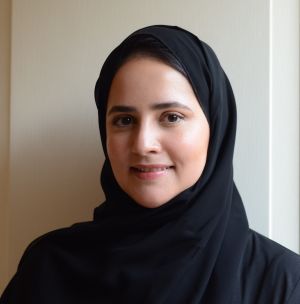
Norah Almubarak
Norah is an Assistant Professor of Finance and Investment at King Faisal University, a Visiting Research Fellow at the University of Bath, and a Consultant with the Alahsa Development Authority. Her research focuses on entrepreneurial and sustainable finance, with interests in venture capital, crowdfunding, angel investing, and financing in emerging markets. She has published in leading journals, including Finance Research Letters, Technological Forecasting & Social Change, and the International Journal of Entrepreneurial Behavior & Research. She has received competitive grants from the Saudi Central Bank, the British Academy, The Open University, and the French Embassy in Riyadh.
References:
Kozinets, R. V. (2019). Netnography: The Essential Guide to Qualitative Social Media Research. Sage.https://doi.org/10.4324/9781003001430-2
Usage of Generative AI
M365 Copilot, the OU’s generative AI tool, was used to reword parts of this blog. In January 2026, Copilot was prompted using discussion points from our project meeting to summarise key questions for netnography researchers working with AI‑generated social media content. The responses were reviewed and further summarised for inclusion in this blog.

Blog posts



Explore

Undergraduate
Postgraduate
Policy
-
Follow us on Social media
-


