
“I want to help, but I’m not always sure how”: What tutors taught us about supporting students with declared dyslexia
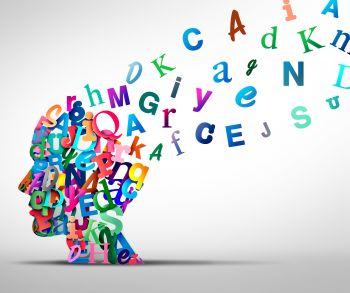
Across higher education (HE) in the United Kingdom (UK), the number of students declaring dyslexia and other Specific Learning Differences (SpLD) continues to rise.
According to Norfolk (2022) in some large faculties within the Open University (OU), nearly 28% of learners declare a SpLD.
While these figures matter, the human stories behind them matter even more.
Understanding the challenges experienced by students and tutors
This scholarship project was grounded in the OU, but the themes that were identified reflect challenges and experiences familiar across the HE sector (Clouder et al., 2020; Tops et al., 2022). Students with dyslexia often describe difficulties with:
- Interpreting academic feedback
- Organising extended writing
- Navigating complex instructions
- Demonstrating knowledge under time pressure
Tutors often witness these struggles. They see the late submissions, the student who hesitates to ask questions, the silence that sometimes follows a disappointing mark (Chang et al., 2022). They regularly see talented learners confronting barriers that have little to do with ability and much more to do with how HE is structured. These experiences demonstrate a sector-wide need for improved inclusive practices.
For several tutors in this study, their connection to dyslexia was personal (Rhoden et al., 2024). Some were dyslexic themselves, while others had supported family members before. Their experiences gave them a deeper understanding when working with students.
What tutors see, hear and experience
Thirteen tutors participated in in-depth interviews and realistic scenarios which involved assessing the assignments of dyslexic students. Their collective reflections offer valuable insight into the intersection between individual practice and institutional policy.
The study revealed four key themes which point to systemic challenges that reach far beyond one institution:
- Assessment policies are interpreted in multiple ways
Even with institutional guidelines, tutors often receive or interpret messages about assessment differently. While all want to mark fairly, twelve tutors experienced uncertainty about what fairness looks like for students with declared dyslexia.
Some adapt their marking thoughtfully while others fear over-accommodating. Others feel unsure about where flexibility ends and academic standards begin.
This variation indicates a sector-wide need for clear, consistent, and more inclusive assessment design.
- Understanding of reasonable adjustments is uneven
Tutors broadly support reasonable adjustments, but their understanding of what these involve differs considerably.
Common doubts among eleven tutors included:
- Whether adjustments should influence how assignments are marked
- When and how adjustments apply
- What tutors can do proactively when students don’t declare that they are dyslexic
These inconsistencies are not unique to one institution and indicates a wider challenge to ensure that policies are fully understood, embedded, and consistently applied.
- Tutors want to address attainment gaps but lack systems and information
The fact that tutors want to help students is clear. They want to prevent students from falling behind. However, ten tutors reported lacking:
- Early warning mechanisms
- Clear intervention processes
- Information about who may be at risk
One finding captured this by identifying that tutors often realise a student is struggling only when the student has already begun to disengage from their studies.
To reduce pass rate gaps, institutions must provide clear structured processes for tutors.
- Tutors rarely receive feedback on whether their support works
Tutors frequently devote substantial time in supporting dyslexic students by tailoring feedback, rewriting explanations, sending supportive messages, and/or adjusting teaching approaches. Yet nine tutors indicated that they rarely know whether these efforts help.
Without institutional feedback:
- Tutors cannot refine their practice
- Institutions cannot identify and share effective strategies and good practice
- Students risk receiving uneven support
This is a general issue and not an individual problem. The absence of clear, structured feedback systems means tutors are often working in isolation, relying on instinct rather than evidence, and institutions miss opportunities to learn from what is working well and where further support is needed.
Implications for Higher Education
These findings highlight a sector struggling with changing student needs and increasing expectations of inclusive learning environments.
This scholarship draws on the experiences of a small group of tutors from one online UK Business school and captures practice at a particular moment in time. While their insights offer valuable perspective, they do not represent a single or universal experience across UK HE. Further research is therefore needed across disciplines, institutions, and learning contexts to explore how inclusive practices are developed, disseminated, and sustained to better understand how tutors are supported in this work over time.
The main message is not one of deficit, but of potential as tutors are willing, capable and committed but require clearer institutional support.
To strengthen inclusive learning environments across the sector institutions should prioritise:
- Clear, consistent assessment guidelines for all staff
- Standardised inclusive marking frameworks
- Mandatory training on dyslexia and neurodiversity
- Review early identification systems for at-risk students
- Structured feedback mechanisms for continuous improvement
- Recognition and sharing of examples of effective good practice by tutors
These changes benefit all learners and not just those with declared SpLD.
Why this scholarship matters
What stands out the most from the tutors’ collective reflections is a desire to create inclusive learning environments. They see the student who rewrites an assignment endlessly because perfection feels safer than submission. They see the student who withdraws in silence after losing confidence in their writing.
Tutors want to help learners to remain, succeed and gain a sense of belonging. However, inclusion in HE cannot rely on individual goodwill alone. It must be embedded in systems, policies, assessment practices, and professional development.
When institutions empower tutors with clarity and appropriate skills, students with dyslexia don’t just get through HE, they gain a sense of belonging in an inclusive learning environment.
That is why the collective voice of tutors is important. Their experiences reveal not only what institutions get right, but also where important improvements are still needed.
Acknowledgements
This blog draws on an OU SCiLAB funded project and is informed by the generous contributions of tutors. The author also acknowledges the wider project team for their collaboration and insights. The views expressed are those of the author.
Dr Maureen Rhoden (PGCE, SEDA, FHEA)
Maureen is a Lecturer and Student Experience Manager in the Business School within the Faculty of Business and Law. Her work centres on advancing inclusive education and improving outcomes for marginalised and underrepresented students.
With over 20 years’ experience in teaching, leadership, and research, she uses an evidence-based approach to embed inclusive, scholarship-informed practices that enhance student success, retention, and satisfaction.
She is currently Principal Investigator on several SCiLAB funded projects exploring dyslexia, assessment, and online learning. Her latest work examines student complaints as a pathway to improving the overall learning experience.
References
Chang, T., Lee, G. T., Bruce, A. T., Powell, D., & Yang, L. (2022). College instructors’ theories of intelligence and awareness of student dyslexia as related to the feedback provided for the student’s writing assignment. Psychological Reports, 11194–11123. https://doi.org/10.1177/00332941221119407
Clouder, D, Karakus, M, Cinotti, A, Ferreyra, MV, Amador Fierros, G & Rojo, P. (2020). Neurodiversity in higher education: a narrative synthesis, Higher Education, Vol. 80, No. 4, pp. 757-778. https://dx.doi.org/10.1007/s10734-020-00513-6
Norfolk, R. (2022). Disability pass rate gaps: Insight strategic analytics, The Open University.
Rhoden, M., Maguire, C., Gallagher, C., Tahera, K. & Mathur, S. (2024). Creating inclusive environments for students with declared dyslexia studying online in higher education. Journal of Open, Distance, and Digital Education, 1(2), 1-17. https://doi.org/10.25619/659cra35
Tops, W., Jansen, D., Ceulemans, E., Petry, K., Haug Hilton, N. & Baeyens D. (2022). Participation problems and effective accommodations in students with dyslexia in higher education, European Journal of Special Needs Education,https://doi.org/10.1080/08856257.2022.2089507

Blog posts



Explore

Undergraduate
Postgraduate
Policy
-
Follow us on Social media
-


