
Online seminar: Findings from two Small Grant research projects
- Dates
- -
This session will explore maternity and pregnancy experiences in policing, including baby loss, organisational support, and inequalities experienced by women of colour.
Navigating Maternity Journeys for Women of Colour in Policing
This talk presents findings from a qualitative study of 18 biographical interviews with women of colour in UK policing, conducted in partnership with Thames Valley Police, British Transport Police, WoCIP and a range of other forces. Participants share rich, candid accounts of how race, gender and motherhood intersect across the maternity journey, including the racialised dimensions of the supervisor lottery, the embodied knowledge they carry into the workplace, and the small relational practices that make the difference. The findings offer actionable implications for forces, national policing bodies and beyond.
Evaluating a Baby Loss Support Network in UK Policing
This talk presents emerging findings from a mixed-methods evaluation of a force-based Baby Loss Support Network and its associated SANDS training, established in 2021 to address an unmet need affecting 200+ staff annually within a single large force. Combining survey data with semi-structured interviews, the study assesses reach, effectiveness, and the feasibility of in-house training. It also offers transferable learning for other forces on the value of peer-led support networks, the role of lived experience in bridging gaps left by line management, and the case for resourcing these networks as core wellbeing infrastructure rather than goodwill-driven initiatives.
News
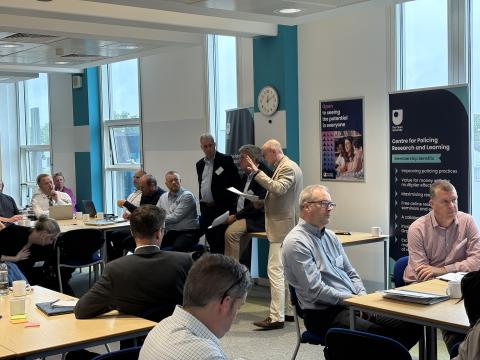
Blog post - Help shape the next chapter of CPRL
The future of policing will increasingly depend upon its ability to learn, innovate and collaborate.
- Blog post - From evidence to action: Convening partnerships to build more Inclusive Workplaces in policing
- Blog post - Building the next generation of football policing: Research, professional development and national learning
- From Conversation to Coordination: CPRL's Emerging Role in National Problem Solving


Explore

Undergraduate
Postgraduate
Policy
-
Follow us on Social media
-


