
Go Green
Go Green: Responsible Futures
May 2025
In this insightful video, Marta Nowicka from SOS-UK and Teresa Cox, Senior Manager at PVCS, delve into the Open University's role as a Host Partner for the Responsible Futures programme. They highlight the significance of the Responsible Futures accreditation, recently awarded to the OU, which recognises the institution’s dedication to embedding sustainability and social responsibility across its curriculum and operations.
The discussion explores:
Go Green: No Mow May
April 2025
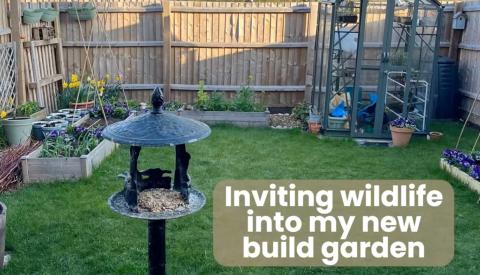
In this inspiring Go Green session, participants explored the importance of biodiversity and how small changes in our gardens and outdoor areas can make a big impact. The workshop offered practical tips for embracing nature-friendly practices, including how to support No Mow May thoughtfully and effectively.
Go Green: 10 steps to reducing your digital carbon footprint
March 2025
In the latest Go Green session hosted by The Open University in Ireland, Kevin Donnelly, Information and Statistics Officer, explored practical ways to reduce our digital carbon footprint. From evaluating internet usage to rethinking how we stream video content, Kevin shared actionable tips to help us live more sustainably in the digital world.
Go Green: Inner Development Goals
February 2025
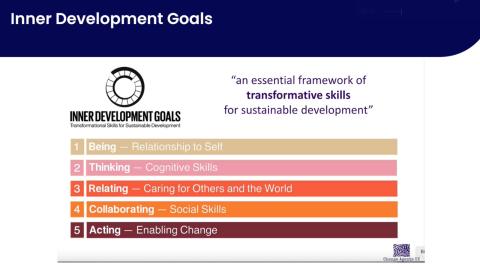
In this insightful session, we explored how the Inner Development Goals (IDGs) framework supports global efforts toward a sustainable future. Closely aligned with the United Nations Sustainable Development Goals (SDGs), the IDGs highlight the inner capacities, such as empathy, resilience, and collaboration that individuals and communities need to drive meaningful change.

Go Green: Giki - Discover Your Carbon Footprint and Take Action
January 2025
In this engaging session, we explore Giki, the fun and interactive carbon calculator designed to help individuals understand their personal carbon footprint. Whether you're just starting your sustainability journey or looking to deepen your impact, Giki offers a simple way to measure your lifestyle’s environmental impact and take meaningful steps to reduce it.
What You’ll Learn:
Go Green: Dirty Digital Habits
October 2024
As our reliance on digital technologies grows, so does the environmental impact of data centres, devices, and online activity. In this insightful session, David Crews explores the hidden carbon footprint of our digital lives and the challenges institutions like The Open University face on the journey to Net Zero.
Go Green: Second-hand September: Re-love Your Wardrobe
September 2024
As part of Second-hand September, the OU’s Ismay Mummery explores how choosing pre-loved clothing can reduce waste, cut carbon, and celebrate personal style. In this video, Ismay shares practical tips on embracing sustainable fashion, from re-wearing and re-purposing your favourite pieces to making mindful choices that support a circular economy.
Go Green: Discover the Open Living Lab
June 2024
The Open Living Lab is a pioneering initiative from The Open University that brings nature recovery into the heart of education. Through this innovative project, OU academics, students, and the public collaborate to collect and explore environmental data, helping us better understand ecosystems, biodiversity, and the human-nature connection.
Go Green: Understanding Your Carbon Footprint with Giki
January 2024
In this bitesize Go Green workshop, Helen Chambers from Giki joined us to demystify the carbon calculator and show how small, achievable changes can make a big impact. Through an engaging and practical session, Helen explained how the tool works, how it helps individuals understand their personal carbon footprint, and how to set realistic goals to reduce it.
Go Green: Environmental law and how to achieve sustainable goals
April 2024
In this insightful video, Fran Baker explores one of the most significant impacts of the Environmental Act 2021 on our urban environments: the legal requirement for biodiversity net gain. This policy marks a major shift in how developments must contribute positively to nature, ensuring that any loss of biodiversity is not only compensated but improved upon.
Contact our sustainability team
For more information contact our sustainability team.


Explore

Undergraduate
Postgraduate
Policy
-
Follow us on Social media
-


