
Meet the Open University academics who helped co-produce Buried
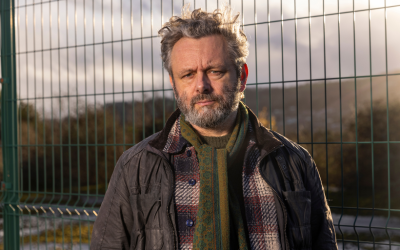
Audiences across Wales have been gripped by the new BBC/Open University co-production Buried – with Michael Sheen. In the two-part series, the acclaimed Welsh actor investigates claims about toxic ‘forever chemicals’ which have been concealed underground in different parts of Wales since the 1960s, causing worry for generations of local people.
A team of academics at the OU have played a key role in helping audiences understand the evidence behind the story, and the impact of polychlorinated biphenyls (PCBs). Drawing on their expertise in the physical and social sciences, they have supported the programme’s exploration of environmental contamination, its impact on residents and future generations, and the legacy of a serious pollution scandal.
‘Chemicals are inherently not 'bad''
Lecturer in Chemistry Dr Daniel Payne achieved his PhD in Organic Chemistry in 2017. He has a background in the pharmaceutical industry, and joined the OU in 2023.
Much of Daniel’s research has been on designing and synthesising organic molecules that can treat diseases and address pollution.
One of the strengths of The Open University is its ability to bring together expertise from different disciplines to explore complex real-world challenges.
Dr Vicky Johnson
'The chemicals that are the focus of Buried were industrially produced organic molecules’ explains Daniel. ‘The main contamination events occurred during their production and disposal, and in the way the waste from their processing was handled at that time.
Chemicals are inherently not 'bad' with numerous examples in our daily lives where they have positive contributions like drugs, cosmetics, detergent and materials. It is the way that they have been used, managed and disposed of that causes issues such as those seen in Buried. My role on the programme focused on reviewing the methods and interpretation of experimental data collected, and ensuring that the conclusions drawn from this data were supported by the evidence.‘
Making the science make sense
Dr Carl Boardman is a lecturer in Energy and Environmental Sciences. His background is as an interdisciplinary research scientist looking at the environmental impact of waste. This includes focusing on how plastic products and carbon materials break down in different environments, as well as quantifying greenhouse gas emissions from natural ecosystems.
Study with the Open University
.png)
‘Buried – with Michael Sheen' examines how environmental decisions can have long-term consequences for people's lives, health, sense of identity and trust in public institutions. These are central concerns within Geography and Environmental Studies and are topics that many of our students engage with throughout their studies at The Open University.’ - Dr Carl Boardman
BA (Honours) Geography
BA (Honours) Environmental Studies
BSc (Honours) Environmental Science
BSc (Honours) Natural Sciences
MSc in Environmental Management
Much like Daniel, his role on Buried was to offer academic advice on the findings, specifically the long-term environmental risk.
‘Academic advisors are there to ensure all scientific information presented in the programme is accurate, responsibly communicated, and understandable to a non‑specialist audience,’ he explains. ‘For Buried, we ensured that any scientific claim being made was proportional and underpinned by appropriate methodology.
‘The science associated with PCB contamination is well established; so, the focus was on ensuring that claims and statements were supported by current academic evidence and communicated clearly.’
‘What made the process so effective was how receptive the production team were to constructive feedback. We worked collaboratively to adjust certain graphics, tighten explanations and make sure that complex environmental concepts were both accurate and accessible to viewers.’
Trust, governance, inequality and community
‘I think Buried helps audiences understand that environmental issues rarely exist in isolation,’ says Dr Vicky Johnson, the Head of the OU’s Department of Geography and Environment Sciences. ‘They are connected to questions of trust, governance, inequality and community wellbeing. Viewers can see how the consequences of environmental decisions may continue to shape people's lives many years after those decisions were made.’
'Buried illustrates how decisions to support livelihoods and replace historic industries may lead to the intended economic growth but without necessarily considering the fuller consequence to people (residents, employees and subsequent generations) and their environment.'
Vicky’s PhD focussed on environmental water quality valuation in coastal systems, considering how people valued this, and ramifications in relation to policy. Her work, prior to the OU, included environmental and rural policy and legislation, more recently exploring how communities and policy makers understand and respond to environmental challenges.
‘One of the strengths of The Open University is its ability to bring together expertise from different disciplines to explore complex real-world challenges’ she adds. ‘Environmental issues are rarely just scientific, social or political - they are usually all of these things at once.’
The experience of working on Buried
Michael Sheen’s investigation is based on a 40-year campaign by the late Douglas Gowan, who had claimed that lethal chemicals had been illegally dumped all over Wales. Douglas’ investigations were continually discredited by a chemical giant and successive governments, but he was able to pass on his findings to Michael days before his death.
In the programme, Michael teams up with two investigative journalists who continue Douglas’ legacy, visiting sites where the chemicals are believed to have been discarded, and testing for pollutants. Making sure that the processes followed were scientifically sound was therefore a priority for the OU’s academic team.
‘One of the most memorable moments from the advisory process was how long it took to get a single graph right!’ recalls Carl. ‘It sounds trivial, but translating complex environmental data into a visual that is both scientifically accurate and easy for the public to understand can be challenging.’
‘The most rewarding moment came when I attended the pre-broadcast BAFTA Cymru screening in Cardiff, with a Q&A session afterwards. It was incredibly powerful to see how deeply the programme affected the audience. There were moments during the screening when you could hear gasps of disbelief in the room.’
For Vicky, Buried represents an example of how different knowledge and expertise can come together for the public good.
‘The documentary combines scientific evidence, investigative journalism and community perspectives to tell a complex story in a way that is accessible to a broad audience,’ she explains. ‘If the documentary prompts people to reflect on how environmental decisions affect communities over time, then I believe it has made a valuable contribution.’
‘The effects and impacts of historic pollutions will be felt for decades to come and the events presented in Buried are just one of countless other similar occurrences all over the globe,’ adds Daniel. ‘We need to continue to ensure that people are being held accountable for the wrongs of the past, and our governments continue to work to deal with these historic pollution events proactively.‘
Request a prospectus
Explore our qualifications and courses by requesting one of our prospectuses today.
Rhodri Davies
Senior Communications Manager,
Telephone: 029 2167 4532
For general OU media enquiries please contact the press office -
Telephone: 01908 654316 /
Out of office hours: 07901 515891
New report highlights barriers facing refugee women in Wales
A major new report from The Open University and the Welsh Refugee Council has revealed the significant challenge many refugee women face when trying to access education and employment in Wales.
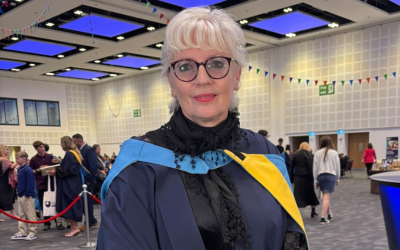
Graduates celebrate lifelong ambitions in Newport
Artist and tutor Constantina Alexander accepted her degree in Maths and Physics from The Open University on Friday. She was among 600 OU students who received their qualifications at Newport’s ICC, during the university's Wales graduation ceremony.


Explore

Undergraduate
Postgraduate
Policy
-
Follow us on Social media
-


