
Supporting student success through embedded English for Academic Purposes: insights from a Faculty of Business and Law pilot

Supporting students to succeed in higher education involves more than developing subject knowledge. It also requires developing academic literacy including confidence with disciplinary language, understanding academic conventions and expectations and communicating effectively.
For many students, particularly those new to higher education or returning after a break, this aspect of academic participation is challenging. Therefore, timing is critical and guidance must be provided before high-stakes assessments (Sloan & Porter, 2010).
One of the central aims of this project was to create English for Academic Purposes (EAP) provision that was targeted and scalable in a distance learning context, while ensuring relevance for Business and Law students. Generic study skills sessions often struggle to achieve impact, as they lack discipline specific support aligned with the students' subject area (Fayram et al., 2021). EAP literature also highlights that effective provision should be embedded within the curriculum rather than offered as a detached add on (Wingate, 2018).
What Associate Lecturers told us
Feedback from surveying Associate Lecturers (ALs), highlighted several converging issues affecting Level 1 students. The most consistent challenge was the ability to express ideas in academic form: structuring arguments, using evidence, and applying conventions such as referencing. ALs noted that students often hesitate to ask for EAP support because they perceive it as remedial, making embedded provision essential. Without early intervention, gaps in academic communication persist into later levels, reinforcing the value of reaching students at Level 1.
A collaborative approach to design and delivery
The pilot adopted a collaborative model in which EAP specialists and subject tutors jointly designed and delivered two sessions to ensure that content aligned with the discipline demands of Business and Law modules. Collaboration of this kind is established in the literature as a principle of effective EAP practice (Purser, 2011 cited in Wingate, 2018).
A student collaborator reviewed each session, offering feedback from a learner perspective.
Following the delivery of the pilot sessions, data was collected on the effectiveness of these through student surveys, focus groups, AL reflections and analysis of module performance. Drawing on Bandura’s (1995) work on self-efficacy, the evaluation considered both whether students had learned new skills and whether they felt more confident using them.
Student feedback
Student feedback on the discipline specific approach of the sessions was consistently positive. Students noted that subject-tailored examples clarified academic conventions more effectively than generic study skills resources:
“I've written beautiful English for academic science and medicine...for decades - but writing for law exams/assessments has a very different formula...”
Many students felt they would have benefited more had the sessions been available at the start of their studies, preventing stress or even withdrawal.
Quantitative outcomes
While it is important to recognise that multiple factors may have contributed to outcomes, module-level data supports the qualitative feedback. In Business and Management, around 75% of students who engaged with the sessions obtained a higher score in their next assignment. The largest gains were recorded among students who previously scored below 75%. In Law, 55% of students improved their subsequent TMA results, rising to 73% among lower scoring students.
Among students who attended both sessions and viewed the recordings, 80% increased their next TMA score by at least 20%.
Confidence, understanding and connection
Students also reported wider benefits such as increased confidence, reduced anxiety, and greater clarity about academic expectations. They described feeling more able to structure arguments and articulate ideas and appreciated others had similar challenges. As one student stated: “...It has helped me feel confident about what I am writing and how to effectively put my thoughts down on paper in a well-structured and correct way.”
Another commented ...
“This also made me realise that I was not alone in trying to grasp the concept of academic writing.”
Improvements in confidence were often linked to observed improvements in performance, and elements of ‘social persuasion’ aligning with Bandura (1995).
Aligning with Sloan & Porter, 2010, some students suggested that improved confidence and positive feedback encouraged them to persist with their studies.
“...if you see you're progressing and your grades are getting better or you're getting positive feedback from your tutor, it's going to encourage you to keep going and you will continue till you complete your degree.”
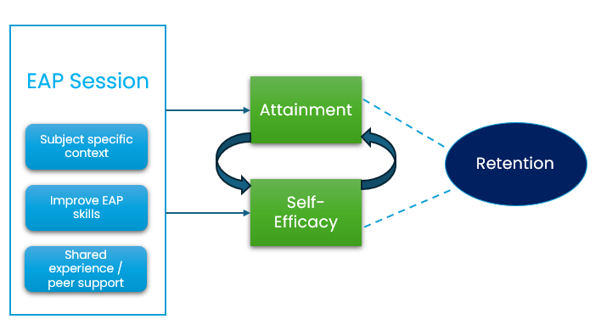
Figure 1. Analysis of themes and targeted outcomes
The diagram illustrates how an EAP session designed to offer subject specific support can improve students’ academic English skills while fostering peer support. These factors independently enhance attainment and build self-efficacy. Self-efficacy and attainment have a mutually reinforcing relationship which potentially boosts retention.
Recommendations
1. Early, integrated EAP support
The evidence from this pilot aligns with the wider literature (Wingate, 2018; Sloan & Porter, 2010) emphasising the value of providing academic literacy support at the very start of a student’s learning journey.
2. Discipline specific design
Discipline specific guidance can be created through integrating EAP components into assessment preparation, sharing feedback between ALs and EAP tutors, and embedding short ‘EAP moments’ within tutorial structures. Collaboration between EAP and subject specialists should be a core design principle for EAP provision.
3. Peer support within learning
Future provision should incorporate opportunities for students to engage with, observe and learn from peers, for example, through structured discussion, shared analysis of sample texts, or short collaborative writing tasks. Such social learning moments are especially important for distance learners who may otherwise feel isolated.
4. Flexible delivery
While many students benefited from the interactive nature of large webinar style sessions, others found busy chat spaces overwhelming, so alternative smaller, quieter formats could be considered.
5. Ongoing evaluation
The pilots generated indications of positive impact, but longer-term evidence is needed to understand effects on retention, progression and degree outcomes.
Final reflection
For a diverse student body, early integration of academic literacy into disciplinary modules is essential for equitable student success. Future research could investigate how early EAP support influences self-efficacy over time, especially in a distance learning environment where confidence plays a crucial role in persistence.

Joanna Mirek-Tooth
Joanna Mirek-Tooth is a Lecturer and Student Experience Manager in the Faculty of Business and Law at The Open University. She has worked in a variety of educational settings, both as a tutor and as an academic manager, in the UK and abroad.
Joanna is also an Associate Lecturer in the School of Languages and Applied Linguistics and a Senior Fellow of AdvanceHE.

Olwyn O’Malley
Olwyn O’Malley is an Associate Head of School for Students and Tuition and Staff Tutor in Language and Applied Linguistics (LAL) and an Associate Lecturer in the Faculty of Business and Law (FBL) at The Open University (OU). She has a background in EAP and is a Senior Fellow of AdvanceHE.
Her career spans a range of educational settings, where she has held roles as a tutor and academic manager both in the UK and overseas. Olwyn has special interest in working across faculties to support OU student success.

Daniel Russell
Daniel is a Lecturer and Student Experience Manager at The Open University. He completed his PGDipEd (Advanced PGCE) and MA in Teaching in Lifelong Learning at The University of Huddersfield.
He was previously an Academic Practice Tutor at Coventry University supporting widening participation students. Prior to that, he was a lecturer in ESOL and taught English for academic purposes and English skills for university study at The University of Huddersfield. He is a Senior Fellow of AdvanceHE.
References
- Bandura, A. (1995) Exercise of personal and collective efficacy in changing societies., Self-efficacy in changing societies /. Cambridge: Cambridge University Press
- Fayram, J., Thorne, S., & Adinolfi, L. (2021). Evaluation Report on the English for Academic Purposes (EAP) Support Project (2019-21): Analysing the impact of individualised EAP support sessions on student retention and academic skills development. eSTEeM Final Report. The Open University. Available at: https://hdl.handle.net/10779/ou.se.24353476 (Accessed 16/05/26)
- Sloan, D & Porter, E (2010) Changing international student and business staff perceptions of in-sessional EAP: using the CEM model. Journal of English for Academic Purposes. 9 pp.198 - 210
- Wingate, U. (2018). "Academic literacy across the curriculum: Towards a collaborative instructional approach", Language Teaching, vol. 51, no. 3, pp. 349-364.



Explore

Undergraduate
Postgraduate
Policy
-
Follow us on Social media
-


