
SCiLAB Blog: Guidelines for external authors
Introduction
Our blog sits on our externally facing website with 2-3 posts published a month.

Blogs can be focused on various aspects of online teaching and learning in business, law and policing. Past articles, for example, have covered matters relating to Gen-AI, learning technology, employability, online teaching and student support. You can read previous blogs here.
Whilst we welcome contributions from outside The Open University, they should nevertheless be relevant to the work of academics involved with scholarship, i.e. not blogs which serve chiefly to promote the interests of the contributor or their organisation. Please note that no payment is made for contributions.
If you would like input on a topic idea before you start writing, please contact [email protected].
Guidance on writing a blog
- It should be written for an externally facing audience, so please take extra care not to include your own institution’s acronyms, terminology and/or provide additional explanation as needed about project work, qualification levels, etc.
- Where possible, please ensure you explain the relevance of your blog or project to higher education in general, rather than focus solely on your own institution.
- Throughout the writing process, please keep in mind the intended audience - they may not be familiar with you, your organisation or even the area about which you are writing.
- Please think about how you engage someone who has no experience with your subject matter. You should aim to explain why this topic is important, any terminology or key concepts as well as the conclusion or ‘take away’ from the piece.
- Prospective articles should: include a catchy title; have a conversational tone; avoid jargon and dense language and explain complex ideas where applicable.
- A blog is not an abstract therefore the introductory paragraph needs to hook the reader into learning more about the topic.
- Your article should be broken up with sub-headings where possible. These should be consistent in feel and clearly lead the reader to the ultimate destination promised in your title.
- Please be mindful to keep sentences and paragraphs short, to help keep the content engaging, and check the flow.
- Where relevant, make sure you reference any research or source material (include a reference list at the end of the piece). We encourage you to use hyperlinks links within the article, however, please avoid linking to content behind pay walls as this will just frustrate readers.
- Where authors have used a generative AI tool in the preparation or drafting of a blog, this should be acknowledged at the end. All declarations of GenAI use should include the following information:
- Name and version of the GenAI tool used
- URL or source of the GenAI tool
- A brief description of how the tool was used
- Date the content/output was generated
To submit a blog for SCiLAB
Please supply a main blog of no more than 800-1000 words, structured as follows:
- A short summary of approximately 30 words that will be used as a teaser to the full article on the website, see our blog page for examples.
- Your title and article copy, formatted using subheadings.
- A short biography for each author (up to 100 words) plus optional photos.
- A references section with any relevant hyperlinks included.
- Your LinkedIn handle, if you have one, provided you are happy for us to tag you when we promote the blog on SCiLAB’s LinkedIn page.
- An image to accompany your blog, if you have one, but please ensure this is royalty free and has no usage restrictions (although it is fine to include a photography credit if needed). You may wish to try free image sites such as Pixabay or Unsplash. If you do not have a suitable image, SCiLAB will assign one for you.
What happens next:
- When we receive your blog, it will be reviewed and feedback provided. You might be asked to make some edits and re-submit. Please allow a couple of weeks for a response.
- Once the blog has been resubmitted and is approved, we will communicate an expected date for publication.
- When the blog is published, we will update you and provide the link to your article for you to share and promote within your networks.
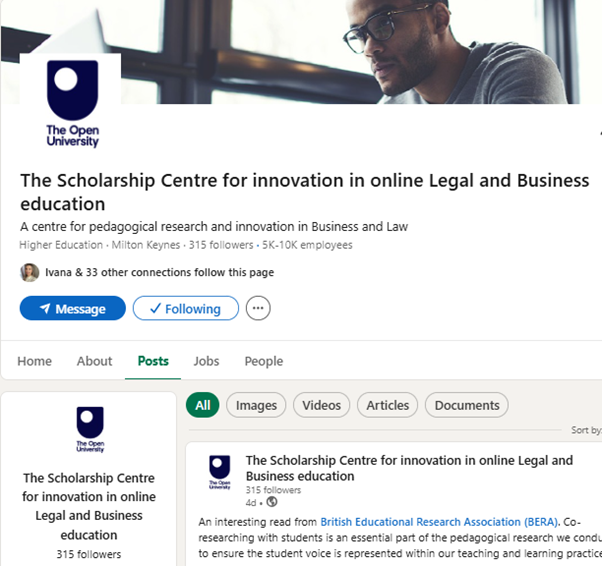
- A post promoting the article (and author/other organisations if relevant) will be published on SCiLAB’s LinkedIn account.
- Please note: Review and approval may take around a month to complete and your blog may be queued for publication around other submissions.
SciLAB Blog Guidelines for external authors
Version 1.0 May 2026
Written by Kate Bunker



Explore

Undergraduate
Postgraduate
Policy
-
Follow us on Social media
-


