
New publication from AstrobiologyOU
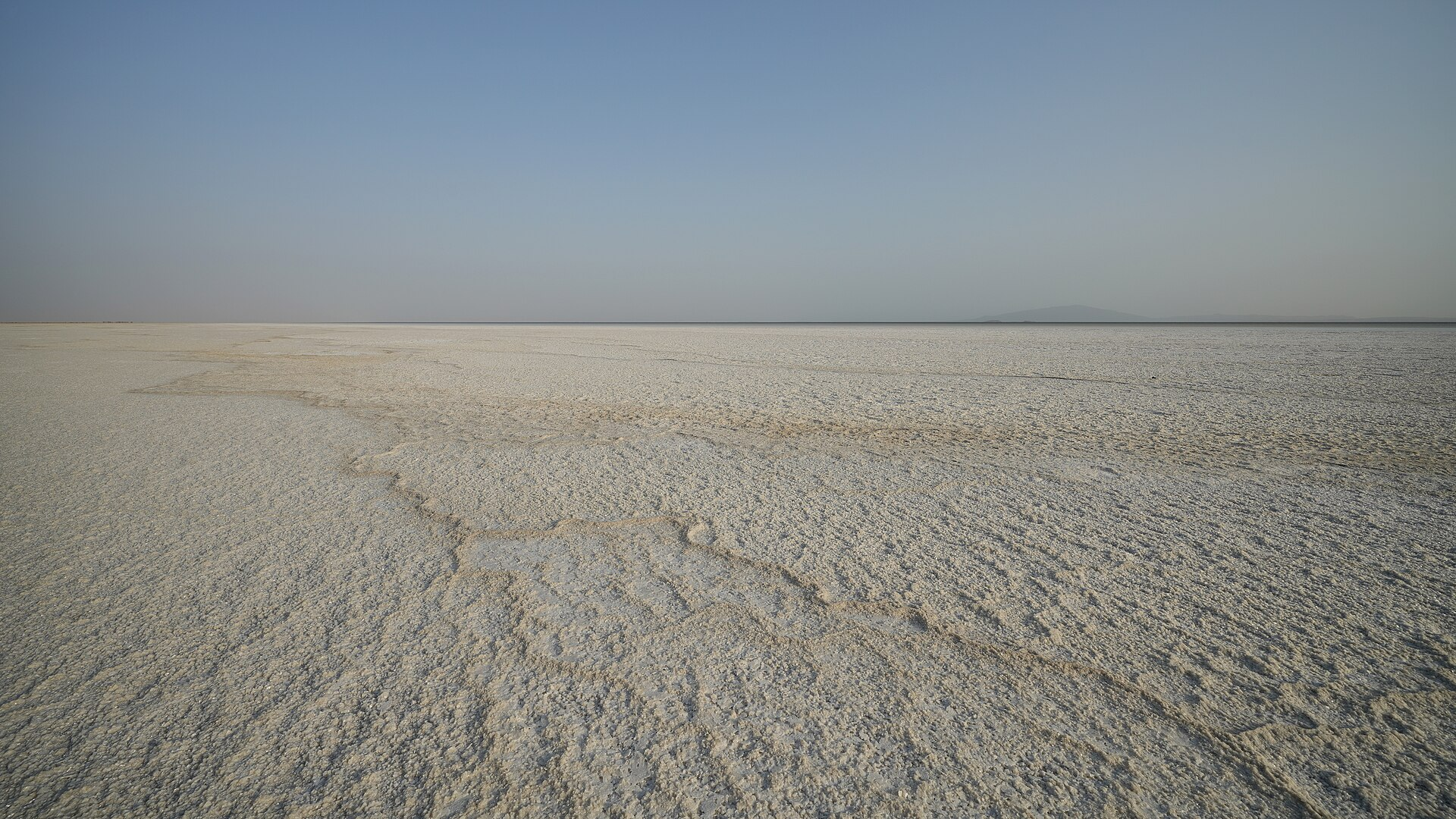 Lake Karum in Ethiopia is one of the world's most extreme salty lakes, yet it supports a thriving community of microscopic life. By studying the DNA of microbes living in the lake and surrounding salt flats, our researchers explored how life survives in conditions that would be hostile to most organisms on Earth.
By studying the microbes that live in the Lake and the surrounding salt flats, researchers found that many of these microorganisms carry genes linked to important environmental processes, including the cycling of carbon and nitrogen. They also found that while different microbes lived in the water and salt flats, they also found that often had similar capabilities, suggesting that different microbes can play similar roles.
The research also revealed previously unrecognised metabolic diversity within several groups of microorganisms, helping scientists better understand how life adapts to extreme environments and how these ecosystems function.
This work represents a truly international collaboration between researchers from The Open University (UK), Addis Ababa Science and Technology University (Ethiopia), Mekelle University (Ethiopia), the University of Essex (UK), the Centro de Astrobiología (Spain) and the University of Bologna (Italy).
Michael Macey said "Studying life in extreme environments like Lake Karum helps us understand the remarkable adaptability of microorganisms and the hidden roles they play in keeping ecosystems functioning."
Congratulations to lead author Michael Macey and all collaborators involved in this exciting study.
Read the early access paper online: https://link.springer.com/article/10.1186/s40793-026-00938-z
#Astrobiology #Microbiology #EnvironmentalMicrobiology #ExtremeEnvironments #Metagenomics #OpenUniversity #AstrobiologyOU #InternationalCollaboration
Latest News
My Summer Internship Researching Mars
Hello, my name is Keeret! I have just completed my first year at the University of Warwick, studying Chemistry. This year helped me recognise my passion for astrochemistry and planetary science
- New publication from AstrobiologyOU
- Icy Worlds Research Featured on BBC's The Sky at Night
- Digital PCR: A Sensitive Approach for Measuring Microbial Contamination for Planetary Protection
- AstrobiologyOU academics reveal the hidden information in icy moon surface salts
- MoonRISE: OU receives grant to unite experts to protect the Moon through sustainable governance


Explore

Undergraduate
Postgraduate
Policy
-
Follow us on Social media
-


