
Icy Worlds Research Featured on BBC's The Sky at Night
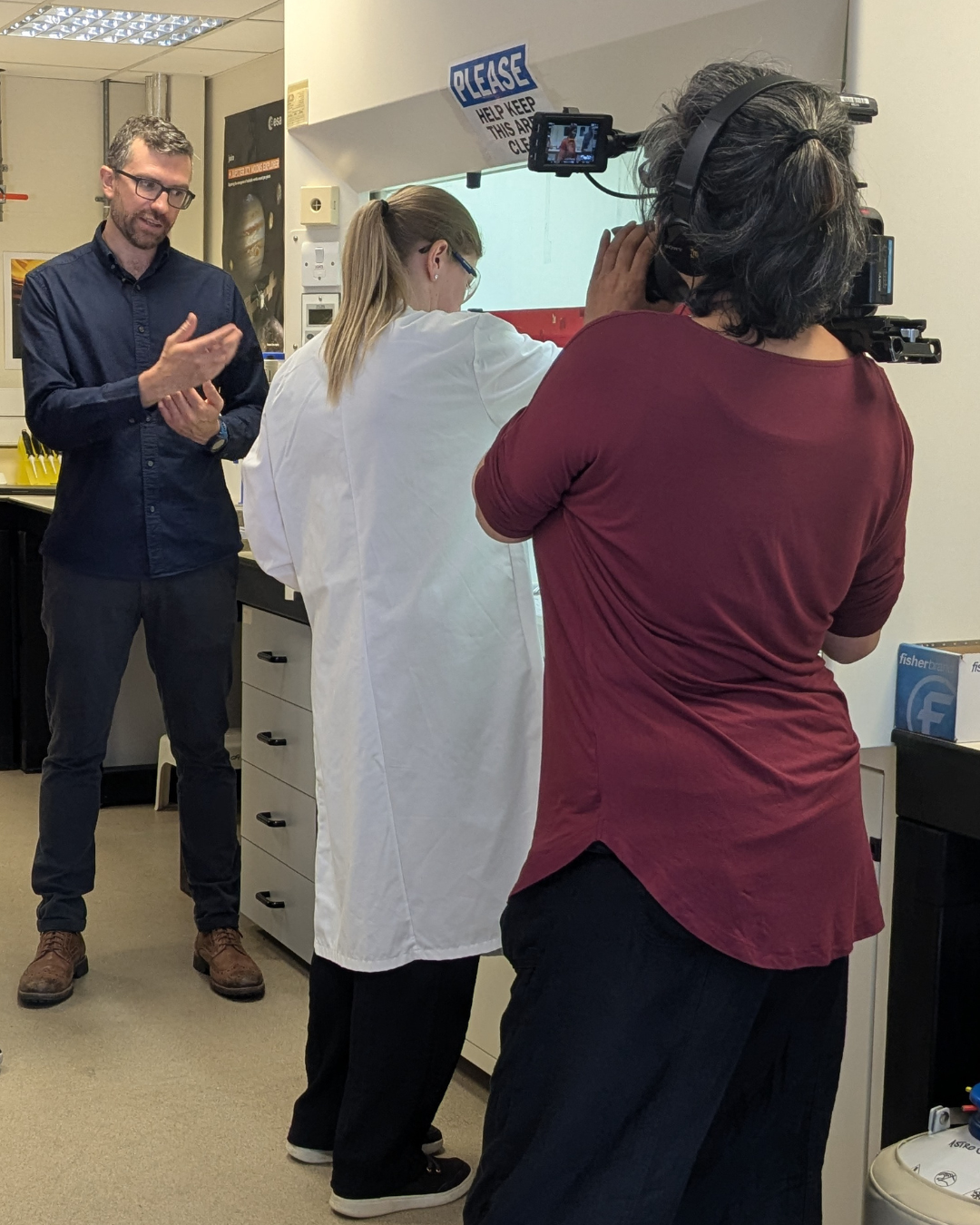 Research by a team at The Open University was showcased in a segment on the BBC's long-running astronomy programme The Sky at Night, broadcast on 13 July. The feature explored how labs in Walton Hall are used to investigate the frozen surfaces of icy moons such as Europa and Enceladus, and how apparently everyday substances like table salt can reveal extraordinary insights into these alien worlds.
The programme followed Dr Mark Fox-Powell as he explained how his team uses laboratory experiments to study how salty water freezes under the extreme conditions found across the outer Solar System. Dr Fox-Powell described the team's surprise discovery of a unique sodium chloride mineral, only the third to be discovered in over 200 years, that forms during freezing to ultra-low temperatures. Because water containing dissolved sodium chloride is found in the deep interior oceans of icy moons, this mineral can act as a kind of geological signpost for where ocean water has made it to the surface and frozen there.
In the episode, viewers were given a peek behind the scenes of this research, seeing a demonstration of how the team recreates icy moon conditions and produces samples of this new mineral from OU researcher and lead for the discovery Dr Rachael Hamp. 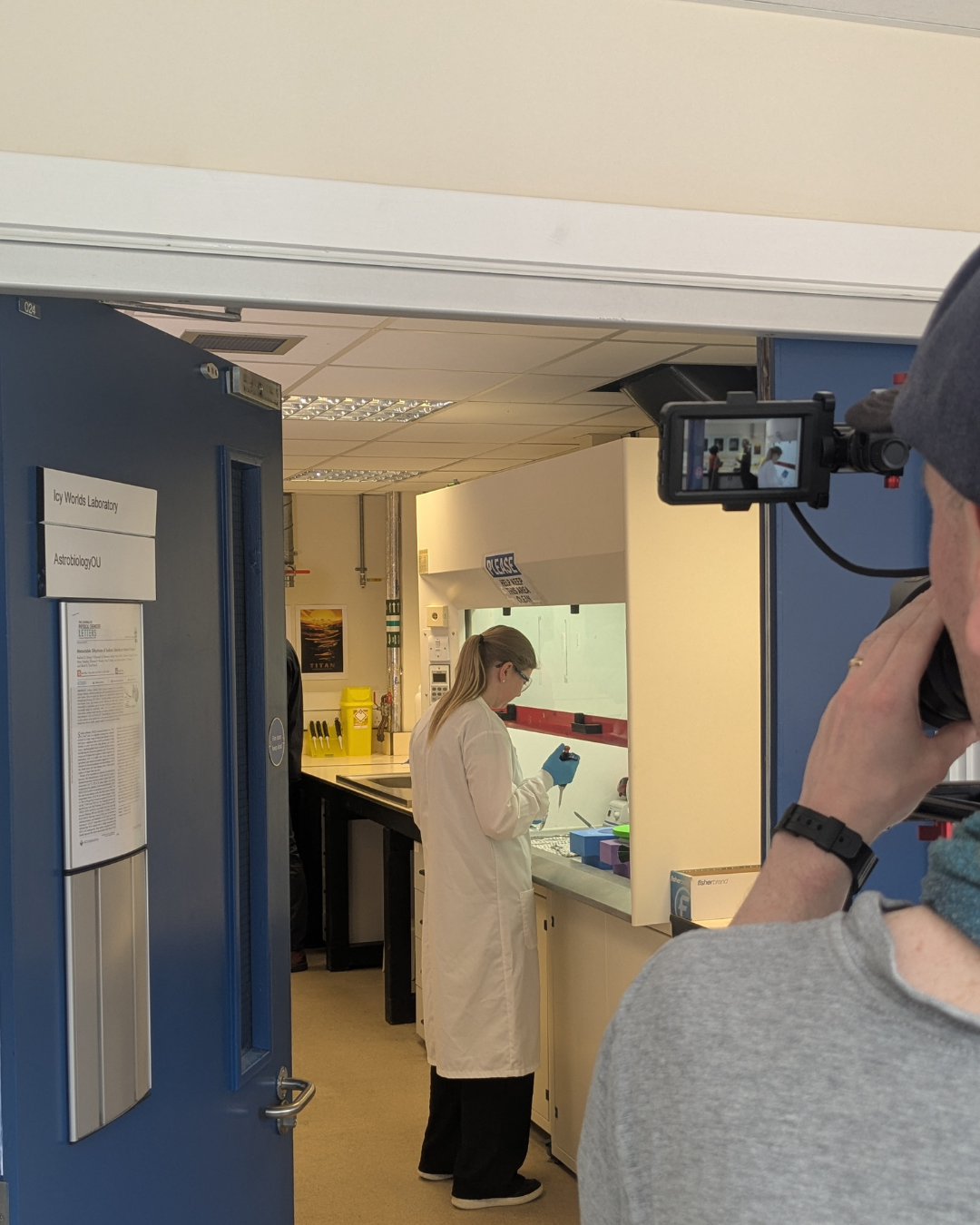
Describing the moment of discovering the new mineral, Dr Hamp said:
“It was a real surprise discovery. We expected to see some effect of freezing really quickly to these super low temperatures but we didn’t expect to find a new mineral! It just goes to show, even materials we think we know everything about, like the salt we put on our dinner, might be behaving in ways we haven’t ever thought about before on these icy worlds.”.
The programme also explored the wider implications of the research for the search for life beyond Earth. The presence of this mineral on icy moons would help guide upcoming missions such as the European Space Agency's JUICE and NASA's Europa Clipper to locations where ocean water has reached the surface. In those locations, we would expect to find other chemical traces from the ocean, such as compounds that could be important for life, or even evidence of life itself.
Reflecting on the experience of working with the BBC, Dr Mark Fox-Powell said:
"It was a fantastic opportunity to share our research with a wider audience, and to explain why we get so excited about salts at icy moons! Maggie Aderin and the BBC crew were great at keeping the conversation flowing and made it a really fun and positive experience."
He added:
"One of the most rewarding aspects of taking part was showing viewers how scientific discoveries can be made. It gave us the chance to show how experiments here on Earth lead us to discover new materials that could be important for the geology of worlds hundreds of millions of kilometres away."
The Sky at Night - The Aliens Next Door? air 13 July 2026 and is currently available on BBC iPlayer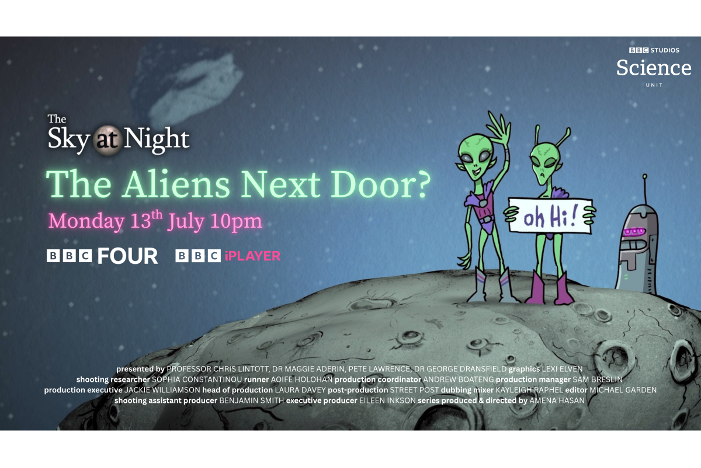
Latest News
My Summer Internship Researching Mars
Hello, my name is Keeret! I have just completed my first year at the University of Warwick, studying Chemistry. This year helped me recognise my passion for astrochemistry and planetary science
- New publication from AstrobiologyOU
- Icy Worlds Research Featured on BBC's The Sky at Night
- Digital PCR: A Sensitive Approach for Measuring Microbial Contamination for Planetary Protection
- AstrobiologyOU academics reveal the hidden information in icy moon surface salts
- MoonRISE: OU receives grant to unite experts to protect the Moon through sustainable governance


Explore

Undergraduate
Postgraduate
Policy
-
Follow us on Social media
-


