
Start-ups Need Support Too! The Untapped Power of Pro Bono

Welcome to the 24th Annual Pro Bono week which takes place between 3rd to 7th November 2025.
The term ‘pro bono’ does not, as you might think, refer to some sort of campaign to champion the lead singer of the rock band U2. Pro bono literally means ‘for the public good’. In the legal context, it refers to the provision of free legal information and advice to those who cannot afford to pay for such information and advice. This week one of our themes is to highlight the importance of pro bono to the business sector.
A quick internet search might give the impression that pro bono is primarily intended to benefit individuals engaged in private disputes with other individuals or the state, or to support the objectives of charities or non-governmental organisations Indeed, such beneficiaries are often the focus of pro bono and are undoubtedly worthy and important recipients, but it might misleadingly suggest that pro bono is of no interest or relevance to those operating in commercial enterprises. Perhaps there is a tacit assumption that business entrepreneurs can afford all the legal advice and support they need, or resource this internally. If so, this would be a false assumption. The most recent survey of the legal needs of small businesses by the Legal Services Board found that small businesses face a significant access to justice gap, with the vast majority of such businesses failing to source the professional help they require. The financial cost of such services is the main reason given, by those surveyed, for the lack of uptake of such support, despite the fact that, in a quarter of cases, legal issues resulted in loss of income to the business or, in 10% of cases, loss of a customer or contract. As the survey points out, this access to justice gap is not only a concern for those directly involved in the businesses but has broader implications for the UK’s economic health and societal wellbeing.
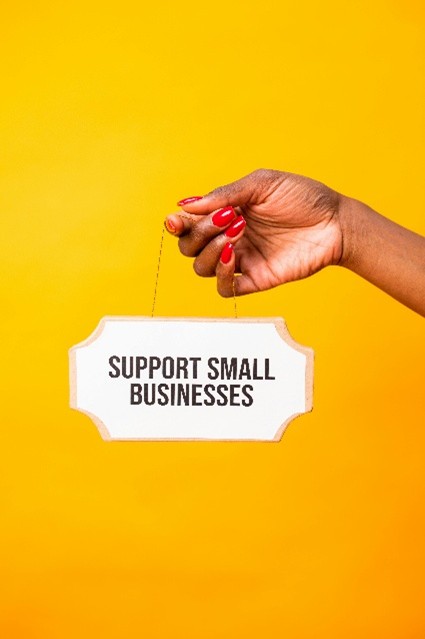
With this in mind, some 30 law students on the OU’s W360 module, in the early part of 2025, participated in a business law clinic intended to provide pro bono support. The students attended an online briefing at the outset of the project during which they met a range of business entrepreneurs who had been selected for the OU’s Open Business Creators Programme. This initiative provides funding and support to OU students or alumni who have recently started or wish to start a business. The briefing gave the law students an insight into the nature of some of the businesses and the legal concerns of the entrepreneurs. The businesses included a tech start up, an online company specialising in the sale of second-hand goods, a freelance interpretation company and an online bakery. Areas of legal concern identified included obligations to online consumers, particularly in relation to the online sale of second-hand items and food and drink, and how to choose the right business structure. The law students, in groups, then researched these areas with a view to designing online toolkits. These toolkits aimed to provide an overview of these legal areas in a clear, practical, accessible and visually engaging format. They were initially provided to the entrepreneurs the students had met at the briefing and then subsequently published on the OU’s Open Justice site for wider consumption. They can be found on the following links : Business Form Toolkit / Consumer Rights for Businesses Selling Goods Toolkit / Contractual Principles Toolkit / Directors' Duties Toolkit
From the perspective of the law students, it was an opportunity to understand the very real, and sometimes quite complex, legal issues that confront budding entrepreneurs. and to appreciate that not everyone who runs a business is an Oprah Winfrey or Richard Branson, with unlimited resources. Furthermore, it gave the students an opportunity to develop employability skills, including research, communication and design skills. The students appeared to find it a fulfilling experience with one saying: “We have all loved this module, and working together.” The toolkits, meanwhile, were well received by the entrepreneurs, and described by one of them as ‘fantastic’.
In summary, as we celebrate the role of pro bono in addressing unmet legal need, it is worth remembering that small businesses face many legal challenges, particularly when they are getting established, and may lack the resources to access the professional help they need. Pro bono can help to mitigate this access to justice gap.
Bono Image: File:Bono U2 360 Tour 2011.jpg - Wikimedia Commons
Support Small Businesses: Small Businesses Photos, Download The BEST Free Small Businesses Stock Photos & HD Images

Kate Ritchie is a senior lecturer-in-law in the Open University Law School and a Fellow of the Higher Education Academy. She is a member of the Open Justice Team and is project lead for the Business Law Clinic and Employment Law Clinic Projects, having previously worked in legal practice in corporate and commercial law. She is also Module Team Chair of W323, which aims to provide law students with foundational preparation for the first of the Solicitors Qualification Examinations in the areas of business law and dispute resolution.


Explore

Undergraduate
Postgraduate
Policy
-
Follow us on Social media
-


