
Pregnancy/ Maternity
Definition
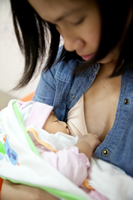 Pregnancy is the condition of being pregnant or expecting a baby.
Maternity refers to the period after the birth, and is linked to maternity leave in the employment context.
In the non-work context, protection against maternity discrimination is for 26 weeks after giving birth, and this explicitly includes not treating a woman less favourably because she is breastfeeding.
Equality Law
Equality Act 2010
Protected characteristic
Pregnancy and maternity is a protected characteristic under the Equality Act 2010 and applies to England, Scotland and Wales.
Education
Unlawful discrimination can occur against a student because of her pregnancy or because she has given birth if
- The student is treated unfavourably because of her pregnancy.
- Within 26 weeks of the day of giving birth the student is treated unfavourably because she has given birth; this also applies in cases of miscarriage, still birth and neonatal death provided more than 24 weeks of the pregnancy has elapsed.
- The student is treated unfavourably because she is breastfeeding and the child is less than 26 weeks old; if the child is more than 26 weeks old, unfavourable treatment because of breastfeeding is likely to constitute sex discrimination.
Employment
It is unlawful discrimination to treat a woman unfavourably because of her pregnancy or a related illness, or because she is exercising, has exercised or is seeking or has sought to exercise her right to maternity leave.
Public sector equality duty
Pregnancy and maternity is included in the public sector duty under the Equality Act 2010 which means we have to have due regard to the need to
- Eliminate discrimination, harassment, victimisation and any other conduct that is prohibited by or under the Act.
- Advance equality of opportunity between persons who share a relevant characteristic and persons who do not share it.
- Foster good relations between persons who share a relevant protected characteristic and persons who do not it.
Northern Ireland
In Northern Ireland, pregnancy and maternity is a protected characteristic under the Sex Discrimination (Northern Ireland) Order 1976 and provides protection against discrimination and harassment. Whilst not explicitly listed as a characteristic to which the public sector duties apply in Section 75 of the Northern Ireland Act 1998 (related to promoting equality of opportunity), it is seen in many respects as being covered by the sex equality provisions.
Policy & Guidance
Equality Scheme
Protected characteristic
Pregnancy and maternity is one of the protected characteristics within our Equality Scheme.
Equality objective
The aim of Equality Objective 9 is to improve equality policy and guidance for staff and students, for which a key performance indicator is to improve policy and guidance for students during pregnancy and maternity. Equality objectives are published in Appendix 1 to our Equality Scheme.
Equality action plan
Actions in our Equality, Diversity and Widening Participation Action Plan set out our plans to achieve our equality objectives and widening access and success strategy priorities.
Students
Policies
We have two policies for students — one for directly registered research degree students and one for all other directly registered students irrespective of their geographic location. Each document explains policy, guidance on support offered to students, responsibilities, contacts and resources.
Student pregnancy and maternity policy
This policy outlines the policy and guidance that applies to students who might need support because their study is affected by pregnancy, maternity, paternity, adoption, fostering or in vitro fertilisation (IVF) treatment. Learn more
Research Degrees students — Maternity, Paternity and Adoption
The document (Maternity, Paternity, Adoption and Shared Leave Policy for PGRs 2024/25) explains policy and procedures related to maternity, paternity and adoption for research degree students. The policy applies to: Directly registered Open University research degree students who become pregnant, have a partner who becomes pregnant, or choose to adopt a child. Learn more about the policy
Contact: Research Degrees Office
Students registered with a partner organisation
Please contact your local education centre as soon as possible to discuss the support you feel you need in relation to pregnancy, maternity, paternity, adoption, fostering and IVF treatment. Your local education centre will then contact us to explore the type of support which can be provided. We will only use the information you give us to help you in your studies.
Staff
Policies
We have a number of policies for staff related to pregnancy and maternity, paternity and adoption. Staff can view these on the Human Resources intranet site.
Recruitment Guidance
The University’s Effective Recruitment and Selection Guide for Selectors provides practical advice on fair, efficient and effective practice in the recruitment and selection of all categories of staff, in line with our equality and diversity policies. OU staff can view the guide on the Human Resources intranet site.
OU resources
Student Resources
Open SU connects students with support, resources, opportunities, and each other.
Employee Assistance Programme
OU staff have access to the Employee Assistance Programme (EAP) which is a support/counselling service provided by Wisdom Health Assured for the OU. The EAP covers a range of issues such as sickness, family issues, finances and etc.
External Resources
You may find these external sites useful:
- Equality and Human rights Commission
For information about your rights related to pregnancy/maternity, browse under 'Human Rights'. For guidance for education providers and information about the public sector equality duty, browse 'Guidance for Public sector'. - Equality Commission for Northern Ireland
Browse under ‘NI equality legislation' (scroll down to bottom of page) for information about equality law related to pregnancy/maternity. - Health and Safety Executive
Browse for information on what to consider if you have new or expectant mothers in the workplace and for guidance on health and safety risk assessment. - NHS Choices
This pregnancy and baby guide provides information about getting pregnant, being pregnant and caring for a new baby. - Family and Childcare Trust
This is the new name for the merged Daycare Trust and the Parenting Institute, launched in April 2013 and provides information and advice to parents. - Which? Birth Choice
This is a non-profit branch of Which? and has an abundance of information around pregnancy, birth, the choices available and tools for helping to decide where to give birth.
Contact us
Equality, Diversity and Inclusion
The Open University
Walton Hall
Milton Keynes
MK7 6AA
Email [email protected]


Explore

Undergraduate
Postgraduate
Policy
-
Follow us on Social media
-


