
Evaluation of ‘WeMove’; a mentoring intervention to prevent young people becoming involved in organised crime and violence
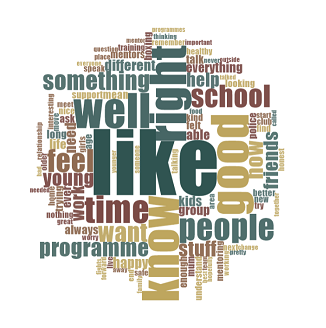
The WeMove pilot was funded by Greater Manchester Police (GMP) to support children and young people aged 12 to 18 years impacted by serious and violent crime, either as perpetrators or victims. Central to WeMove was one-to-one support by trained mentors. The evaluation conducted by the Open University aimed to assess implementation and early impacts to evidence programme effectiveness.
The findings were largely supportive of a positive impact of WeMove on participants. Benefits included improved emotional intelligence and improved relationships with peers and family members. An important mechanism for change was the creation of safe spaces where young people felt listened to and genuinely cared for by mentors. Promising practices included the use of group work alongside one-to-one mentoring, and activities which increased community connectedness and a sense of belonging (e.g. volunteering opportunities). Recommendations included:-
- Improved programme oversight by the Governance Group, particularly in relation to ensuring that the intended target group are invited onto the programme.
- Improved early communication with participants around what the programme is about, why they have been asked to take part, and what the programme will involve.
- More consistent menu of activities to ensure that all participants are exposed to the same sorts of experiences and opportunities.
- Adoption of structured self-evaluation tools to monitor individual and programme progression.
- Development of alternative pathways for young people who do not meet the selection criteria for WeMove.
- A programme of Continuous Professional Development (CPD) for mentors, including development of skills to address challenging and risky behaviours, and reflective practise to encourage peer support.
The summary report is available in the members area.
In addition, a final report and 3 self-evaluation tools were created based on the evaluation’s theory of change. These are available on request via [email protected]
News
Blog post - Help shape the next chapter of CPRL
The future of policing will increasingly depend upon its ability to learn, innovate and collaborate.
- Blog post - From evidence to action: Convening partnerships to build more Inclusive Workplaces in policing
- Blog post - Building the next generation of football policing: Research, professional development and national learning
- From Conversation to Coordination: CPRL's Emerging Role in National Problem Solving
Upcoming Events
National Practitioner Programme: Evidence-Based Football Policing: Contemporary Practice, Innovation and Future Challenges
Tuesday, October 6, 2026 - 10:00 to Thursday, October 8, 2026 - 12:30
Online seminar: TBC
Tuesday, October 6, 2026 - 13:00 to 14:30


Explore

Undergraduate
Postgraduate
Policy
-
Follow us on Social media
-


