
Katherine Staden awarded UKRI Future Leaders Fellowship
Congratulations to Katherine Staden who has been awarded a prestigious £1.17 million Future Leaders Fellowship from UK Research and Innovation (UKRI) to lead groundbreaking research into extremal structures in graphs.
The fellowship will advance fundamental mathematical theory with potential wide-ranging applications in artificial intelligence, ne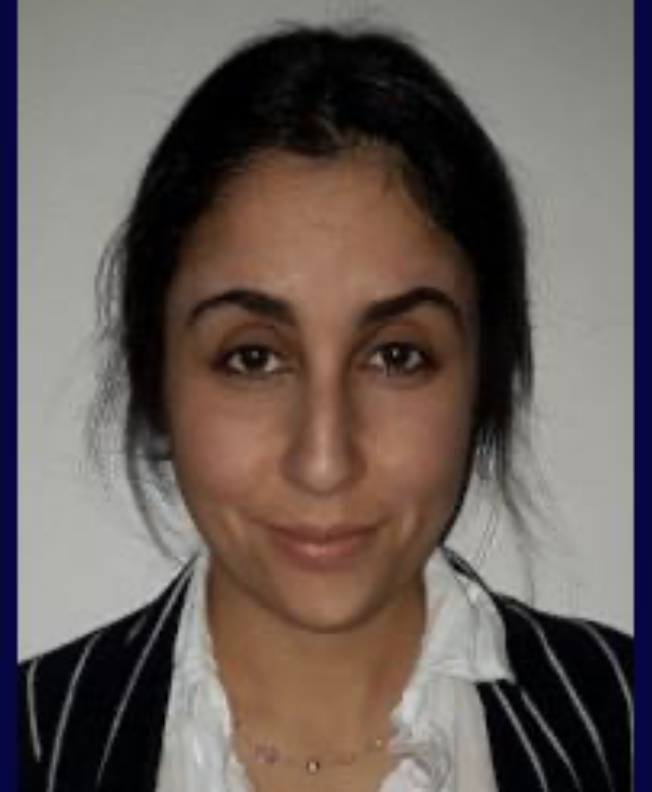 tworks, transport systems, and beyond.
Graphs – or networks – are abstract mathematical objects that underpin many aspects of modern life. From social media networks like Instagram, to the London Underground transport system or disease transmission modelling, graphs provide the framework for understanding connections between different entities. Beneath these real-world examples lies a mathematical structure: a graph, made up of vertices (points) and edges (lines), which captures how systems are linked.
This fellowship focuses on the extremal properties of graphs, understanding their best- and worst-case behaviours. This branch of mathematics, known as extremal graph theory, asks fundamental questions such as: how can structures like Hamilton cycles (routes visiting every node exactly once) be found, counted, or decompose a host graph? These are not only theoretically rich challenges but also critical for designing efficient algorithms that support today’s vast and complex networks.
This project splits into two complementary but independent strands:
Counting substructures in graphs and related objects and the extremal problem of maximising or minimising this count. This question is at the very heart of extremal graph theory. It has driven several of the key developments in the field, such as flag algebras and the use of computers to produce mathematical proofs. This project will investigate the intriguing connections between seemingly unrelated problems such as the clique density problem, the inducibility problem, and the extremal behaviour of the chromatic polynomial.
Graph decomposition, which is the problem of partitioning (the edge-set of) a graph into given substructures. The first objective here builds on Katherine's recent and current work on decomposing graphs into`large' pieces and will tackle the problem of decomposing into regular graphs. Other objectives include decompositions in graphs that are not quasi-random, where even approximate decomposition is difficult and fractional ideas come into play.
Katherine recently completed an EPSRC Postdoctoral Fellowship at the OU on Graph decompositions via probability and designs and already has an impressive track record of solving longstanding conjectures with modern mathematical techniques. Less than 2% of all previous UKRI fellowships have supported projects in pure mathematics, making this a remarkable achievement and a testament to the outstanding quality of Katherine's research.


Follow us


Explore

Undergraduate
Postgraduate
Policy
-
Follow us on Social media
-


