
Face It: Why Face Recognition Fails and Why That Should Concern You
 Author:
Catriona Havard is a Professor of Psychology at The Open University
Catriona Havard, Professor of Psychology at The Open University, delves into the chances and risks of facial recognition going wrong.
At this year’s Bloody Scotland International Crime Writing Festival in Stirling in September, I’ll be pulling back the curtain on one of the most curious and consequential traits of human perception: our ability to recognise faces. Or sometimes… not.
Ever bumped into someone and thought, “I know that face—but who are you?” You're not alone. Our brains and even high-tech machines struggle more than you'd think to recognise faces accurately. Many everyday mistakes we often make, such as not recognising a neighbour, can be embarrassing but have no serious consequences. However, falsely identifying an innocent person from a police lineup can be life-changing.

Through my work with UK police forces, I’ve witnessed firsthand how fragile eyewitness identification can be. For example, in police line-ups, suspects are only chosen by eyewitnesses 40 percent of the time.
There are several factors that can influence how accurate witnesses are at making identification. In my research, I’ve found the delay between witnessing a crime, and the witnesses’ race, age, and gender, can all influence whether someone recognises a culprit, with misidentifications being more likely when a witness is a different race to a suspect. These aren’t just academic puzzles; they’re issues that have led to real miscarriages of justice.
But it’s not just humans who make mistakes. The algorithms behind facial recognition technology used in airports, streets, and courtrooms can also be flawed. Many repeat the same biases we carry, and some have falsely matched innocent people to crime scene footage, resulting in wrongful arrests.
In my book, ‘When Face Recognition Goes Wrong’, I dive into the fascinating and sometimes alarming ways that face recognition can fail. From everyday errors that we all make, to serious neurological conditions like prosopagnosia (an inability to recognise faces), and Capgras syndrome (a delusional disorder where a person thinks a familiar person has been replaced by an impostor).
I also explore the mistakes made by AI systems, joining the dots between human psychology and machine learning and explore what happens when both break down.
The book looks towards the future, by asking the world’s leading experts in face recognition research, what they think the big issues are that face recognition research needs to focus on next. This includes the increased use of face recognition technology, deepfakes and AI impostors.
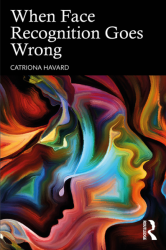
At Bloody Scotland, Scotland’s International Crime Writing Festival, I’ll be giving a lively illustrated talk based on the book with no academic jargon, just compelling stories, curious phenomena, and interactive discussion. We’ll explore:
- Why witnesses and victims misidentify innocent people from police lineups.
- How facial recognition tech learns from biased data and what happens when it gets things badly wrong.
- What it’s like to live without the ability to recognise faces, or believing loved ones are imposters, and how families navigate everyday life with those neurological conditions.
- What’s the future of face recognition research.
You’ll also hear personal anecdotes, everyday examples from social interactions, and some unexpected twists that make face perception anything but straightforward.
Let’s face it: we all make recognition mistakes. What matters is how we learn from them.
Curious to find out how well your brain performs when it comes to face recognition? Join me at Bloody Scotland on Friday 12 September 2025, for this fun and fascinating session. Or dive deeper into the psychology of identity and memory with the Open University’s online psychology courses on our free learning site OpenLearn.
For updates, new research, and behind-the-scenes stories from When Face Recognition Goes Wrong visit the Open University’s School of Psychology and Counselling.
This article was originally published in The Herald.
1 September 2025
News

New approach to grow support for tree planting
A free tool for planners and community groups has been published by researchers.
New investment to create Fife skills partnerships
A three-year programme will create clearer routes from Fife College to degree-level Open University study.
Media contacts
Media enquiries
OU in Scotland Media Relations:
Call 0131 549 7932
OU UK Press Office:
Call 01908 654316
Out-of-hours:
07901 515 891
Visit our OU UK news site
Newsletter
Sign up for our quarterly e-newsletter, Open Outlook.


Explore

Undergraduate
Postgraduate
Policy
-
Follow us on Social media
-


