

Centre for Scholarship and Innovation
How disseminating your scholarship can expand horizons
We are all aware we should aim to disseminate our work, but it can be hard to make the time for external conferences. So often they happen at really busy times, such as when we’re marking or finalising exam results, or preparing for the new academic year. But they are – I’ll argue – immensely worthwhile.
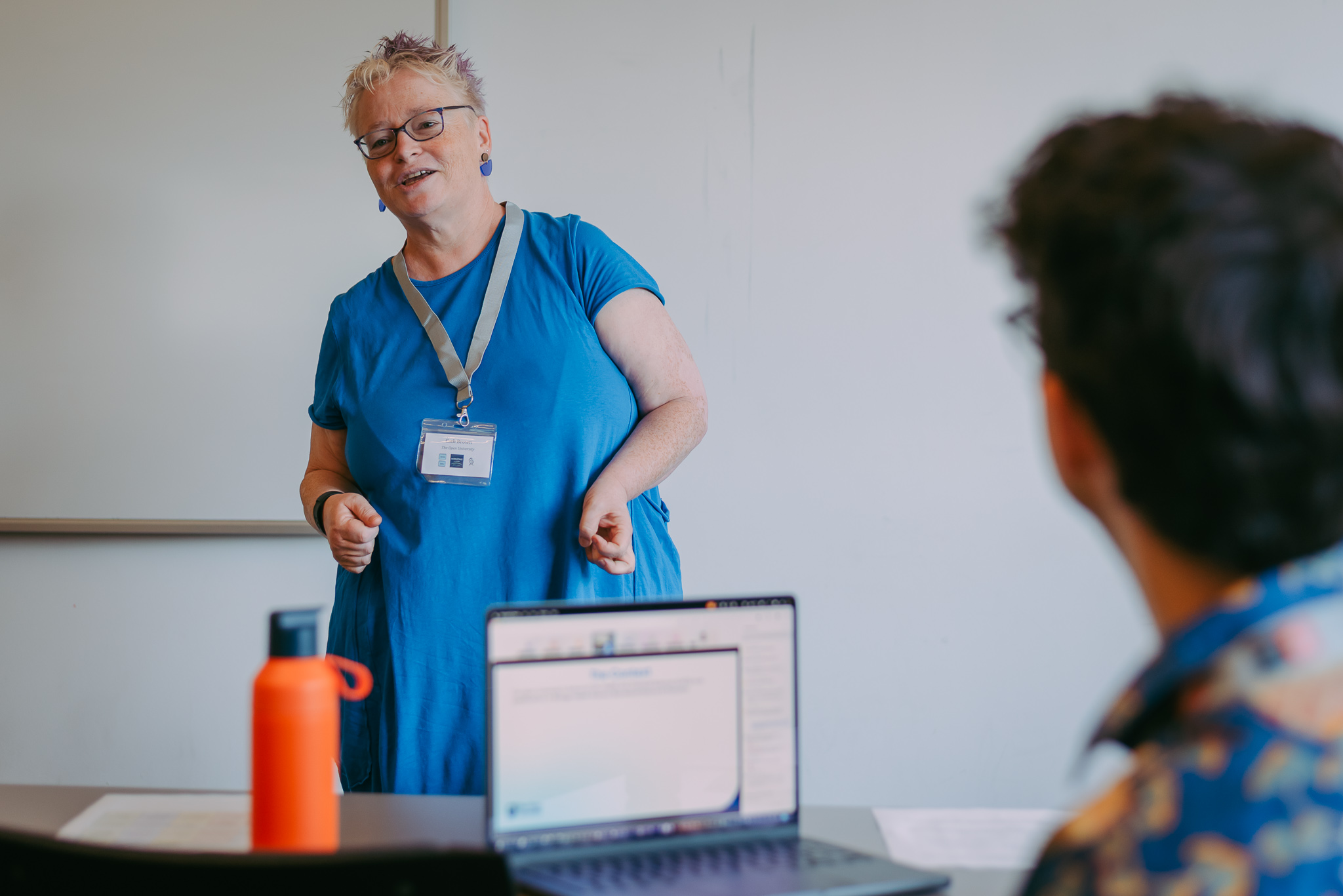
Let’s talk about the dissemination first. I actually find writing my initial abstract and producing my presentation or poster gets me to reflect on what the key messages and impacts are of my project – what is there about it that’s relevant outside my little corner of the OU, what questions does it raise? Then at every conference I’ve been to, people have come to talk to me after the talk or poster session – to ask questions, offer ideas, compare notes. That sort of contact is such a valuable starting point for expanding horizons and for helping each other. I’ve ended up sharing resources for community events, comparing notes on supporting maths-fearing students and discussing the logistics and principles of differentiated tutorial provision with colleagues both in the UK and internationally.
Image 1: Cath Brown presenting at an external conference. Alexander Tudor, Royal Holloway, University of London.
Of course, attending colleagues’ presentations or discussing their posters offers exactly the same opportunities for connections. But I’ve found they are a rich source of ideas for new things to try; hearing things live from enthusiastic colleagues is so much more motivating than perusing journal articles. Plus, the conference environment means you may attend a session of whose relevance you were unsure – but it turns out to be the best one and sets your mind travelling in a whole new direction.
But it’s not just that. On a day-to-day basis, I suspect we all struggle to find time for our scholarship; it is hard to prioritise it over the day-to-day demands of our jobs. Having a few days away from home, surrounded by others who really care about SoTL, can really rekindle that enthusiasm and energy for scholarship. And whilst we can – theoretically – discuss our scholarship with colleagues at any point, far too often, we don’t! I’m far more likely to have in depth conversations about current or potential projects with colleagues when we’re attending conferences together.
And if, like me, you aren’t the most experienced in publishing journal articles, conference proceedings may offer a relatively gentle way in.
My most recent conference was CETL-MSOR in Heriot-Watt University this September. It’s about – broadly – supporting students with maths, who may or may not be maths specialists. There are similar things for other STEM disciplines, such as ViCEPHEC for physics and chemistry, as well as broader ones such as Horizons in STEM HE (another favourite of mine).
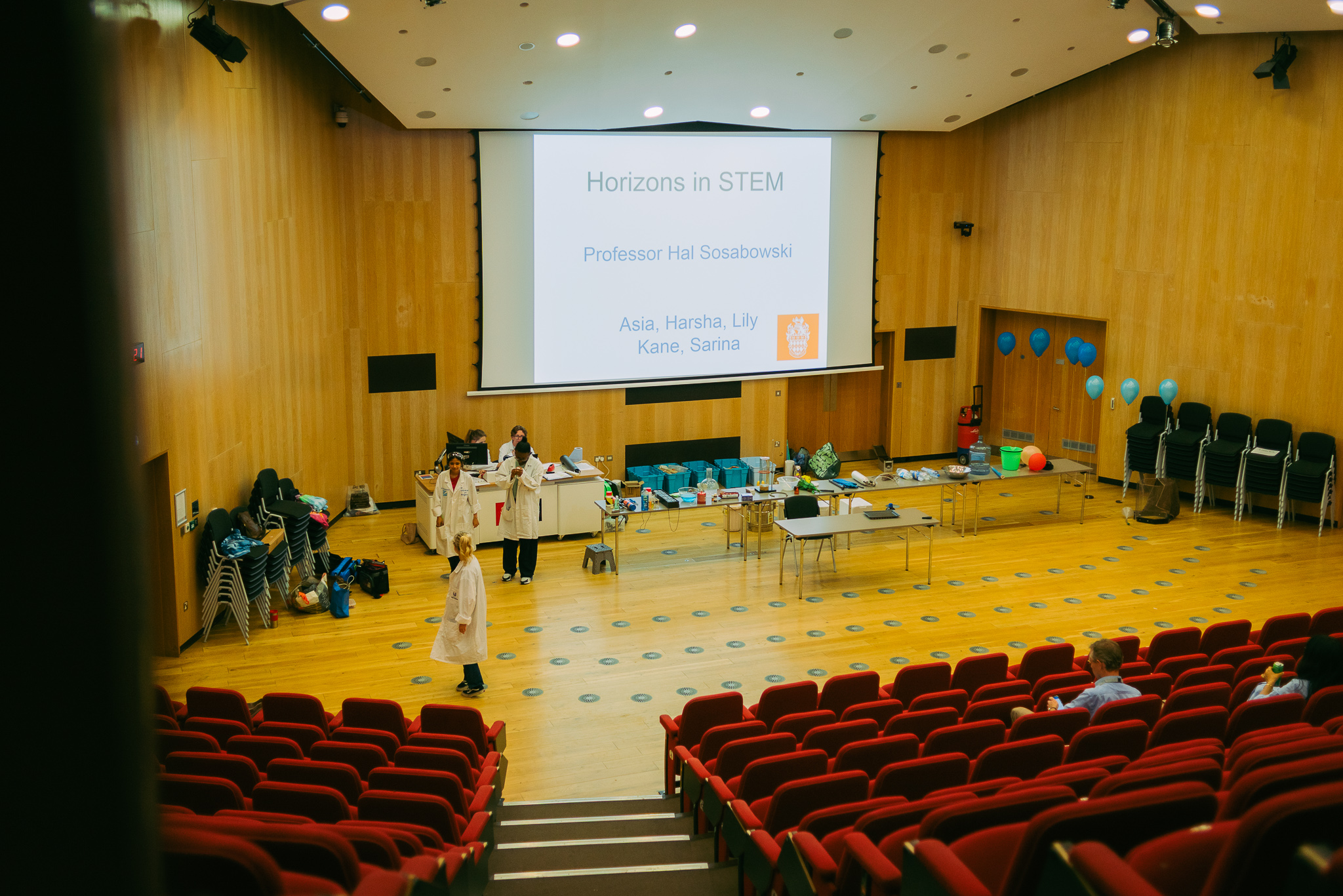
Image 2: Lecture Theatre at the Horizons in STEM HE Conference 2026. Alexander Tudor, Royal Holloway, University of London.
I was presenting on a project I’m part of in our School of Life, Health and Chemical Sciences, to develop maths support that’s offered outside the individual modules. Following that, I got into conversations about how to train staff to best support nervous students, the skills such staff need, the balance between instructor- and peer-support, and the utility or otherwise of diagnostics, and a link to a very useful resource.
Here’s a few other things I gained: -
- Some excellent ideas for conveying the uses, and limitations, of Generative AI to our students studying maths modules.
- A new idea for a community event for new students, which I implemented a few weeks later.
- Some points to think about regarding the different support needs and preferences of students as they progress through their studies.
- Inspiration for embedding sustainability in learning mathematics.
- … and of course the chance to see colleagues again I’d met at previous conferences, alongside meeting new people.
Yes, it is tiring. Yes, inevitably routine things from work build up while you are away. But it is so worth it!
Cath Brown, Staff Tutor, School of Mathematics and Statistics
Blog posts
- How disseminating your scholarship can expand horizons 5 October 2026
- Teaching in a virtual environment 7 September 2026
- 15 years of growing the eSTEeM community 29 April 2026


