

Centre for Scholarship and Innovation
The AI Paradox in Higher Education: Students Want AI, But Not at Any Cost
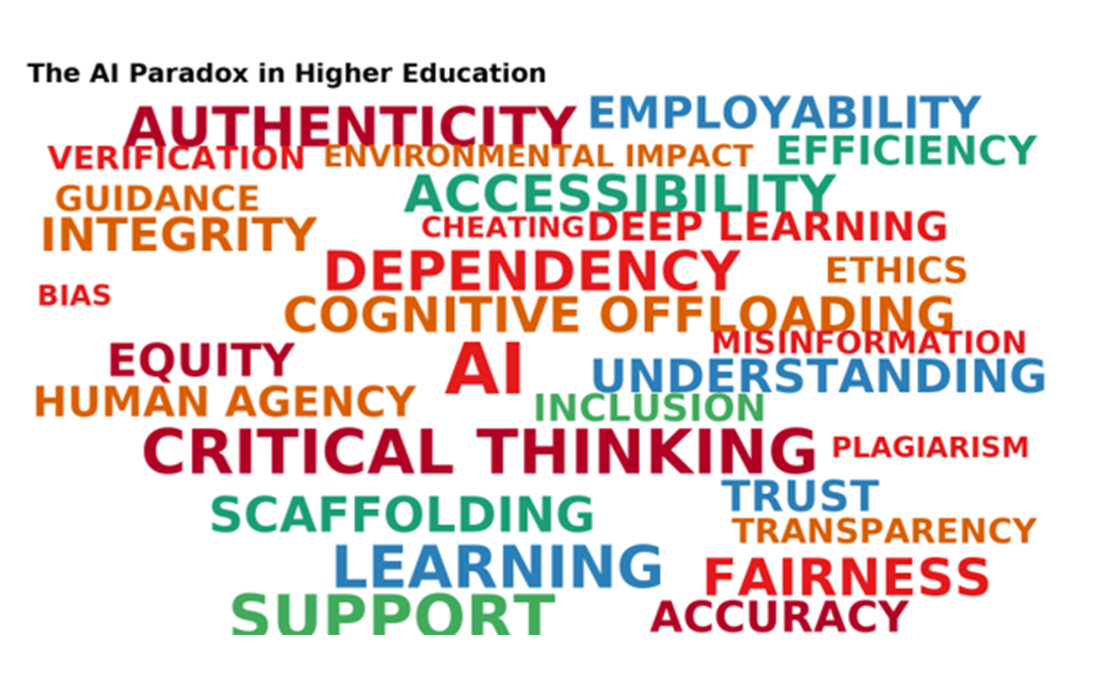
While listening recently to the BBC Radio 4 programme The Artificial University, I was struck by a recurring theme: students are receiving increasingly mixed messages about artificial intelligence. For example, ‘AI is the future but don’t use it’, ‘you need to be fluent in AI, but you should be able to function without it’ and ‘AI can’t be trusted but we are building it in every aspect of your university education’. The contradiction is hard to ignore by students and academic staff. Universities are embedding AI into teaching, support services and learning technologies, while simultaneously encouraging students to demonstrate independent thinking and academic integrity. As educators, we should not be surprised that students are trying to make sense of these competing expectations.
Image 1: Word cloud Generate reflecting students’ perception of the AI paradox in Higher Education.
This tension is emerging clearly in our own research with Environmental and Earth Science students. Although the findings are still developing, they reveal a highly divided landscape of opinion about AI in higher education.
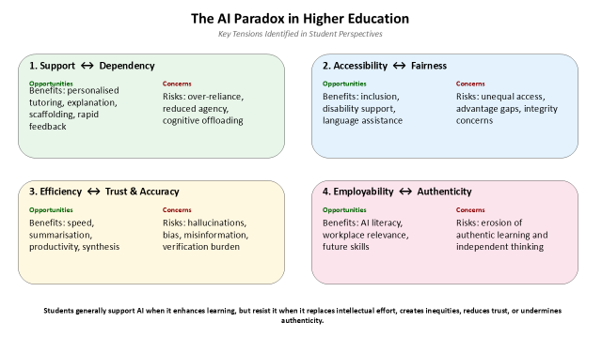
Image 2: Key Tensions expressed by students
For some students, generative AI tools such as ChatGPT and Copilot are viewed as valuable learning companions. Particularly in distance-learning environments, where immediate access to tutors is not always possible, AI can provide explanations, clarify difficult concepts, support revision and help students plan their studies. Many students described using AI as a form of personalised tutoring that enables them to ask follow-up questions and receive rapid feedback.
In this context, AI is not seen as replacing learning but as scaffolding it. Students value it when it helps them understand complex material, organise their thinking or identify areas where they need further study.
Yet an equally vocal group rejects AI altogether.
Their concerns extend well beyond worries about plagiarism. Many students see independent reasoning, cognitive effort and intellectual struggle as fundamental parts of higher education. For them, learning is not simply about reaching the correct answer; it is about developing the skills and habits of mind that emerge through the process of inquiry, analysis and reflection.
Some students expressed concern that AI encourages “cognitive offloading”, outsourcing thinking to technology rather than developing knowledge and understanding for oneself. In their view, allowing AI to perform too much of the intellectual work risks undermining the very purpose of a university education.
This highlights one of the most significant tensions facing higher education: students appear willing to embrace AI when it supports comprehension but resist it when it appears to replace intellectual effort.
A second tension centres on accessibility and equity.
Many students recognise AI's potential to make education more inclusive. It can support those studying in a second language, provide assistance for students with disabilities, and offer help outside normal teaching hours. For distance learners especially, this immediacy can be transformative.
At the same time, students are concerned about fairness. Access to advanced AI tools is often uneven, creating worries that some learners may gain advantages unavailable to others. Uncertainty about what constitutes acceptable use also creates anxiety. Students fear either being unfairly penalised for responsible use or being disadvantaged by choosing not to engage with AI at all.
The result is a growing call for clearer institutional guidance and more equitable access to approved AI tools.
Trust is another major issue.
Students who use AI frequently appreciate its speed and convenience. It can summarise information, synthesise sources and accelerate routine tasks. However, even enthusiastic users remain cautious about accuracy. Concerns about hallucinated information, fabricated references, bias and unverifiable outputs were widespread across our research.
Perhaps one of the most interesting findings is that scepticism about AI is not limited to those who oppose it. Students on both sides recognise the need for critical evaluation and verification. In other words, while opinions differ on whether AI should be used, there is broad agreement that its outputs should never be accepted uncritically.
A final tension concerns employability and authenticity.
Many students acknowledge that AI literacy is becoming an important graduate skill. They recognise the growing role of AI across sectors and understand that employers increasingly expect graduates to work effectively with these technologies.
However, students frequently draw a distinction between learning about AI and learning through AI. While they accept the importance of understanding and using AI in professional contexts, they remain concerned about preserving the authenticity of university learning. For some, higher education is fundamentally about intellectual formation, curiosity and independent thought rather than efficiency or productivity alone.
What emerges from these findings is not a simple story of students being either “for” or “against” AI. Instead, their views are nuanced, conditional and deeply thoughtful. Students are weighing educational benefits against ethical concerns, convenience against intellectual development, and employability against authenticity.
Importantly, they are asking universities to engage with them as partners in these conversations.
The message from students is remarkably consistent. They want clear boundaries around acceptable use. They want guidance rather than silence. They want equitable access to AI-enabled support. They want transparency about the ethical and environmental implications of AI technologies. And they want universities to acknowledge that concerns about AI are not simply technical issues but also moral and educational ones.
The challenge for universities, therefore, is not whether AI should be embraced or resisted. It is how institutions can create learning environments where AI enhances education without diminishing the value of human thinking. The future of higher education may well involve AI, but students are reminding us that the future must also remain firmly centred on learning, critical inquiry and human agency.
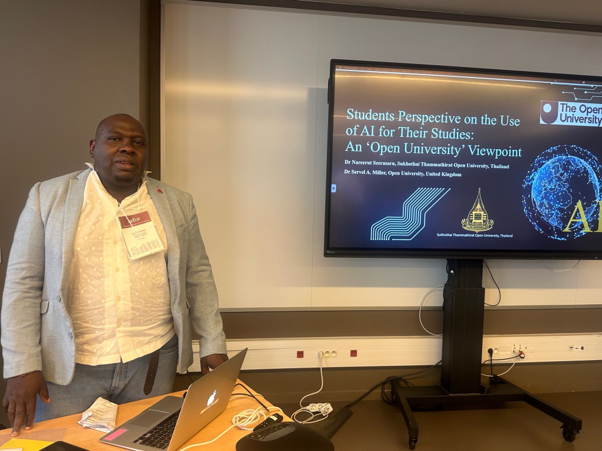
Image 3: Servel presenting research findings on AI in HE at the Paris Education Conference, 2025 - Students Perspective on the Use of AI for Their Studies: An “Open University” Viewpoint - The IAFOR Research Archive
Please get in contact ([email protected]) if you are a staff member in EEES and would like to get involve with scholarship research and/or just to discuss ideas.
Servel Miller is the Scholarship Lead and AI Ambassador for the School of Environment, Earth and Ecosystem Sciences (EEES) at The Open University. An active researcher and educator, Servel's work focuses on the innovative use of digital technologies to enhance teaching, learning, and student engagement in higher education. His recent research explores the potential of Virtual Reality (VR), Generative AI, and drone technologies to create immersive, inclusive, and authentic learning experiences. Through his scholarship and leadership, Servel champions the effective and responsible integration of emerging technologies to support student success and drive innovation across teaching and learning. This work is based on research funded by eSTEeM. Please visit the project website for a summary.
Servel Miller, Staff Tutor, School of Environment, Earth and Ecosystem Sciences (EEES)
Blog posts
- Teaching in a virtual environment 7 September 2026
- 15 years of growing the eSTEeM community 29 April 2026


