
Our priority areas - Equity, Diversity and Inclusion Strategic Plan
3. Our priority areas
While we continue to work to advance equity and inclusion for all staff and students, particularly for communities covered by the protected characteristics set out in the Equality Act 2010, we have identified four priority areas for focused action between 2026 and 2031. These priorities do not limit our broader commitment to tackling all forms of inequity. They are:
- Disability, Neurodiversity and Accessibility
- LGBTQIA+
- Race
- Gender
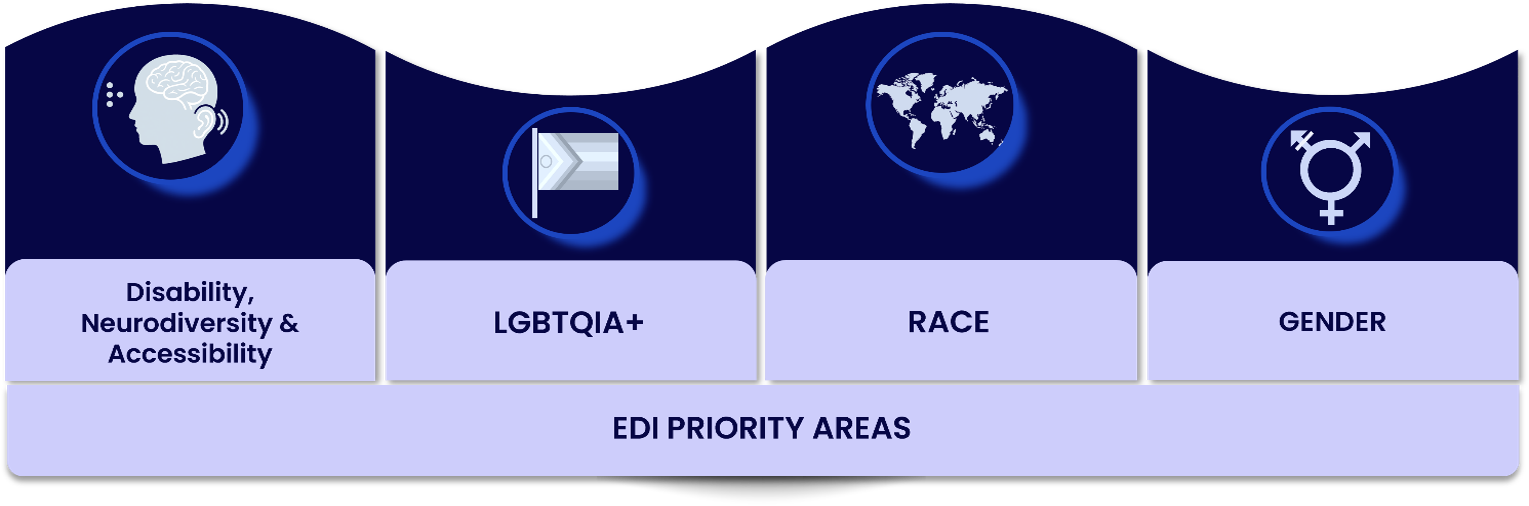
These priority areas reflect where evidence shows some of the most persistent inequities in staff and student experience and outcomes, and where we already have significant frameworks and activity in place such as Athena Swan, the Race Equality Charter, the Access and Participation Plan and staff networks.
From an APP and student outcomes-specific lens, the APP-prioritised student groups are reflected within the priority areas above. This includes a focus on our Black students, students who have shared that they have mental health difficulties, and students who reside in IMDQ11 areas.’
Historically, our gender and race inclusion work has benefited from significant resource and focus, largely driven by our engagement with Advance HE Equality Charter frameworks. While this remains essential, this EDI Strategic Plan commits to broadening that focus. We will ensure that Disability and Neurodiversity, and LGBTQIA+ inclusion, are elevated as equal priority areas, supported by dedicated initiatives, governance, and measurable outcomes.
Across all four areas we will build on what has already been achieved, respond honestly to what staff and students have told us is not yet working, and focus on practical, evidence-led actions that improve lived experience and outcomes. This includes strengthening our understanding of, and response to, the experiences of people seeking sanctuary, including migrant, refugee and asylum-seeking students. We recognise the additional and intersecting barriers these groups may face and will draw on existing work within the REC, including a dedicated migrant-focused working group.
We also recognise limitations in our current data collection processes, particularly in how we capture information about students’ religious beliefs. We will therefore work to improve data quality to better inform support for staff and students from different religious backgrounds.
Delivery of these priorities will be fully integrated with, and directly support, the University’s wider strategic framework, including the University Strategy, People Plan, Mental Health and Wellbeing Strategic Plan (MHWBS), and education, research, and access and participation plans. The EDI Strategic Plan is a cross-cutting enabler and a fundamental driver of institutional performance, quality, and impact.
Through this integrated approach, EDI strengthens and connects our strategic commitments by embedding inclusive values into decision-making, culture, and outcomes.
[1] IMDQ1 – Index of Multiple Deprivation – group 1 (the most deprived areas)


3.1) Disability, Neurodiversity and Accessibility
Context and case for action
The OU is the largest UK provider of higher education for disabled people, with over 39,000 students who have shared a disability studying with us. This includes a significant number of neurodivergent learners, whose experiences, adjustment needs and modes of engagement must be explicitly recognised to ensure equitable learning, progression and outcomes can be consistently delivered.
The OU aims to be proactive rather than reactive by embedding an accessible by design approach. This will support the commitment to reducing awarding gaps between disabled students and those with no known disabilities as well as helping to make the disabled student experience more positive and consistent.
We also employ disabled and neurodivergent colleagues across all parts of the institution. Our ability to attract, retain and develop neurodivergent talent has a direct bearing on organisational effectiveness, staff wellbeing, productivity and innovation. Embedding neurodiversity across our policies, processes and culture – including inclusive design, reasonable adjustments and workforce development – provides a clear framework for consistent practice and assurance of delivery.
Accessibility lies at the heart of our OU mission and values and is the key to enabling success for our disabled and neurodivergent staff and students. The OU has a well-earned reputation as a sector leader in this field and many initiatives which contribute to this successful work.
While we have held Disability Confident Level 1 since 2020, we have now exceeded the usual three-year timeline for progressing to Level 2. This highlights a need for stronger coordination and oversight. Without a clear, visible and accountable approach to disability and neurodiversity, our capacity to address persistent inequities, meet legal and regulatory expectations, and evidence sector leadership cannot be consistently assured.
In this Strategic Plan, we use the terms ‘disability, neurodiversity and accessibility’ to encompass disabled and neurodivergent staff and students, as well as individuals with diverse access needs. The actions set out in the Plan will be underpinned by an intersectional approach.
What we’ve achieved so far
We have:
- Achieved Disability Confident Level 1 (Committed) and previously held a Disability Standard award through our membership of the Business Disability Forum. Level 1 focuses on employers making initial pledges, such as inclusive recruitment, offering interviews to disabled applicants, and providing reasonable adjustments, alongside choosing at least one practical activity to improve opportunities for disabled people.
- Completed a structured self-assessment in 2023/24 to understand our readiness for Disability Confident Level 2 and to identify where we need to improve how we recruit, support and develop disabled colleagues.
- Committed to publishing our Disability Pay Gap annually.
- In 2025, established a Disability, Neurodiversity and Accessibility Steering Group to coordinate and strengthen staff-focused activity across these three key areas. This work aligns with and complements existing student-focused structures, with dedicated working groups delivering targeted initiatives, including reasonable adjustments for staff, within a single, cohesive framework.
- Strengthened our approach to student neurodiversity by advancing targeted activity through the Disability, Neurodiversity and Accessibility Steering Group. This includes formal engagement with Students’ Union representatives to ensure student voice informs strategic direction and SeGA.
- Become a founding member of the Disabled Student Commitment (DSC), an enabler to addressing specific barriers that disproportionately affect our disabled students. It outlines 43 principles that cover the student lifecycle, including information sharing, course selection, support during studies, and transition to employment.
- Elevated our institutional commitment to digital accessibility governance and compliance by including it in the OU risk register.
- Embedded accessibility best practice across the OU by coordinating and driving change through guidance and training, compliance, digital design, research, and community development. This has included a particular focus on engaging stakeholders from across the OU whose perspectives had not previously been fully included.
- Embedded accessibility into digital design and development, ensuring that the OU is developing in alignment with contemporary UX (user experience) methodology and that the voice of disabled staff and students is represented in our digital spaces.
- Used the APP to strengthen our focus on students experiencing mental health difficulties, including identifying and tackling barriers in OU policies, practices, culture and structures that negatively affect this student group.
- Worked in partnership with Academic Services in implementing the OU’s Mental Health and Wellbeing Strategic Plan (MHWBS), ensuring alignment with our APP-prioritised students and a strategic focus on equity, including looking at using data to inform our approach to identifying and supporting specific cohorts of staff and students.
What we’ve learned
Feedback from staff and students highlight that:
- Accessibility – disabled students and staff still encounter barriers, particularly around digital accessibility, learning materials, assessment and some of the systems and tools they are expected to use.
Many systems and processes are not designed with neurodivergent users in mind, which can create additional cognitive and usability barriers and limit equitable access and participation. - Recruitment and progression – practice, processes and policies are not consistently inclusive, and disabled and neurodivergent colleagues can face barriers in recruitment, workload, progression and access to development opportunities.
- Reasonable adjustments and policy – processes and guidance for requesting, agreeing and reviewing reasonable adjustments, and the policies that sit behind them, can be unclear or applied inconsistently across the OU.
- Awareness, training and communication – disability awareness, the availability and uptake of disability-related training, and communication about expectations and good practice all need to be strengthened so that inclusion does not depend on individual knowledge or goodwill.
- Gaps in resourcing and inconsistency in practice – work on disability, neurodiversity and accessibility has often relied on a small number of committed individuals, teams and staff networks, and good practice is not yet embedded or consistent across all areas of the institution.
- Mental health and wellbeing - students experiencing mental health difficulties are less likely to pass their modules, progress into
 further study, or move into graduate employment. Barriers faced by this student group include inflexible assessment and workload expectations; limited flexibility in teaching approaches or deadlines; inconsistent academic and wellbeing support; complex processes for accessing help; and cultural norms that discourage students from sharing difficulties or seeking support.
Our objectives for 2026 - 31
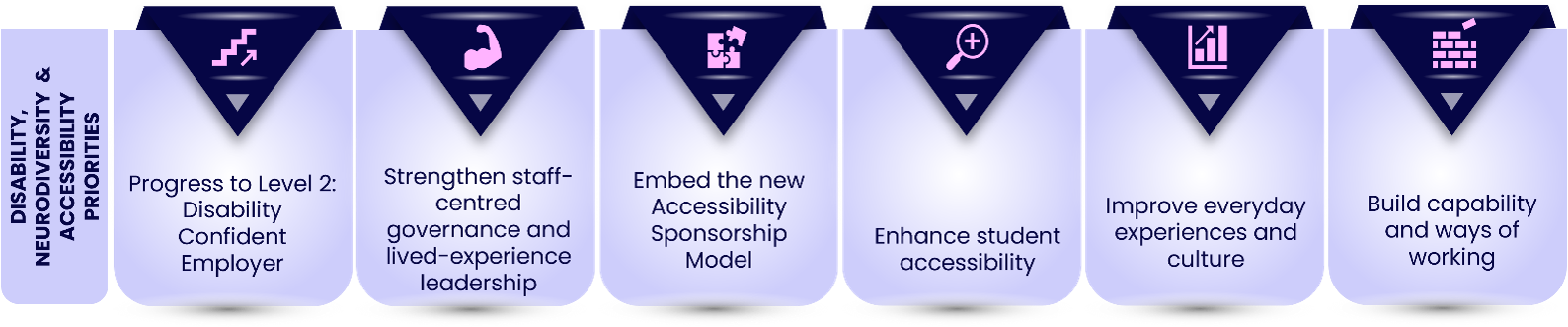
Over the lifetime of this Strategic Plan, we will:
- Progress to Disability Confident Level 2
- Use the findings of our 2023/24 self-assessment which evaluated our readiness for progression, to address gaps and progress from Level 1 to Level 2 (Disability Confident Employer). Level 2 will require us to demonstrate deeper and sustained action through a structured self-assessment, including how we recruit, support, and develop disabled employees across areas like accessible recruitment, workplace adjustments, and ongoing staff development.
- Strengthen staff-centred governance and lived-experience leadership
- Embed the Disability, Neurodiversity and Accessibility (DNA) Steering Group and its working groups as the focal point for this agenda. The Steering Group will ensure that disabled and neurodivergent staff and students shape priorities and decision-making, while maintaining alignment with complementary student-focused structures such as SeGA. It will provide strategic oversight, clear direction and lead listening exercises with disabled and neurodivergent staff and students to ensure priorities reflect lived experience. Dedicated working groups will take forward key priorities, working collaboratively to support an intersectional approach to driving institutional change through policy development and advocacy, while aligning with existing student-led activity.
- Embed our new Accessibility Sponsorship Model
- Enable more focused accessibility work with three senior sponsors covering student, staff and digital accessibility. The model will reduce overlap, prioritise resources and align accessibility work with wider strategic priorities. Senior sponsors will strengthen governance by providing strategic oversight, clear direction and a collective voice for accessibility at the highest levels, supporting visibility, advocacy and institutional change.
- Enhance student accessibility
- Continue to review and enhance how student accessibility is supported and resourced.
- Ensure approaches are sustainable and informed by student need and institutional priorities.
- Improve everyday experiences and culture
- Clarify and streamline processes for requesting, implementing, and reviewing reasonable adjustments for staff and students.
- Enhance data on disability and neurodiversity to inform action and track progress.
- Plan and review how we measure the impact of our accessibility initiatives so that we can make sure we are being transparent, learning from lessons, and incorporating feedback and evidence into our decisions and work.
- Build capability and ways of working
- Provide targeted guidance and development on accessibility, disability and neurodiversity inclusion.
- Support and resource staff networks so they can continue to act as critical friends, partners and advocates.
The KPIs detailed in Section 5 Our success measures will support our ongoing work through the Disability, Neurodiversity and Accessibility (DNA) Steering Group to develop a robust SMART action plan for DNA inclusion at the OU.

3.2) LGBTQIA+
Context and case for action
LGBTQIA+ inclusion is essential to creating a safe, equitable and welcoming environment for everyone in our community. At the OU, we use the term LGBTQIA+ to reflect the full diversity of sexual orientation, gender identity and sex characteristics within its community. LGBTQIA+ is an inclusive and widely recognised term that acknowledges and supports the visibility and belonging of all individuals who face discrimination due to their gender identity or sexuality.
While we celebrate significant progress through networks, events and visible commitments, we know that data on LGBTQIA+ staff and student experience is limited. For example, our systems allow staff to record non-binary genders, but disclosure rates are low. Our student systems do not currently allow this information to be recorded, and we know far less about LGBTQIA+ students in distance-learning contexts than campus-based universities do.
In addition, responses to our institutional EDI staff survey show that LGBTQIA+ colleagues are more likely to report bullying and/or harassment, with trans colleagues among those most affected at 24%.
We also recognise that the evolving legal context presents challenges for LGBTQIA+ inclusion, and we commit to navigating this responsibly while recognising the heightened anxiety and uncertainty experienced by our people.
We want to move beyond basic support to a more systematic, evidence-led approach that addresses the specific barriers faced by LGBTQIA+ staff and students, including trans, non-binary or gender diverse people.
What we’ve achieved so far
We have:
- Two active staff networks – the Proud Staff Network (for LGBTQIA+ identities) and the Trans Staff Network – which provide peer support, advocacy and insight into lived experience.
- A regular programme of LGBTQIA+ focused events and campaigns, including Pride and LGBTQ+ History Month, delivered in partnership with staff networks and Marketing and Communications team.
- Established an LGBTQIA+ Working Group in December 2025 to coordinate this agenda and develop a comprehensive LGBTQIA+ Lived Experiences Report and Action Plan, informed by listening exercises with staff and students.
- Secured funding through a pan-university scholarship scheme (funded by APP) for a research project on LGBTQIA+ student experience at the OU. A team of LGBTQIA+ scholars (staff and student interns) will explore the realities of distance learning, identity disclosure and belonging for undergraduate and taught postgraduate students.
- Trans and Non-Binary inclusion is also a priority in Athena Swan, which allows us to take a joint institutional approach to trans, non-binary or gender diverse colleagues inclusion.
What we’ve learned
Feedback from staff networks, issues known by us and the rationale for our scholarship project highlight that:
- Many LGBTQIA+ staff and students still navigate concerns about safety, disclosure and belonging, particularly in online and distance-learning spaces.
- Our policy and systems landscape are not always fully inclusive of diverse gender identities and sexual orientations (for example, limitations in how identities can be recorded or recognised).
- We lack consistent, institution-wide data on LGBTQIA+ experience, making it harder to identify and address inequities.
- Work has often relied on a small number of committed individuals in networks, rather than shared institutional responsibility.

Our objectives for 2026 - 31
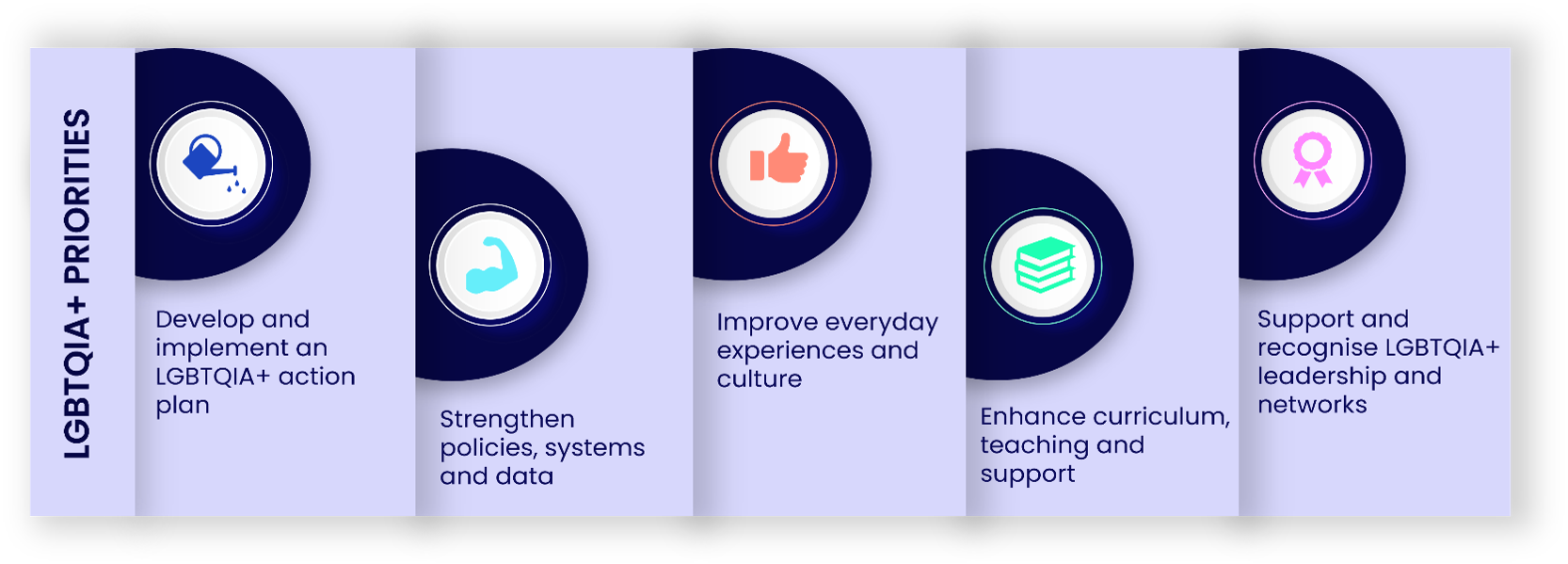
Over the lifetime of this Strategic Plan, we will:
- Develop and implement an LGBTQIA+ Action Plan
- Use the findings of the upcoming LGBTQIA+ Lived Experiences Report and the student research project to create a SMART Action Plan with clear owners and measures of success.
- Work in partnership with Athena Swan team to ensure gender inclusion work is inclusive of the LGTBTQIA+ experiences, including supporting the specific charter priority for trans, non-binary or gender diverse inclusion.
- Strengthen policies, systems and data
- Review staff, student and governance policies to ensure they are explicitly inclusive of diverse sexual orientations and gender identities, including trans, non-binary or gender diverse people.
- Improve how we collect and use data on LGBTQIA+ identities, while respecting privacy and safety, so we can better understand outcomes and target interventions.
- Improve everyday experiences and culture
- Equip managers, tutors and leaders with guidance and development on LGBTQIA+ inclusion, including trans, non-binary or gender diverse inclusive practice and how to respond to discrimination and harassment.
- Ensure that reporting routes (including Report and Support2) are visible, trusted and responsive to LGBTQIA+ issues.
- Enhance curriculum, teaching and support
- Work in partnership with faculties and PVC-LTSE to ensure that curriculum, teaching materials and student support reflect and affirm LGBTQIA+ identities where relevant.
- Use insights from the student research project to inform improvements in supervision, pastoral support and community-building for LGBTQIA+ students.
- Support and recognise LGBTQIA+ leadership and networks
- Continue to resource and recognise the work of the Proud and Trans staff networks, ensuring they are connected into governance and decision-making structures.
The KPIs detailed in Section 5 Our success measures will support our ongoing work through the LGBTQIA+ Working Group to develop a robust SMART action plan for LGBTQIA+ inclusion at the OU.
2Report and Support is the University’s safe space reporting tool, giving staff, students, learners and visitors a confidential way to report bullying, harassment, discrimination, hate crime or sexual misconduct either anonymously or with their details. It helps people get timely support, enables the OU to spot and address harmful behaviours, and strengthens its commitment to safety, dignity and inclusion across the community.

3.3) Race
Context and case for action
Our race inclusion work is guided by our Race Equality Charter Bronze Award received in February 2026. Through this process we undertook a rigorous self-assessment of staff and student data and listened carefully to racially minoritised (RM) colleagues and students through surveys and consultation events. Our participation in the Charter acknowledges our commitment to tackle identified racial inequities at the University.
We use the term “race equality” where it aligns with the Race Equality Charter (REC) and wider institutional and sector language. However, the way we approach this work is equity-focused, ensuring that actions are designed, implemented and evaluated in response to identified barriers, needs and inequities.
We also recognise that previous work, including decolonisation initiatives and the Racism at the OU report, is perceived by many as not having resulted in sufficiently visible change. We are committed to being open about this and ensuring that our REC action plan and other targeted initiatives lead to tangible improvements in people’s lived experience, not just new documentation.
What we’ve achieved so far
Through our REC work we have:
- Built a robust evidence base, drawing on multiple staff and student datasets, two EDI surveys and extensive consultations.
- Developed a five-year REC Action Plan (2026–31) focusing on the experience of racially minoritised (RM) staff and students.
- Aligned with the APP priorities by addressing inequities in access to the OU, pass rates and ‘good’ pass rates for Black students, while also supporting work to improve their sense of belonging and mattering. REC actions support these APP priorities through activities to improve staff cultural humility, increase the diversity of the staff body, and strengthen understanding of, and support for, students seeking sanctuary, including through the migrant-focused working group.
- Continued to support targeted initiatives such as 100 Black Women Professors NOW, which provide development, sponsorship and networks for Black women academics. This has informed our approach to progression and leadership, with participants achieving promotion, awards, Senate membership and creating a Black Women Academy. The OU now has two Black women professors.
- Committed to publishing our Ethnicity Pay Gap annually.
What we’ve learned
A cross-university team of 31 staff and students led by the EDI Senior Leadership Team conducted a rigorous self-assessment of 21 staff and student datasets and two EDI surveys for staff and students to understand the University’s culture and any differences in experience among racially minoritised staff and students. The surveys were complemented by 9 staff consultation events and 12 student consultation events, providing solid evidence base for our REC action plan.
Our self-assessment highlighted persistent inequities, including:
Staff
- Racially minoritised (RM) staff, particularly Black staff, were more likely to be employed in lower-grade roles and underrepresented in senior positions.
- RM staff were less likely to be shortlisted and appointed, with disparities increasing at higher grades.
- RM staff, particularly Black staff, were more likely to have experienced situations that made them feel uncomfortable due to their ethnicity (24%) were less confident (34%) that leaders would address racially inappropriate behaviour.
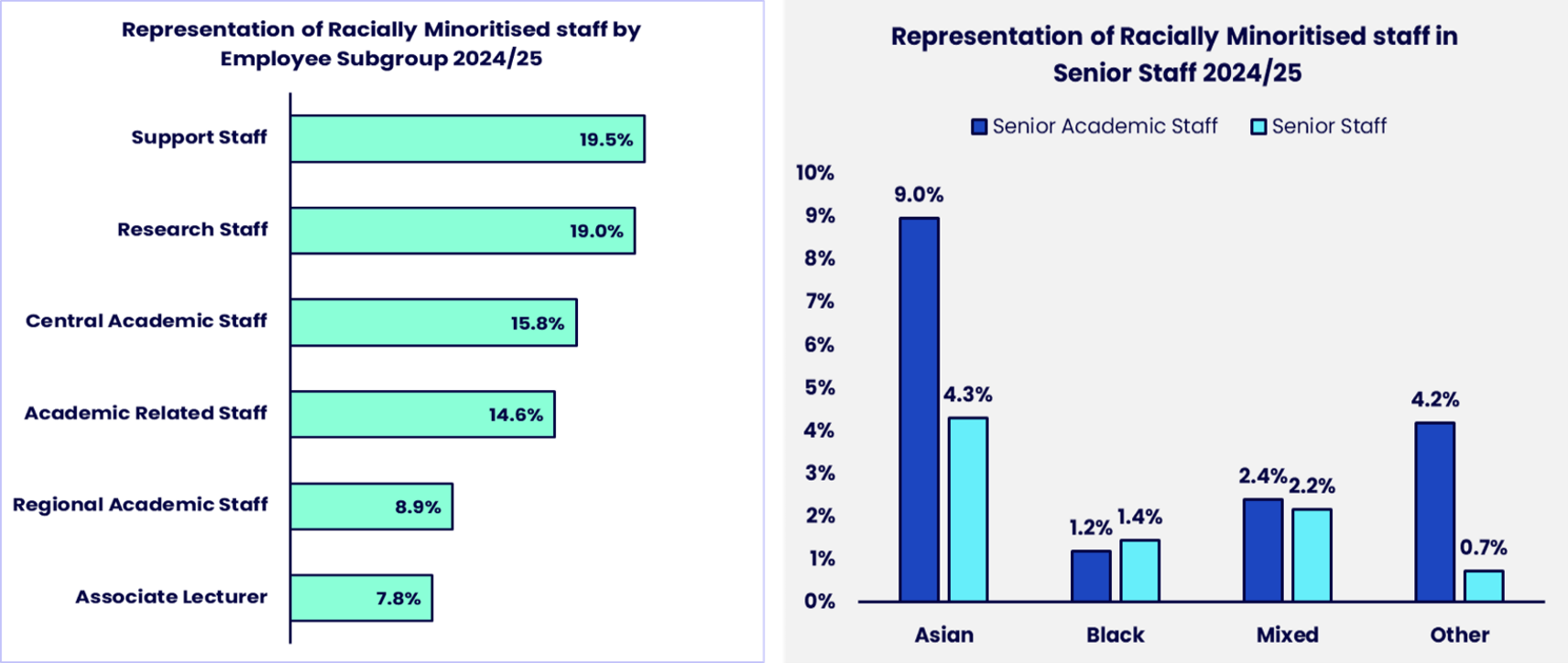
Figure 2: Representation of Racially Minoritised Staff
| Employee Subgroup | % Racially minoritised staff |
|---|---|
| Support Staff | 19.5% |
| Research Staff | 19.0% |
| Central Academic Staff | 15.8% |
| Academic Related Staff | 14.6% |
| Regional Academic Staff | 8.9% |
| Associate Lecturer | 7.8% |
Representation of racially minoritised colleagues varies considerably across staff subgroups, with higher representation in support and research roles than in academic roles.
| Ethnicity | Senior Academic Staff | Senior Staff |
|---|---|---|
| Asian | 9.0% | 4.3% |
| Black | 1.2% | 1.4% |
| Mixed | 2.4% | 2.2% |
| Other | 4.2% | 0.7% |
Representation of racially minoritised ethnic subgroups is generally higher in Senior Academic Staff than Senior Staff
Students
- RM students, particularly Black students, had lower good module pass rates - 64.6% compared to 67.9% for white students. Black students had the lowest good module pass rate at 58.4%.
- RM students, particularly Asian students (17%) were more likely to have experienced a situation that made them feel uncomfortable due to their ethnicity. Black students are least confident (54%) that tutors will address racially inappropriate behaviour.
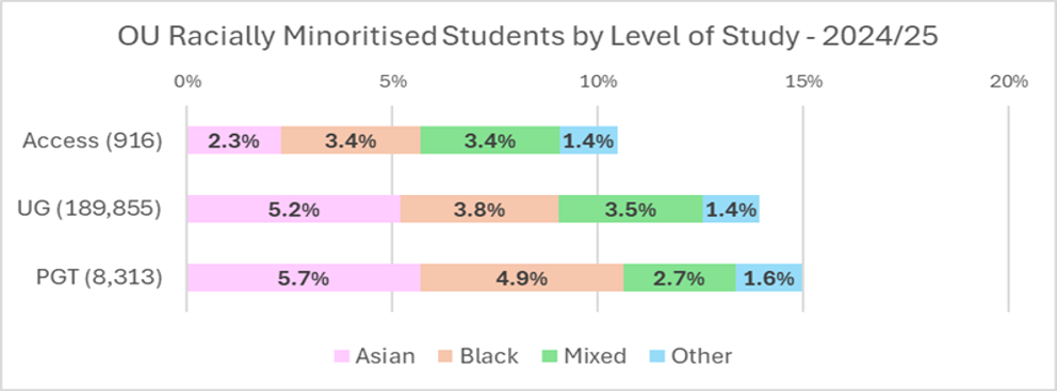
Figure 3: Student data by level of study and ethnicity
| Level of study | Asian | Black | Mixed | Other |
|---|---|---|---|---|
| Access (916) | 2.3% | 3.4% | 3.4% | 1.4% |
| UG (189,855) | 5.2% | 3.8% | 3.5% | 1.4% |
| PGT (8,313) | 5.7% | 4.9% | 2.7% | 1.6% |
Students in different levels of study share similar ethnicity profiles, but Asian students are more represented in UG and PGT than Access.
These findings confirm the need for systemic change in culture, structures, processes and accountability.
Our objectives for 2026 - 31
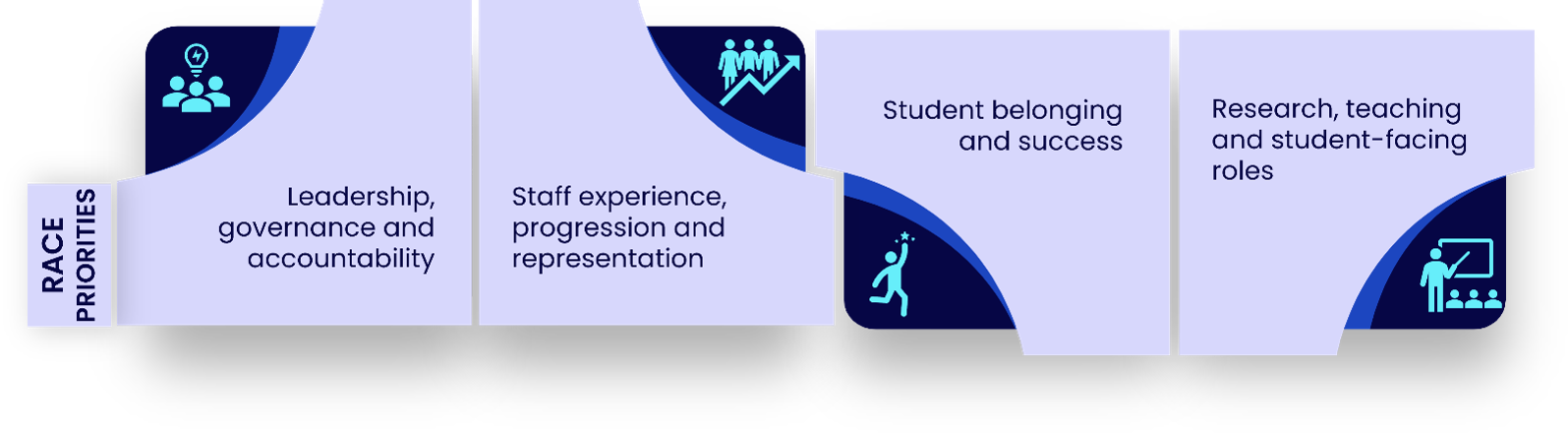
The REC Action Plan identified seven priority areas and for the purposes of this Strategic Plan we group our objectives under four themes:
- Leadership, governance and accountability
- Increase racial diversity in governance and senior decision-making structures.
- Equip leaders with the skills and confidence to make inclusive decisions and hold themselves accountable for race equality outcomes.
- Staff experience, progression and representation
- Improve recruitment, retention, progression and cultural climate for racially minoritised staff, particularly Black staff, and address underrepresentation at senior grades.
- Strengthen reporting routes, support and protections so that RM staff can safely speak up about racism and see action taken.
- Student belonging and success
- Work with Access and Participation Plan (APP) and other initiatives to work towards eliminating ethnicity awarding gaps, especially the Black-white awarding gap.
- Improve sense of belonging, cultural climate and confidence in tutors’ responses to racially inappropriate behaviours for RM students.
- Research, teaching and student-facing roles
- Enhance support for racially minoritised research-only staff and postgraduate research students, addressing issues such as fixed-term contracts and access to networks.
- Increase the racial diversity and cultural competence of Associate Lecturers/Regional Academics and other student-facing staff.
Across all of this, we will seek to move beyond a solely charter-driven approach, being open to listen and act on what our own community tells us needs to change and how they experience the impact of our actions. This includes a need to disaggregate current data to ensure that analysis and consequent support activities are more nuanced, particularly when considering the needs of our international students. We therefore commit to exploring student experience by including the valuable voices of our international students in our attempts to reduce inequity.
Decolonisation
In support of the OU’s commitment to anti-racism work through the REC and the drive to reduce inequity through the APP, in line with best practice in the HE sector, the University is committed to advancing an institution-wide approach to decolonisation that includes but importantly, extends beyond curriculum reform. Reviewing and diversifying curricula remains an important aspect of this work, as intended through the strategic lens of the Inclusive Curriculum initiative, however, meaningful decolonisation also requires critical examination of how institutional power operates through policies, decision-making structures, cultural norms and everyday practices.
A dedicated Decolonisation Working Group will be formed to support colleagues to engage in decolonisation initiatives that address the consideration of whose knowledge and perspectives are prioritised within teaching, research and leadership; how institutional policies and processes may be disadvantaging particular student groups; whose voices are represented in governance and strategic decision-making; and how historical and contemporary inequalities and inequities can shape experiences of belonging, success and progression.
Detailed actions for race inclusion are set out in the REC Action Plan (2026-31).

3.4) Gender
Context and case for action
Gender inclusion has long been a focus at the OU. We have been members of the Athena Swan Charter since 2012 and hold an institutional Bronze award, with a mix of Bronze and Silver awards across several Schools and units (Table 1). A Bronze award is the foundational level of the Athena Swan Charter which shows a commitment to promoting fairness, inclusion and opportunity for women, men and gender-diverse colleagues and students.
Progress towards an institutional Silver award has been slower than we would like, and colleagues have told us that gender work can feel overly focused on the charter rather than on everyday experience. However, staff are reminded that Athena Swan is fundamentally routed in taking our staff and students’ everyday experiences and working to make tangible changes in this area.
The Athena Swan Charter is a gender equality charter where awards are conferred by AdvanceHE. Though it is called a ‘gender’ charter it encompasses the following protected characteristics: sex, gender re-assignment and pregnancy and maternity.
We use the term “gender equality” where it aligns with the Athena Swan Charter and wider institutional and sector language. However, the way we approach this work is equity-focused, ensuring that actions are designed, implemented and evaluated in response to identified barriers, needs and inequities.
What we’ve achieved so far
We have:
- Renewed our institutional Bronze Athena Swan award and supported multiple Schools to secure Bronze and Silver awards (Table 1).
- Developed a comprehensive Athena Swan data pack and an active Athena Swan Champions Network to share learning and support applications.
- Introduced practical initiatives such as the Menopause Policy, a dedicated baby-feeding area on the Milton Keynes campus, and expanded provision of gender-neutral toilets across OU sites which benefits gender diverse colleagues and women.
- The Menopause Moments Network has created several spaces for colleagues to access menopause-related information and support, including a Viva Engage group, mailing list, private MS Teams space and regular online meetings. The group also maintains a Menopause Hub with resources and information about voluntary Menopause Champions, who can offer one-to-one support.
- Established the Women’s Development Community, with over 500 members, and continued to support leadership development through the Aurora Programme.
- Published annual Gender Pay Gap reports show the OU performs better than the sector average by regularly reporting a small gender pay gap.
- Committed to piloting the Career Accelerator Women's Development Programme.
The Athena Swan Self-Assessment Team (SAT) has been meeting every three months since January 2024 to provide oversight and strategic direction for our institutional Silver Athena Swan Award submission. The following draft priorities for the Silver submission have been agreed:
- Tackling bullying and harassment
- Create an inclusive working and learning environment for trans, non-binary or gender diverse staff and students
- Progression Pathways for Professional Services Staff
- Promotion of academic staff on specific contract types
- People Services parental leave support
Improve wellbeing and mental health support for men, researchers and trans, non-binary or gender diverse staff
Table 1: Athena Swan Awards across OU Faculties and Schools
| FACULTY/SCHOOL/UNIT | AWARD LEVEL (YEAR) |
|---|---|
| Faculty of Science Technology, Engineering and Mathematics (STEM)/ School of Physical Sciences (SPS) | Silver (2021) |
| STEM / Engineering and Innovation (E&I) | Silver (2021) |
| STEM / Computing and Communication (C&C) | Silver (2021) |
| STEM / Mathematics and Statistics (M&S) | Silver (2022) |
| STEM / Knowledge Media Institute (KMi) | Silver (2022) |
| STEM / Environment, Earth and Ecosystem Sciences (EEES) | Silver (2026) |
| STEM / Life, Health and Chemical Sciences (LHCS) | Bronze (2021) |
| Faculty of Wellbeing, Education and Language Studies (WELS) / Education, Childhood, Youth and Sports (ECYS) | Bronze (2022) |
| WELS / Health, Wellbeing and Social Care (HWSC) | Bronze (2024) |
| Faculty of Arts and Social Sciences (FASS) / Psychology and Counselling | Bronze (2024) |
| Faculty of Business and Law (FBL) / Business School | Bronze (2022) |
Schools and Professional Services Staff (PSS) units can apply for unit/school level Athena Swan awards alongside the institutional Athena Swan award. School level awards are important because this is the level that our students benefit from specific and targeted gender equality initiatives in addition to a focus on academic staff within that specific school. PSS units benefit from a unit level Athena Swan submission because initiatives are targeted at specific staff groups within that specific unit. Local initiatives are often easier and quicker to implement than OU-wide actions and the cost-base is reduced.
What we’ve learned
Recent years have seen financial constraints, restructuring and staff turnover, which have slowed progress and made it harder to sustain local Athena Swan work. Colleagues have also highlighted that gender inclusion work must move beyond compliance and awards to address broader issues such as reproductive health, caring responsibilities, workplace culture and the intersections between gender, race, disability and other identities.
Caring responsibilities are also increasing, disproportionately affecting women, including those who take on dual caring roles for both children and older relatives. The Athena Swan team and the Carer Staff Network have been working closely together to ensure that care forms part of the new Athena Swan action plan.
Our objectives for 2026 - 31
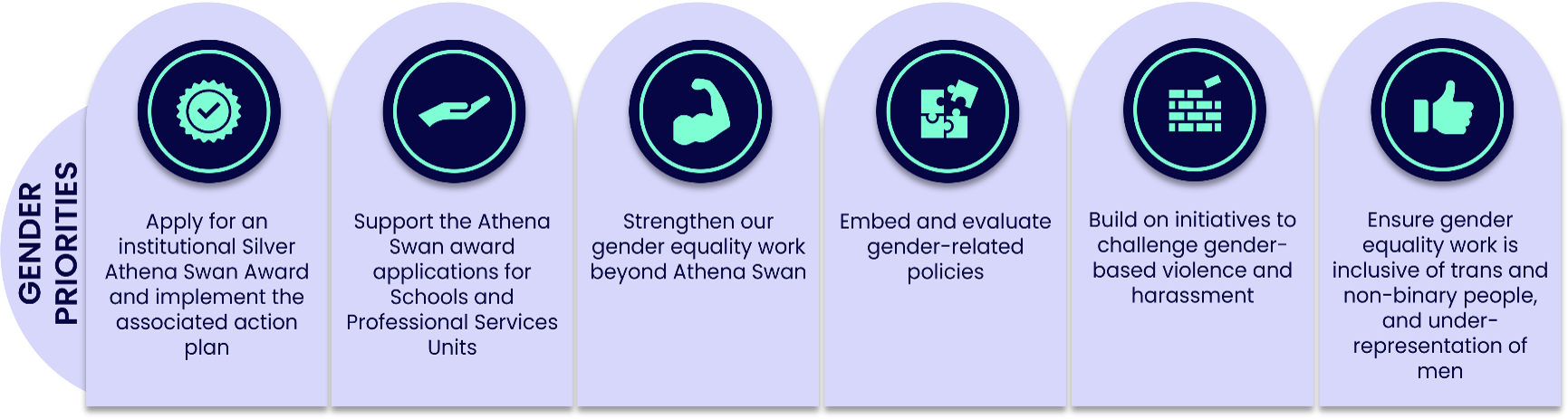
Over the lifetime of this Strategic Plan, we will:
- Apply for an institutional Silver Athena Swan award, and, subject to approval, implement the associated action plan, using it as a framework for sustained change rather than an end in itself.
- Support the Athena Swan award applications for Digital Services and LDS (two of the largest Professional Services units at the OU), and for the Schools of Languages and Linguistics (LAL), Socials Sciences and Global Studies (SSGS), and Law School.
- Strengthen our gender inclusion work beyond Athena Swan, including action on gender pay gaps, progression and representation at senior levels.
- Embed and evaluate our Menopause Policy and other gender-related policies, ensuring line managers and leaders actively support staff through key life stages.
- Build on initiatives such as International Women’s Week, the Women’s Development Community and future White Ribbon3 accreditation to challenge gender-based violence and harassment and promote safe, inclusive cultures.
- Ensure gender inclusion work is explicitly inclusive of trans, non-binary or gender diverse people4, and responsive to under-representation of men in particular disciplines or roles.
3White Ribbon is a leading charity in England, Wales, Scotland and Northern Ireland engaging men and boys to prevent men’s violence against women and girls. Organisations work with White Ribbon to develop and deliver a transformative action plan over a three-year life-cycle. This work also aligns with Athena Swan.
4The Athena Swan self-assessment team (SAT) includes five working groups, one of which is the ‘Supporting Trans and Non-binary staff” working group. This group is working closely to align with the LGBTQIA+ working group.
Athena Swan and LGBTQIA+
Athena Swan is a gender charter and as such this work also intersects with the work of the LGBTQIA+ working group. The Athena Swan Charter includes:
- gender re-assignment as a protected characteristic
- one of the principles of the Athena Swan charter is supporting gender diverse people
- collecting gender identity data in addition to sex data as recommended by AdvanceHE
- several actions pertaining to supporting gender diverse people in the Bronze Award action plan
- supporting trans, non-binary or gender diverse staff and students is a priority in the Silver Award action plan.
Detailed actions for gender inclusion are set out in the draft institutional Silver Athena Swan Action Plan. This is a live document that is reviewed and refined throughout the five-year cycle, informed by staff and student experiences and emerging evidence.
Contact us
Equality, Diversity and Inclusion
The Open University
Walton Hall
Milton Keynes
MK7 6AA
Email [email protected]


Explore

Undergraduate
Postgraduate
Policy
-
Follow us on Social media
-


