
Introduction - Equity, Diversity and Inclusion Strategic Plan
1. Introduction

This Equity, Diversity and Inclusion (EDI) Strategic Plan replaces the Open University’s 2022 Institutional Equality, Diversity and Inclusion Plan and Equality Scheme for England, Wales, Scotland, and Northern Ireland bringing our EDI “why” and “how” into a single document. It signals a strategic shift from a focus on equality, understood as providing the same support to everyone, to a focus on equity, understood as recognising different needs and responding through targeted, contextualised action to advance inclusion.
The EDI Strategic Plan sets a clear direction for the whole University and provides a shared framework for every part of the OU to drive change and embed equity, diversity and inclusion in everything we do. Central to this approach is ensuring that lived experience informs decision-making in practice. This means creating meaningful opportunities for minoritised groups to contribute, influence and be heard with confidence that input is acted on meaningfully and in a timely way.
While lived experience is essential to understanding barriers and shaping meaningful change, responsibility for EDI does not sit with colleagues from minoritised communities. Creating an inclusive university is a shared responsibility. We all have a role to play as allies, through ongoing and active practice such as listening, learning, challenging exclusionary behaviours and practices, and taking action to foster a more inclusive culture.
The EDI Strategic Plan positions EDI principles as a lens through which we view our culture, environment, behaviours, policies and practices, making clear their importance for all OU staff, students and communities and contributing to the OU’s wider commitment to social justice.
The Equality Scheme for Northern Ireland complements this Strategic Plan by outlining the statutory processes and commitments that apply specifically within the Northern Ireland context.
We recognise that many faculties are now using the term Equality, Diversity, Inclusion and Accessibility (EDIA). However, for the purposes of this strategic plan and our wider work, we incorporate accessibility under the heading of Inclusion and use the widely recognised term EDI, with E standing for equity rather than equality. This reflects our intentional strategic focus on equity. Where we refer to equality in this document, it is because the term relates to specific legislation, duties or established frameworks, such as the Equality Act 2010, the Race Equality Charter, and the Equality Scheme in Northern Ireland amongst others.”

Professor Allán Laville
PVC-EDI
1.1 Our context
The Open University (OU) is a pioneer in distance learning and was created to widen access to higher education and promote social justice. Since its establishment in 1969, more than 2.5 million people worldwide have achieved their learning goals by studying with us. Today, we are the biggest university in the UK and one of the largest universities in Europe, with over 136,000 students.
Our mission is to be open to people, places, methods and ideas. This means we actively work to remove potential barriers to learning, employment, and participation by promoting educational opportunity and social justice through high-quality education to all who wish to realise their ambitions and fulfil their potential.
Our vision is to offer life-changing learning that meets people’s needs and enriches society. Our core values are to be inclusive, innovative and responsive.
We are:
- The UK’s only university dedicated to support distance learning, with a significant presence in all four nations of the UK.
- A UK-based university with a global reach, we have over 8,600 international students directly registered with the OU.
- A leader in open education, with over 3.5 million OpenLearn course completions by learners worldwide.
Our student communities include people from a wide range of backgrounds, lived experiences and circumstances. In 2024/25, our student profile included:
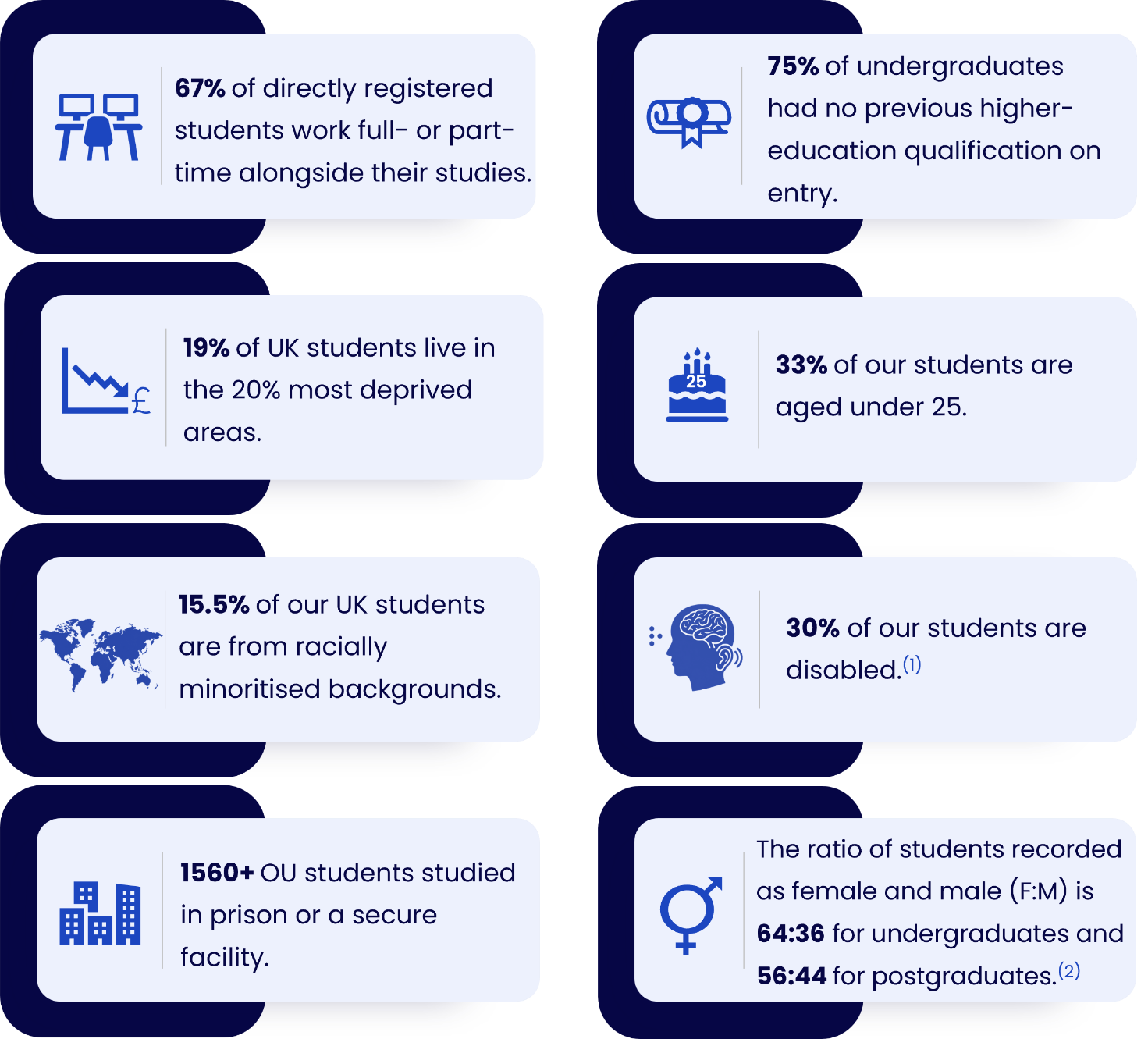
- 67% of directly registered students work full- or part-time alongside their studies.
- 75% of undergraduates had no previous higher-education qualification on entry.
- 19% of UK students live in the 20% most deprived areas.
- 33% of our students are aged under 25.
- 15.5% of our UK students are from racially minoritised backgrounds.
- 30% of our students are disabled.1
- 1560+ OU students studied in prison or a secure facility.
- The ratio of students recorded as female and male (F:M) is 64:36 for undergraduates and 56:44 for postgraduates.2
(1) We are the largest UK provider of higher education for disabled people, with over 39,000 students who have shared a disability studying with us (as of February 2026).
(2) The data presented is ‘Sex’ data and is in line with the responsibility to share this data under the Equality Act (2010).
Our workforce profile also includes colleagues from a wide range of backgrounds and lived experiences. As of December 2025:
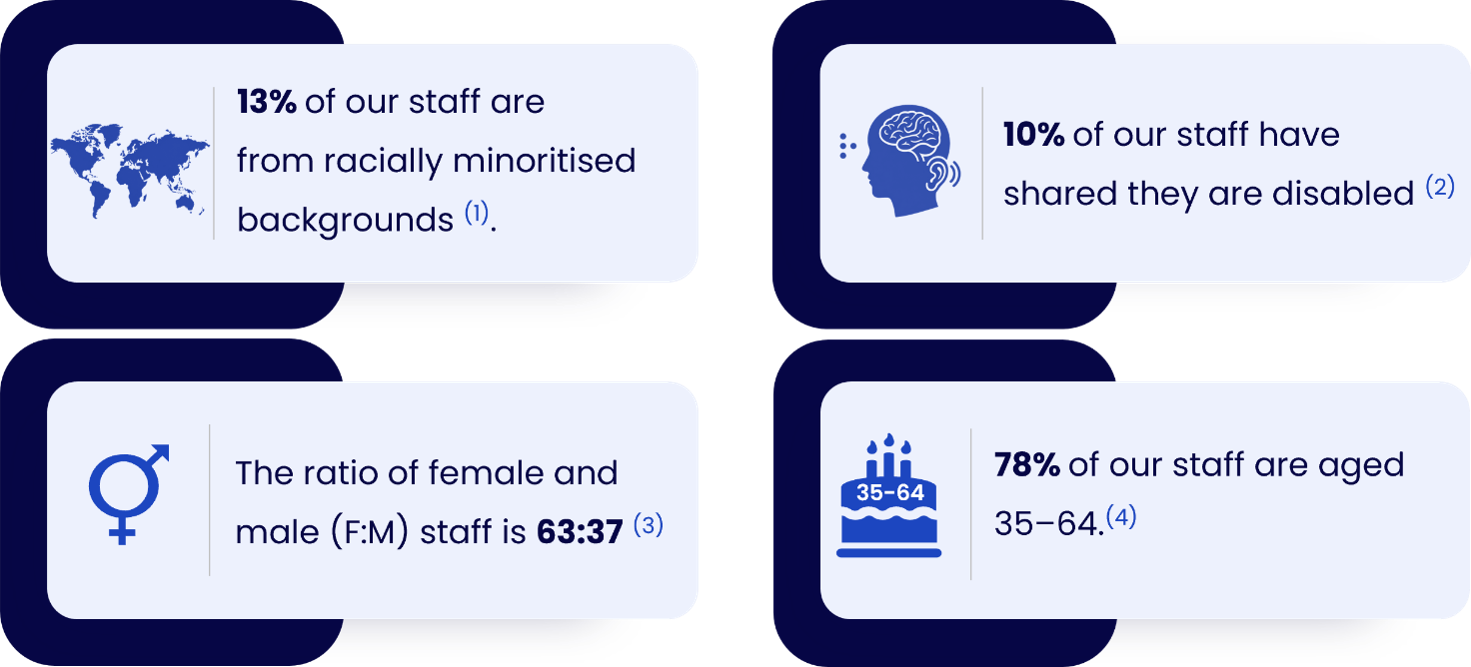
- 13% of our staff are from racially minoritised backgrounds1
- 10% of our staff have shared they are disabled2
- The ratio of female and male (F:M) staff is 63:373
- 78% of our staff are aged 35–644
(1) Detailed ethnicity breakdown: 79% White / 4% preferred not to say / 5% unknown or no data (percentages may not add up to 100 due to rounding).
(2) 86% of our staff are non-disabled and for 4%, the disability status is unknown or we have no data.
(3) Our system allows staff to record non-binary genders, but disclosure rates are low.
(4) Detailed age breakdown: 10% between 25–34 / 22% between 35-44 / 29% between 45-54 / 27% between 55-64 / 11% 65 and over (percentages may not add up to 100 due to rounding).
These figures help us understand the diversity that exists within our student and staff body and where further action is needed to improve representation, participation, experience and outcomes.
1.2 Why EDI matters at the OU
Our mission commits us to making higher education available to people who might otherwise be unable to access it. We know that discrimination and structural barriers waste talent and deny opportunity for individuals, for the University and for society. We also recognise that openness must be matched by equity, so that everyone, regardless of background or circumstances, can thrive.
EDI is reflected in our core values: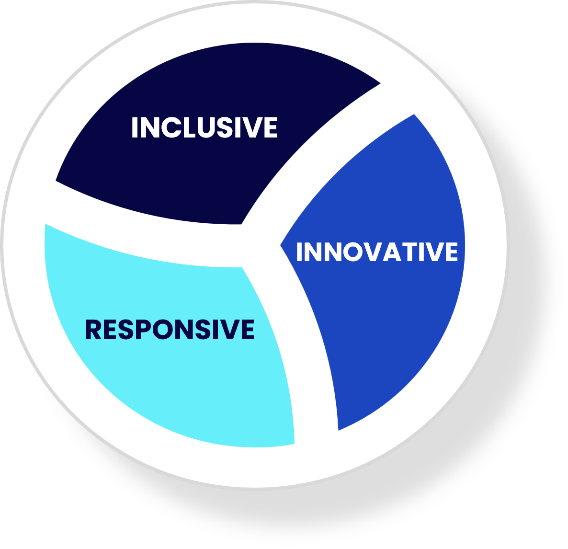
- Inclusive – We value diversity and foster a culture where everyone can belong, contribute, and succeed.
- Innovative – We recognise that new ideas flourish when different perspectives are welcomed and celebrated.
- Responsive – We listen actively, adapt thoughtfully and stay attuned, proactively shaping our response to changes in the EDI landscape and acting on the needs of all members of our diverse community.
We want everyone who works or studies with us to:
- feel that they belong at the OU
- be treated with dignity, fairness and respect
- be able to flourish and reach their potential, free from unlawful discrimination, harassment and victimisation
We work with a wide range of communities locally, nationally and internationally – students, schools and colleges, other universities, governments, employers and partner organisations. To honour these relationships and stay true to our mission, we must reflect, value and actively support the diversity of the communities we serve and hope to serve in future.
Historically, EDI work has often fallen on the shoulders of the most marginalised staff and students, with little recognition or reward. We are clear that:
"EDI is everyone’s responsibility, and we are all accountable for it."
Working towards a more equitable, diverse and inclusive OU benefits everyone. Real cultural change can only happen if EDI is seen as core work for the whole institution, not as something delegated to a single team or to particular groups.
The EDI Strategic Plan supports Theme 1: Creating societal impact, Theme 2: Supporting student success, and the People and Culture enabler within the 2027-2032 University Strategy. We will ensure that the actions within the Plan evolve, adapt and remain aligned with these strategic priorities, supporting their delivery over time.
1.3 Our legal duties
As a public body operating across the four nations of the UK, the OU has important statutory duties relating to equality and human rights.
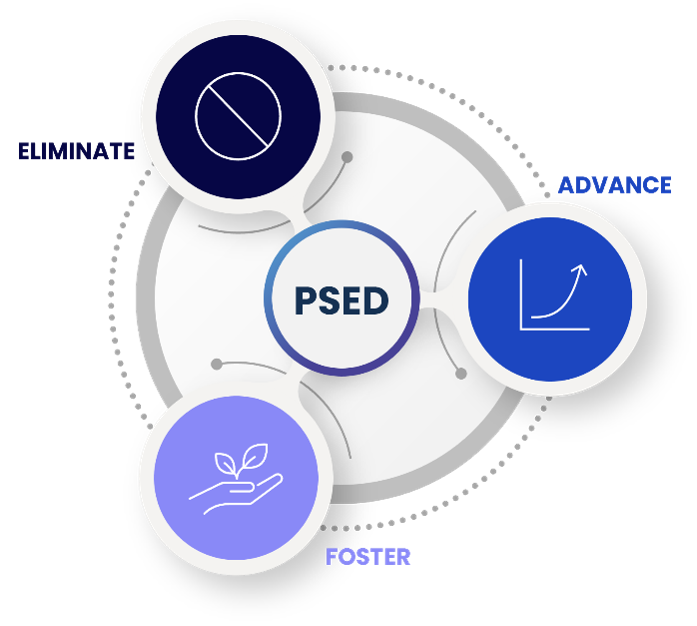
Under the Public Sector Equality Duty (PSED) in Section 149 of the Equality Act 2010, across England, Scotland and Wales, we must have due regard to:
- Eliminate discrimination, harassment, victimisation and any other conduct prohibited by the Act.
- Advance equality of opportunity between people who share a protected characteristic and those who do not.
- Foster good relations between people who share a protected characteristic and those who do not.
The nine protected characteristics identified in the Equality Act 2010 are age, disability, gender reassignment, marriage and civil partnership, pregnancy and maternity, race, religion or belief, sex, sexual orientation.
People with caring responsibilities can also experience discrimination because of their association with someone who has a protected characteristic, and this is also unlawful.
In Northern Ireland, we must also meet the requirements of Section 75 of the Northern Ireland Act 1998, which asks us to promote equality of opportunity between:
- persons of different religious belief, political opinion, racial group, age, marital status or sexual orientation
- men and women generally
- persons with a disability and persons without
- persons with dependants and persons without
Additionally, we must promote good relations between persons of different religious belief, political opinion or racial group.
The Access and Participation Plan (APP) is a legal requirement and a condition of registration with the England regulator, the Office for Students (OfS). As the OU benefits from a Higher Fee Income, the OfS requires the University to make a proportional financial commitment to support students from minoritised backgrounds in accessing higher education and achieving equitable outcomes.
Although the OfS is the regulatory body for higher education providers in England, as a four-nation institution, broader priorities for Access, Participation and Success (APS) are managed by teams in each of the nations. This institutional commitment is set out in the University’s Access and Participation Plan (APP, PDF version).
This EDI Strategic Plan shows how we will meet these legal duties by embedding EDI best practice and committing to the priorities of the Access and Participation Plan (APP) to inform the way we teach, support students, employ people, partner with others and manage our organisation.
1.4 PVC-EDI Office: who we are and how we work
The PVC-EDI Office is the University’s hub for equity, diversity and inclusion expertise. We turn OU-wide commitments into practical approaches that work across different parts of the institution. The Office is made up of two distinct but connected teams: the EDI Team and the APS (Access, Participation and Success) Team.
We do not “own” EDI. Instead, we enable the wider University to deliver EDI through their roles, decisions and local plans.
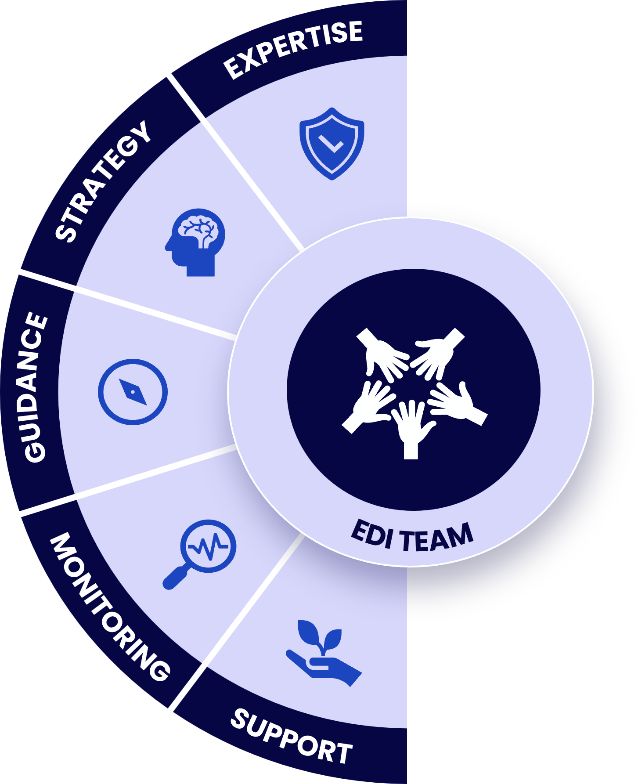
The EDI team does this by providing specialist expertise, strategic direction, practical guidance, monitoring and support. We:
- Help the institution and colleagues meet and embed their EDI responsibilities by providing specialist advice on legal duties and EDI best practice.
- Enable faculties, units and teams to turn EDI commitments into practical local action through strategic projects and action plans aligned with institutional strategy.
- Create tools, frameworks, guidance and learning that enable colleagues to embed EDI in their work and build an inclusive culture.
- Monitor and report on progress to strengthen accountability and inform improvement.
- Support and challenge the University to keep equity, diversity and inclusion central to decision-making.
The APS Team leads the delivery of the Access and Participation Plan (APP) through an evidence-informed approach focused on reducing inequity for APP-prioritised students. Working collaboratively across the OU, we support strategic, co-designed activity that drives forward change. We recognise that reducing inequity requires a whole-provider approach, and so we work beyond directly funded APP activity to influence wider institutional change. As the APS Team, we:
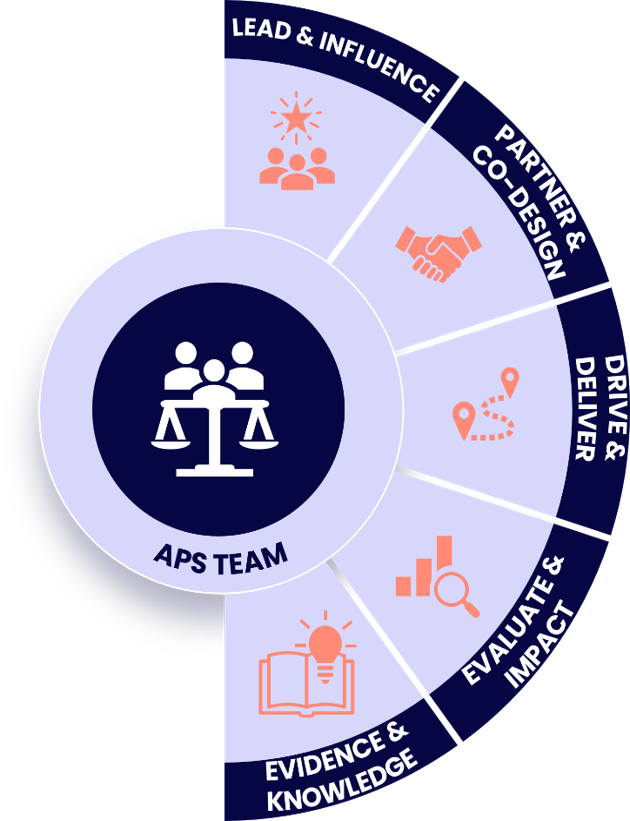
- Lead the implementation of the Access and Participation Plan (APP) by influencing institutional activity and funding strategic work designed to reduce structural inequity.
- Work in partnership with key collaborators, including our students, who are at the forefront of co-designed activity.
- Work together with faculties and units to drive forward the Plan, with a focus on reducing inequity for our APP-prioritised students: Black students, students who have shared they have mental health difficulties, and students residing in IMDQ1 areas.
- Ensure that a framework of evaluation with measurable outcomes underpins all activity and use evidence to learn, adapt and demonstrate impact.
- Build on sector and OU research and scholarship as well as the expertise and lived experience of staff and students to contribute to knowledge creation and lasting change.
The PVC-EDI Office works in partnership across the University. For example, we:
- collaborate with Faculties and Units, advising and supporting on local EDI actions that align with this Strategic Plan (e.g., APP, Athena Swan and Race Equality Charter action plans).
- work with Faculties and Units to integrate EDI and APP priorities into policies, processes and projects (e.g., by advising on projects and Equality Impact Assessments - EIAs).
- support and learn from Staff Networks, Trade Unions, Student Union and other representative groups, recognising the value of lived experience and expertise across the OU.
We carefully focus our time and expertise and aim to:
- prioritise work with significant legal, regulatory, risk or equity implications.
- focus on institution-wide policies, systems and projects that affect many staff and students.
- invest in tools and frameworks that others can reuse, rather than one-off requests.
- be clear when something is better owned locally, with light-touch advice or signposting from us.
Responsibility for EDI outcomes is shared across the University. This Strategic Plan assumes:
- People managers, tutors and all staff play a day-to-day role in creating inclusive environments and making fair decisions.
- Faculties and units are responsible for developing, resourcing and delivering local EDI action plans, with clear ownership and governance.
- The VCE, Senate, Council and senior leaders are accountable for modelling inclusive leadership.
There are also areas we do not lead on:
- We do not manage individual staff or student cases (such as grievances, complaints or conduct issues). These sit with the relevant people management or student support processes.
- We are not responsible for operational student support and related administrative processes. Student facing EDI developments requiring new processes, systems, evaluation and resourcing will require Academic Services capacity and expertise.
- We cannot attend or advise in depth on every local initiative, but we can often provide tools, light-touch input or signposting.
Being clear and transparent about these boundaries helps us manage expectations, stay focused on high-impact strategic work, avoid duplicating what other teams are better placed to do, and support colleagues to take ownership of EDI in their own areas.
For more information, please visit the EDI intranet page (internal only).
1.5 EDI governance
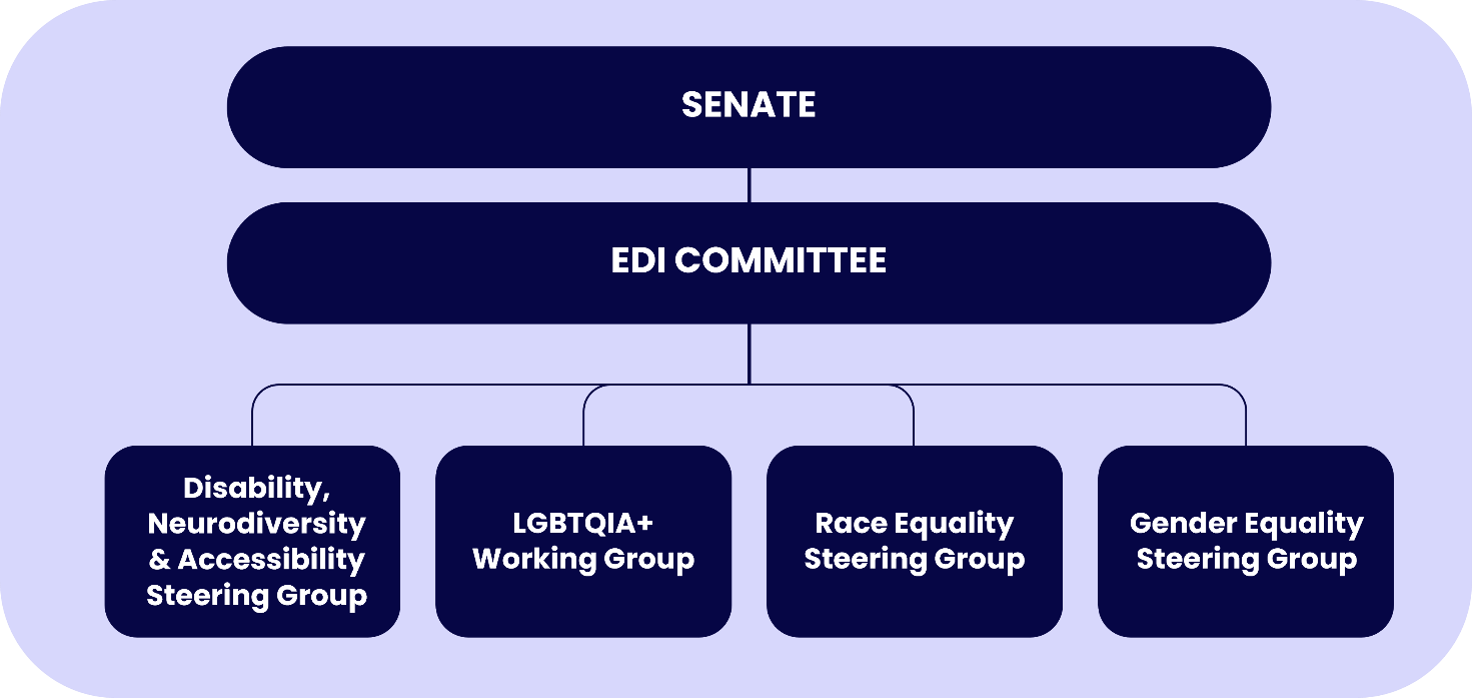
The image below illustrates the University’s current EDI governance structure. This structure is under review, in light of the wider institutional governance review and the expansion of the PVC-EDI Office.
Contact us
Equality, Diversity and Inclusion
The Open University
Walton Hall
Milton Keynes
MK7 6AA
Email [email protected]


Explore

Undergraduate
Postgraduate
Policy
-
Follow us on Social media
-


