
Cognitive impact of circadian misalignment experienced by UK police officers [Ref 4.04]
Academic team: Dr Emily Breese
Policing partners: N/A
Status: Complete
Shift working is becoming an increasingly common feature of 21st century employment. Working against the human circadian rhythm (the biological drive to be awake during the day and sleep at night) for extended shift cycles is thought to have effects on the brain, although many of the details remain to be determined.
In this project, we intend to evaluate if shift working behaviour can impact 4 well-defined aspects of cognitive performance. To isolate the effect of shift working specifically from the effects of fatigue accumulated through simply being at work, we will evaluate cognitive performance in people on a day off from work, after they have slept.
In this project each participant will answer a brief online questionnaire covering basic demographic and occupational information (e.g. age group, years of shift working), their recent shift work pattern and their recent sleep history. This phase will take approximately 10 minutes. Participants will also complete two online cognitive tests, similar to brain training exercises. This phase will take approximately 15-20 minutes. Access to the online assessment will be via a web link and participants will be required to create a unique ID to anonymise the data they provide.
This project intends to provide new insights into the effects of shift working on specific aspects of cognitive performance. It will enable direct comparison of the cognitive effects of different shift patterns and allow identification of the pattern(s) which best preserve performance. This could in turn lead to the development of better shift working practices which minimise any cognitive impact on employees.
Contact: Emily Breese [email protected]
Outputs
| Title | Outputs type | Lead academic | Year |
|---|---|---|---|
| Cognitive impacts of circadian misalignment and sleep disruption - shift working and new parenthood | PhD Thesis | Breese, E | 2021 |
News
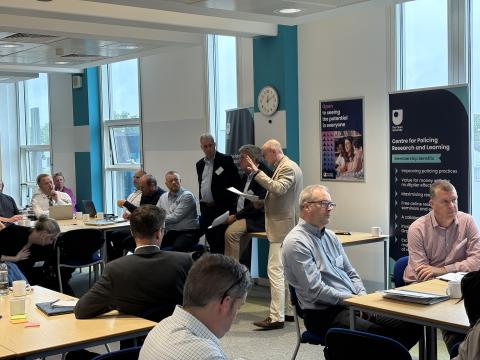
Blog post - Help shape the next chapter of CPRL
The future of policing will increasingly depend upon its ability to learn, innovate and collaborate.
- Blog post - From evidence to action: Convening partnerships to build more Inclusive Workplaces in policing
- Blog post - Building the next generation of football policing: Research, professional development and national learning
- From Conversation to Coordination: CPRL's Emerging Role in National Problem Solving


Explore

Undergraduate
Postgraduate
Policy
-
Follow us on Social media
-


