
Blog post - Evolving the CPRL Collaboratives: Connecting research, practice and national priorities
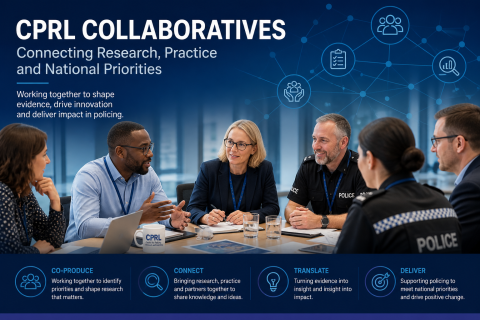
From October 2026, our Collaborative Research Seminar series will enter a new phase as part of the ongoing development of the Centre for Policing Research and Learning (CPRL). These Collaboratives will evolve over the summer alongside a refreshed governance structure, positioning them at the heart of how the Centre connects research, practice, and national policing priorities.
The Collaboratives will become the primary conduit for the dissemination of CPRL research outputs, including emerging findings and concluding insights from major programmes of work. They will also provide a structured yet open forum for engaging with research from across the wider academic and practitioner landscape - ensuring that CPRL remains outward-facing, connected, and responsive to the broader evidence base.
Critically, this next phase places a strong emphasis on co-production. Building on work started at January's Engagement Day, we will be working closely with force-level strategic leads and national policing stakeholders to identify priority areas for research and innovation. These priorities will be brought into the Collaboratives, where they can be collectively explored, refined, and developed into actionable programmes of knowledge production and exchange. In this way, the Collaboratives will not simply be a seminar series, but an active mechanism for shaping and delivering research that is aligned to operational need and national direction.
This development reflects CPRL’s wider strategic shift toward becoming a platform for nationally relevant, co-produced research at scale. The Collaboratives will support this ambition by creating a space where academics, practitioners, and partners can engage in sustained dialogue - testing ideas, sharing learning, and building the relationships necessary to deliver meaningful impact.
Alongside dissemination, the Collaboratives will also play a key role in knowledge transfer. By bringing together diverse perspectives, they will help translate research into practice, supporting policing organisations to adapt to an increasingly complex and rapidly changing environment. They will also provide opportunities to reflect on ongoing work, identify gaps in understanding, and generate new lines of inquiry that can inform future funding and collaboration.
As these developments take shape over the summer, further details on structure, themes, and participation will be shared. However, the core aim remains clear: to establish the Collaboratives as a central, dynamic component of CPRL’s mission - linking research excellence with real-world impact in policing.
If you are interested in contributing to or participating in the Collaboratives, either as a presenter or attendee, please reach out to your strategic lead or contact [email protected]

Upcoming Events
Membership Group Meeting
Thursday, October 15, 2026 - 10:30 to 12:30
Online, Microsoft Teams
Online seminar: TBC
Tuesday, November 10, 2026 - 13:00 to 14:30


Explore

Undergraduate
Postgraduate
Policy
-
Follow us on Social media
-


