
About
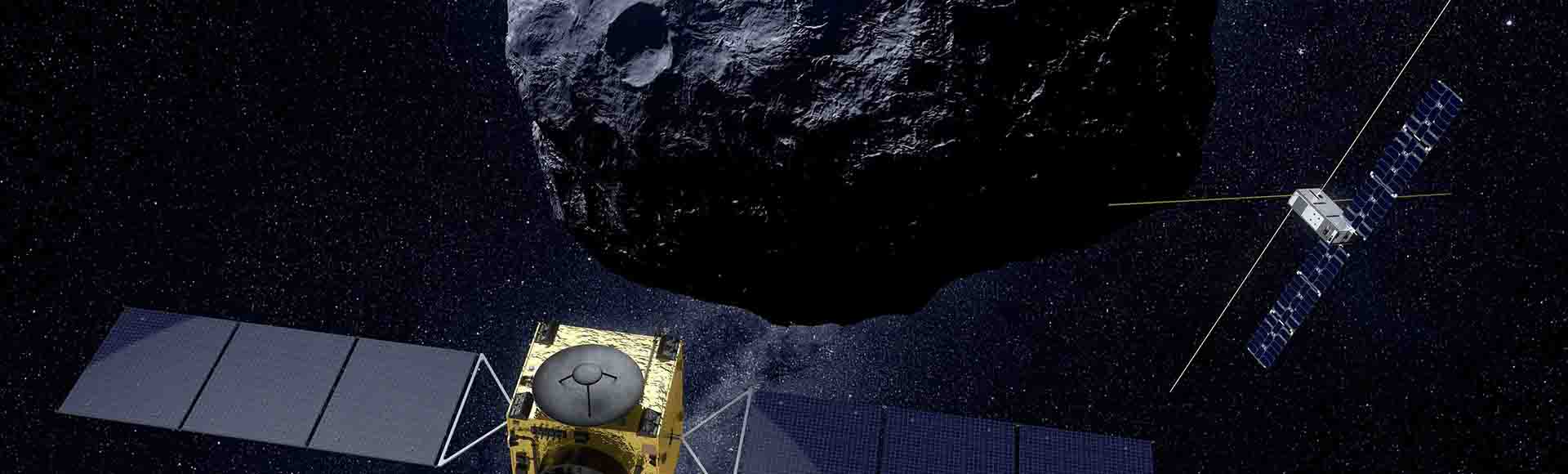
Understanding the surface mineralogy of asteroids is extremely important prior to both asteroid observation missions and especially sample-return missions, such as OSIRIS-REx and Hayabusa 2. While it may sound far-fetched, mining asteroids is of key interest to the wider world due to the abundance of resources (namely metal) on asteroids. NASA recently launched a probe to a metal-rich asteroid Psyche, with the aim of better characterization for future exploration and potentially, mining (NASA’s Psyche mission to a metal world may reveal the mysteries of Earth’s interior (theconversation.com)).
Therefore, comparing the spectral properties of asteroids and samples in a laboratory environment has the potential to better understand the mineralogy before spending millions on a space exploration mission. We address questions such as:
- What was the parent body of different meteorites?
- What material provides the best analog for asteroids?
- What was the distribution of melting in the Solar System?
Samples (<1 g) are crushed by hand using an agate mortar and pestle to produce homogenized powders with particle sizes < 50 µm.
Development of a Python script with Dr Samuel Jackson and international collaborations with Dr Eric MacLennan for further analysis of band structures is ongoing, allowing comparisons to asteroids and evaluating meteorite origins (Figure 1).
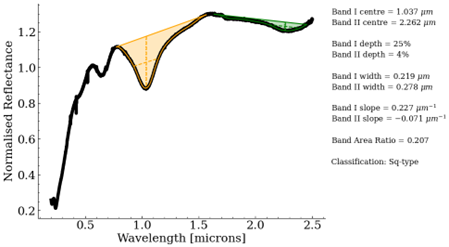
Figure 1: Processed spectrum with the measured band centre, depth, width, slope and band are ratios.
Get in touch
If you would like to discuss your research of potential projects, please contact


Explore

Undergraduate
Postgraduate
Policy
-
Follow us on Social media
-


