
Scotland’s rural youth bring green transition to life
 Author:
Dr Leslie Mabon is a Senior Lecturer in Environmental Systems at the OU.
The Open University's (OU) Mock COP events are empowering Scotland’s rural young people to shape a fairer, greener future, says Dr Leslie Mabon, OU Senior Lecturer in Environmental Systems.
Look across Scottish Government climate change policies, and you’ll see repeated reference to ‘a just transition’ – ensuring the shift from polluting industries to greener ones is fair.
Ten years ago, a just transition conjured up images of retraining workers in the North Sea oil and gas sector. Since then, the term has taken on a much wider meaning; responding to climate change in a way that does not reinforce inequalities or create new ones across Scotland’s society.
Common pressures in more rural areas
Nowhere is this wider need better encapsulated than in Scotland’s rural and island communities.
Scotland isn’t simply made up of giant concrete jungles and pristine wilderness, with nothing in-between. Many smaller towns sit along the rural-urban continuum, depending on their location and connectivity.
In general, Scotland’s more rural areas experience common pressures.
Livelihoods dependent on natural resources, for example farming, fishing and aquaculture, face stricter environmental regulations.
Rural and island communities are hit first and hardest by more extreme climate impacts such as storms, floods and wildfires.
These challenges are compounded by ageing transport infrastructure, global price shocks, and demographic change. Responding effectively, while remaining sensitive to local needs, requires a skilled workforce now and in the future.
Bodies such as Skills Development Scotland recognise that the ‘green jobs’ needed for Scotland’s just transition are as much about planning, environmental management and community organisation, as putting up wind turbines and installing heat pumps.
OU schools' programme
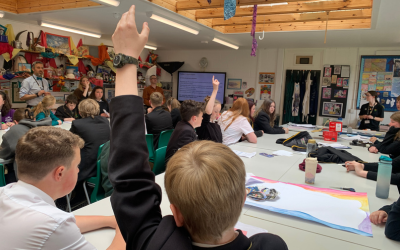
Focusing on less urbanised regions, Mock COP gathers pupils from a breadth of schools in one room, for a day of dialogue and debate that simulates annual United Nations’ Climate Change negotiations.”
This is where the Mock COP programme, which The Open University in Scotland has been running over the last few years with local organisations – and which I'm very proud to be a part of – comes in.
Focusing on less urbanised regions, the Mock COP gathers around 50 pupils from a breadth of schools in one room, for a day of dialogue and debate that simulates the annual United Nations’ Climate Change Conference of the Parties (COP) negotiations.
Each school represents a different country or organisation, and is given a briefing at the outset of what they want to achieve by the end of the day.
Across multiple rounds of negotiations, the pupils come to a consensus on a set of resolutions relating to reducing emissions, adapting to climate change, and the financing arrangements to make it all happen.
Over the last four years, we’ve based the Mock COP in Scotland’s less central places – initially Inverness in the Highlands, expanding to Dumfries in South West Scotland – and brought in schools from the surroundings.
This year, we’re also running a Mock COP in the westerly Isle of Tiree in the Inner Hebrides, on 4 June 2026. Tiree illustrates very well why getting the just transition right is vital to sustaining livelihoods in Scotland.
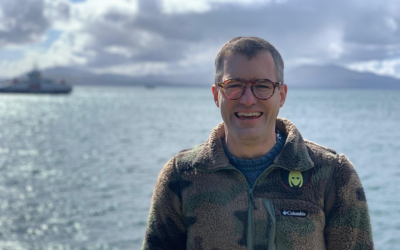
A combination of ageing ferries, stormier seas and sharply rising petrol and diesel costs left island businesses hanging by a thread earlier this year.
For the past few years, I’ve been working with the Tiree Community Development Trust on community-led approaches to adapting to climate change.
Thanks to support from the Ecological Citizens Network+ we’ve been able to upscale this work; a Mock COP at Tiree High School is part of this.
Vital skill sets
As someone who researches environmental policy and governance and has been to an actual COP, what I enjoy most about the Mock COPs is seeing how the pupils get into their roles during the day.
Political bargaining, deal-making, briefings to the students acting as news reporters – all of this happens at the ‘real-life’ climate negotiations too.
As well as learning about what international climate negotiations are and what they can (and can’t) achieve, the Mock COPs are a great opportunity for young people in some of Scotland’s less urbanised places to build capabilities in collaboration, collectively exploring complex situations, and negotiating outcomes.
Whether it’s in local government, small-to-medium-sized enterprises, or in community organisations, these skill sets are vital to making a just transition happen in Scotland’s rural and island communities.
The OU in Scotland offers support and opportunities for schools and educators across Scotland, including through our Young Applicants in Schools Scheme for S6 pupils to study a university-level module.
We also offer a wide range of Sustainability and Environment courses and qualifications, including free courses and learning resources.
This article was also published by The Herald and its affiliate news sites.
4 June 2026
News
New approach to grow support for tree planting
A free tool for planners and community groups has been published by researchers.
New investment to create Fife skills partnerships
A three-year programme will create clearer routes from Fife College to degree-level Open University study.
Media contacts
Media enquiries
OU in Scotland Media Relations:
Call 0131 549 7932
OU UK Press Office:
Call 01908 654316
Out-of-hours:
07901 515 891
Visit our OU UK news site
Newsletter
Sign up for our quarterly e-newsletter, Open Outlook.


Explore

Undergraduate
Postgraduate
Policy
-
Follow us on Social media
-


