eSTEeM

Centre for Scholarship and Innovation
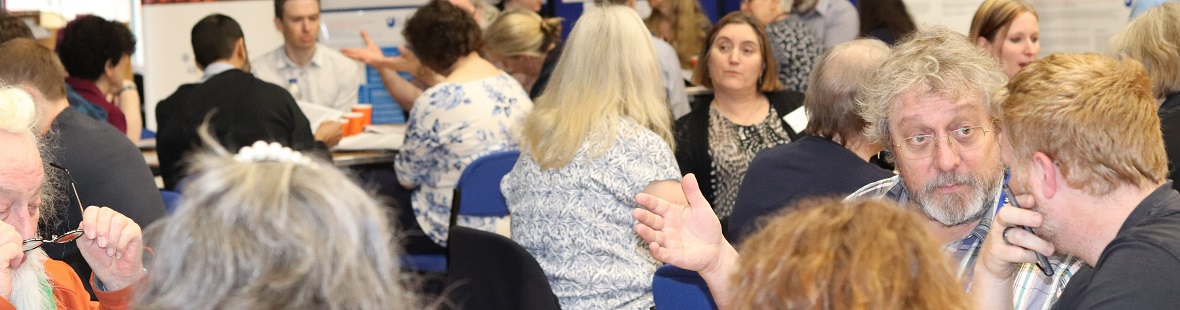
Conference delegates working in groups

Projects

eSTEeM is providing a mechanism for professional development through practice-based scholarship within a mentored community. Much of our work is organised on a project basis with project management aimed at the delivery of new educational outcomes and scholarship outputs. 

eSTEeM supports a rolling portfolio of approx. 80 active scholarship projects under a number of themes which include:

  • Access, Participation and Success
  • Innovative assessment
  • Online/onscreen STEM practice
  • Supporting students
  • Technologies for STEM learning

To learn more about our projects, please click on the project titles or use the search feature below by entering keywords. To search by the name of a project leader, please use the 'Filter by Project Leader' tab on the right-hand side of this page.

Search results

138 results found

Sally Jordan Jonathan Nylk Becca Whitehead

The project seeks to extend earlier investigations into the factors that enable students to do themselves justice in remote online exams in physics and related subjects, by encouraging them to attempt the exam in the first place and to complete a reasonable number of questions to an appropriate l

to

Silvia Varagnolo Zahra Golrokhi

The aim of this project is to improve students’ engagement with maths exercise through the gamification of existing practice quizzes. The specific context is T192 (the first module in the Engineering Qualification) which already features weekly maths practice quizzes.

to

Rupesh Shah

The STEM-ByALs-ForALs programme was set up in 2015, initially just for Science ALs to help build community cohesion and offer a way for science ALs to share good practice. The programme has been running successfully for 9 years, and has adapted to changing circumstances.

to

Jake Hilliard

The purpose of this project is to explore students’ emotion regulation practices while studying online. Specifically, this study will investigate how and why students manage their own emotions, as well as examine whether they try to influence their peers' emotions in these learning settings.

to

Sam Johnson

Self-efficacy is an individual’s belief that they can successfully complete a particular task. Self-efficacy has been shown to be strongly predictive of performance and retention. Current studies are largely cross-sectional and do not explore how self-efficacy changes throughout a module.

to

Diane Butler Soraya Kouadri Mostéfaoui Jimena Gorfinkiel Mark McJury

The study adopts a qualitative approach to determine academics’ experiences and perceptions of the Professorial Promotions process (PB1 only) within the Faculty of STEM, Open University.

to

Elizabeth Shakespeare Anthony Short

Student retention and continuation are key drivers for this project. They are also key focus areas for the University.

to

Fiona Aiken Iris Verhagen Chris Hutton

With ever increasing focus on the need to support progression in our diverse student body, we are seeking to identify the most important skills gaps that present challenges to students on environmental and Earth science modules in EEES as they move from stage 1 to stage 2 and from stage 2 to stag

to

Sarah Daniell Fiona Moorman Katie Acutt

Students currently have little continuity of contact with their allocated tutors on the different modules throughout their qualification. Currently student retention on Q71 Health Sciences is concerning.

to

Emma Dewberry Vera Hale

This project aligns with current developments in the Open University to explore the relationship between Sustainability goals, curriculum design and opportunities for progressing employability outcomes.

to