
The Global Literature, Technology and Infrastructure Research Group
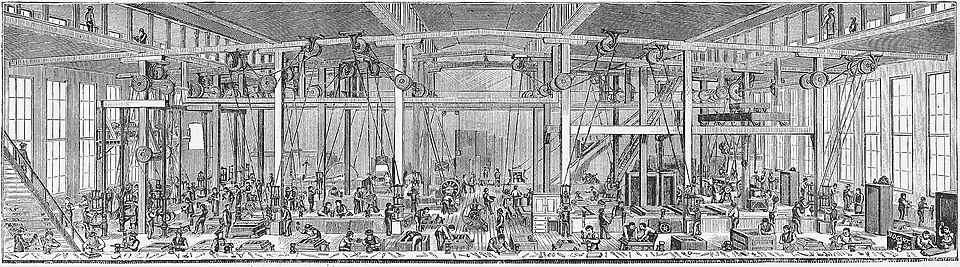
The interdisciplinary Global Literature, Technology and Infrastructure (GLTI) research group is based in the English & Creative Writing Department, The Open University, UK. It explores the enduring, manifold relationships and mediations of literature with diverse infrastructural systems and technologies.
- The GLTI group has an international literary scope: recognising the centrality of infrastructure and technology to the rise of global colonial and commercial systems, international politics, anti-colonial and populist ethno/nationalisms and to the Anthropocene and climate crisis. As such, it develops on, and advances beyond, the work of its predecessor, the Postcolonial and Global Literatures Research group, attending to literature and technology/infrastructure in relation to histories of neo/colonial expansion and anti-colonial or insurgent struggle.
- The group treats infrastructural and technological developments as integral to literary themes and forms in all periods: from ancient concepts of techne and divisions of labour to industrialisation, digital systems and AI. The group thus explores the reflection of infrastructure and technology in literary themes and forms from early civilisations to the present: in evocations of transport, architecture, war, energy usage, data science and communication. The group works, necessarily, across disciplines to illuminate the intersection of infrastructure, technology and literary culture.
- The group also explores infrastructures and technologies as the material frameworks for literary production, circulation and reception: in writing equipment, press technologies, text reconstruction and preservation, and modes of reproduction; in forms of global publishing, distribution, retailing, publicity and archiving; and in facilitating commentary and criticism and systems of collation, comparison, translation. Of interest also are procedures that enable the gatekeeping of literary institutions: surveillance, market control and pedagogic design.
- The group responds directly to literature as it mediates or is grounded in current technologically driven social dilemmas/anticipations: in fears of techno-determinism and populism, in population management and global pandemics, in its impact on identity-based interests, environmental depredation, migration and new collective fears and anxieties circulated and weaponised through social media.
Researchers in the group thus recognise the centrality of infrastructure and technology to present-day political landscapes and conflicts, especially where these bear on representational forms of truth-telling, narrative accountability, environmental sustainability, and human cultural production and creativity.

Top image credit: Hallsafe, CC BY-SA 4.0, via Wikimedia Commons
Bottom image credit: Geni, CC BY-SA 4.0, via Wikimedia Commons


Explore

Undergraduate
Postgraduate
Policy
-
Follow us on Social media
-


