

My visit to Florence McClure Women’s Correctional Center (September 2025)
The moment you drive through the gates of Florence McClure Women’s Correctional Center on the outskirts of Las Vegas, you are being watched. Within minutes, a very polite but firm correctional officer approached me in a large van, asking why I was taking photographs of the outside of the facility.
I wasn’t a journalist or a tourist. I was there as an Open University PhD student, volunteering with Return Strong, a Nevada nonprofit advocating for the rights of incarcerated people. I have been part of this organisation since 2021, and on 22 September 2025 we were granted access to tour the facility.
I have visited several men’s prisons in Nevada, including Warm Springs Correctional Center in Carson City (now closed), Lovelock Correctional Center in the north, and Southern Desert Correctional Center in Las Vegas, but this was the first time visiting the women’s prison. I also have many friends who were formerly, or are currently, held by the Nevada Department of Corrections. All of Nevada’s prisons are bleak. But the conditions in which women are kept are harder to put into words.

The entrance of Florence McClure Women’s Correctional Center
Not a prison abolitionist, but…
Ten years ago, if you had asked me whether prisoner’s rights mattered, I probably would have shrugged: They broke the law, who cares? Today, I know better. We should all care. Because what happens inside those walls does not stay there.
Most of the men and women incarcerated in Nevada (and in most other states and countries) will return to our communities. To me, two questions need to be asked:
- Will they return broken or rebuilt?
- Should they have been there in the first place?
As an aspiring academic, I often feel an implicit expectation to adopt a prison‑abolitionist stance. I don’t. I believe there is a place for prison in society, and that public safety matters. Nevada reinforces this belief loudly: its governor is a former sheriff of Clark County, and a short walk through the centres of Reno or Las Vegas reveals the scale of the state’s drug crisis. In the underground flood channels of Las Vegas, I am told the situation is even more severe.
Compared to the U.S. average, Nevada’s violent crime rate in 2024 was 11.9% higher, and its property crime rate was 24.8% higher. I understand why residents are concerned. I understand why they elected a Republican leader who promised to try and make their lives, and their children’s lives, ‘safer’.
Had I started my PhD in my early twenties and not later in my life, I suspect I would have approached my studies with a more naïve worldview. Over the past few years, my perspective has shifted, from a left‑leaning, ultra‑progressive stance to a more balanced, centrist position that actively seeks to understand competing viewpoints. That change did not happen overnight; it came from genuinely listening to people across society (and from receiving a few ‘reality slaps’ of my own along the way…)
That is why I feel confident asking the question: is prison truly the best place for everyone it currently holds? And answering it with an unequivocal ‘absolutely not’.
Nevada’s ‘tough on crime’ approach focuses overwhelmingly on incarceration, but most of those currently imprisoned will return to society at some point. Nevada’s prison system is not rehabilitating people in the way it could, or the way it should. Locking a woman up is not the end of her story; it is merely one step in a much longer process. Without meaningful rehabilitation, incarceration does not secure long‑term safety for anyone.
Who prison is really for
Yes, women can, and do, commit horrific crimes. As a PhD student, I have had countless conversations with my supervisors about which women I can ethically include in my research. I will admit that a minority of the crimes perpetrated by women in Nevada are so disturbing that engagement would risk my own wellbeing.
But a significant proportion of women incarcerated at Florence McClure Women’s Correctional Center and Jean Conservation Camp are there because of addiction, untreated mental illness, and long histories of trauma, abuse and intimate partner violence. These are women who were failed by systems that should have supported, protected, and helped them long before they ever entered a courtroom. All but one of the 79 women who returned their surveys to me in the first round of my data collection reported having experienced intimate partner violence (I sent 847 surveys in total).
Instead, they become numbers in a database, figures used by politicians to declare success in ‘reducing crime’. What is often really happening is far less triumphant: women are separated from their children, denied meaningful support, and quietly written off.
Camilla*, a mother of nine, told me she was ‘turned down for having too many children’ when she sought help from local domestic‑violence services, leaving her unable to escape the circumstances that later led to her incarceration.
Sharon* told me she feels safer in prison than she ever did on the streets. After years of intimate partner violence, prison became her refuge. When I asked whether she planned to appeal her sentence, she said no. ‘Being here right now is what’s keeping me alive. I feel safe.’
I was stunned.
How is it possible that a woman could be failed so completely that a prison would become her sanctuary?
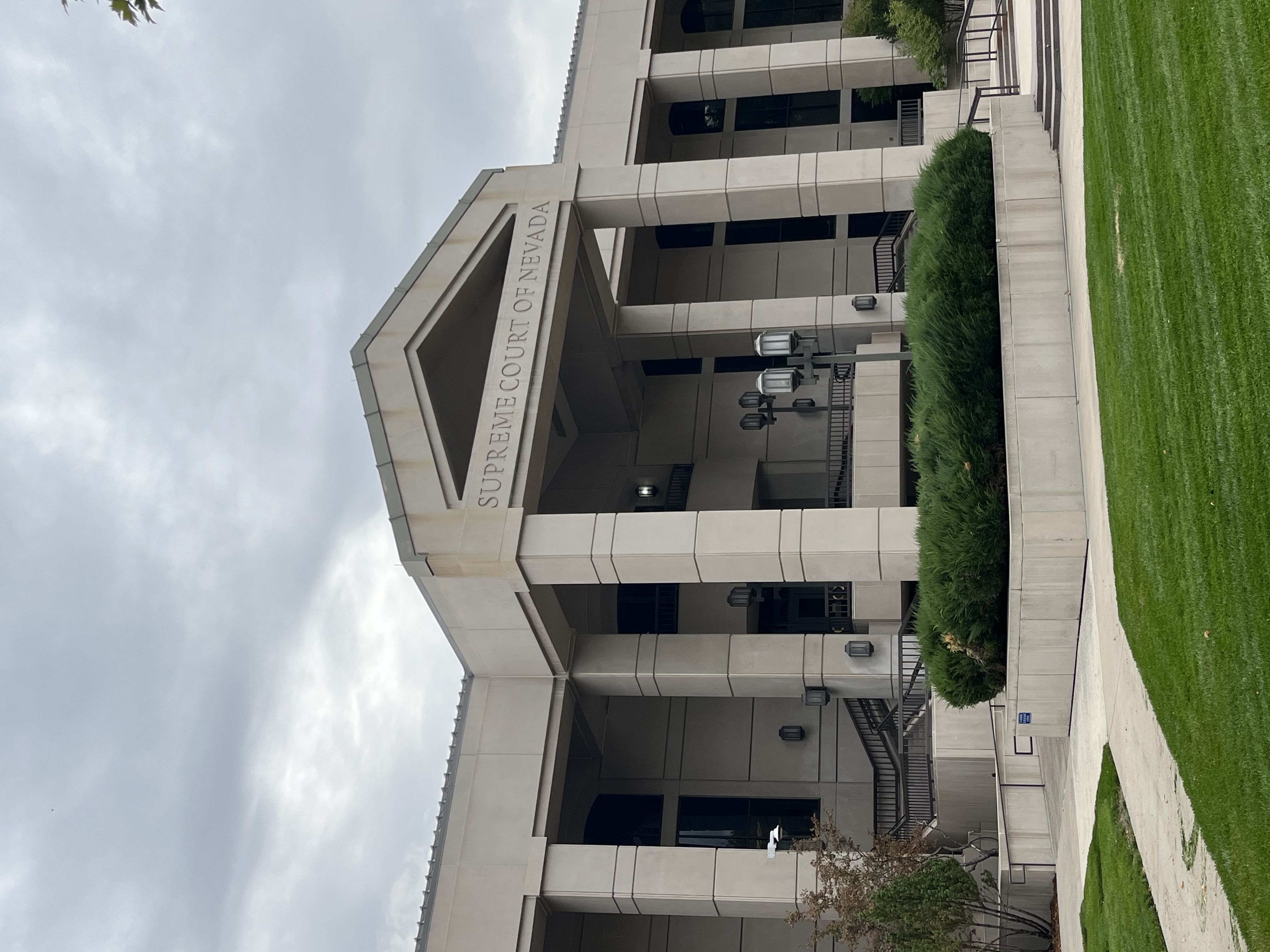
The Supreme Court of Nevada
What we choose not to see
One question continues to replay in my mind: how is it that in a place where women are monitored every second, so few are truly seen, as human beings, as mothers, daughters, and sisters?
How do we compel policymakers to recognise the pathways that lead women to prison, and to invest in interventions that could divert them long before incarceration becomes inevitable? And how do we move away from the dangerous fiction that incarceration alone creates a safer society?
Why it matters
When we ignore these stories, we ignore their ripple effects. Rehabilitation is not only about the individual; it is about families, communities, and public safety. It is about the 188 children who were carried and birthed by the women who engaged in the first round of my data collection. When people are released without support, without treatment for trauma or addiction, we set them up to fail. And when they fail, society pays the price.
As I drove away from the facility, I carried more questions than answers. But one truth felt undeniable: visibility matters. Seeing these women not as ‘inmates’, but as people, changes everything. It changes policy. It changes priorities. And, if we allow it, it changes us.
You can watch Heidi’s research video here and also download the Mental Health and Wellbeing Toolkit she co-designed for her research participants.
*Names have been changed to protect privacy.


Explore

Undergraduate
Postgraduate
Policy
-
Follow us on Social media
-


