

The limits of national security and foreign policy orthodoxy: Labour’s challenge to UK policy under Jeremy Corbyn

["Operation Temperer deployment" by Defence Images is licensed under CC BY-NC-ND 2.0.]
It is often said that the security of the people is the primary and most important responsibility of government. But it’s not always so clear what this ‘security’ means. Often, what ‘national security’ means is taken for granted, underpinned by a political consensus, and an assumed societal consensus. The ‘orthodoxy’ of what national security can and should be is often unchallenged.
But what happens when this political consensus is challenged? And what do these moments of contestation tell us about the politics of national security?
In our recent article, we explored this contestation through the experiences of one of the most interesting political moments in recent years for the UK: the leadership of the Labour party by Jeremy Corbyn.
We argue that the Corbyn experience is important to understand for what it reveals about the operation of policy orthodoxies. More specifically, we analyse the case study through a neo-Gramscian lens, arguing that there exists a ‘common-sense’ approach to national security and foreign policy in the UK, that is often taken for granted and only becomes audible and explicit when it is threatened.
["Rt Hon Jeremy Corbyn, Leader of the Labour Party, UK" by Chatham House, London is licensed under CC BY-NC-ND 2.0.]
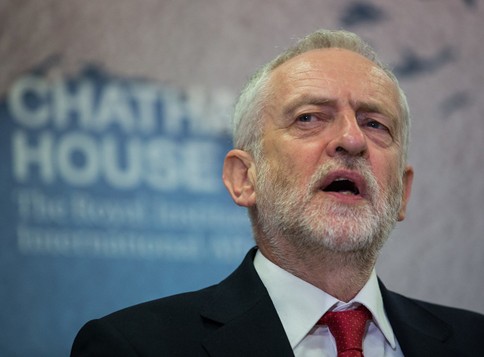
We were fortunate to be able to interview Jeremy Corbyn, as well as senior members of his international policy team. Through these conversations, it became clear that the leadership team were advancing policies on national security and foreign policy that they knew would challenge the status quo. Yet, the responses they received surprised even them.
In particular, we identify four areas in which the Corbyn leadership diverged from conventional thinking on national security and foreign policy:
1. Corbyn’s longstanding opposition to military intervention, resulting in his criticism of the Iraq War and the UK’s wider counter-terrorism strategy.
2. Scepticism of the UK’s relationship with the US and NATO and criticism of NATO’s role in the post-Cold War world. This came to the fore with the poisonings of Sergei and Yulia Skripal in Salisbury in the UK by Russian agents.
3. Criticism of UK relationships with countries accused of human rights violations, alongside the argument that the UK should cease selling arms to such states, notably Saudi Arabia.
4. Corbyn’s principled opposition to nuclear weapons and life-long support for disarmament, which informed his scepticism of the need for a like-for-like replacement of the UK’s Trident nuclear weapon system.
These positions were part of a broader approach to national security set out by the Labour Party under Corbyn that was rooted in the internationalist left and privileged human rights, economic justice, anti-militarism, and the climate crisis.
In advocating for an alternative security politics, the team often found themselves under sustained pressure. Yet, while the orthodox approach to national security was often intuitive for those who defended it, it was also seen to require significant work to produce and maintain. Indeed, a wide range of actors were seen to engage materially and discursively in producing and reproducing a hegemonic security orthodoxy. As one interviewee remarked: “is there a basic consensus in parliament on foreign policy: absolutely yes. You go through the [parliamentary] All-Party Groups; you go through the defence establishment; you go through the parliamentary armed forces group; and you go through the very close relationship between the arms industry, BAE systems and other parliamentary lobbying, you realise the powers that are at work”.
Through the research, we identified five ‘veto-players’ who were understood as important in sustaining the status quo and contesting challenges to the national security and foreign policy orthodoxy. I will briefly outline these five groups, before drawing out some of the key conclusions of the research.
Trade unions
Trade unions were identified as veto-players on military procurement policies that used their power as party donors to defend military industry jobs. This was experienced as significant push back on issues such as the renewal of Trident, the UK’s nuclear weapon system and critiques of the UK’s arms trade. When Corbyn argued for the suspension of UK arms sales to Saudi Arabia, for instance, one interviewee told us this prompted a “huge argument at parliamentary committee”, with “lots of arguments brought up about jobs” that would be lost if arms sales were reduced.
The National Security establishment
For those at the heart of the Corbyn team, a key source of pushback was from what we might term a national security establishment. This brings together both the economic interests of the arms industry with military, security and civil service elites.
Members of the national security establishment made exceptional attacks on the Corbyn team. Military elites frequently and publicly challenged Corbyn, for example when a serving army general went to the press to state that Corbyn would face a mutiny of the armed forces if elected prime minister.
The Parliamentary Labour Party (PLP)
Opposition to Corbyn’s national security agenda also came from inside the Labour Party itself, including from many Labour MPs.
A key example is the case of the poisoning of Sergei and Yulia Skripal in Salisbury on 4 March 2018. Sergei Skripal, a former Russian military officer and intelligence double agent, was targeted by the Russian state with a Novichok nerve agent. In the aftermath of the poisoning, the Labour leadership asked for evidence of Russian involvement and thus appeared to equivocate by failing to adequately and immediately condemn the Russian state. This response was derided by Labour MPs who made clear that they sided with Conservative Prime Minister Theresa May.
The media
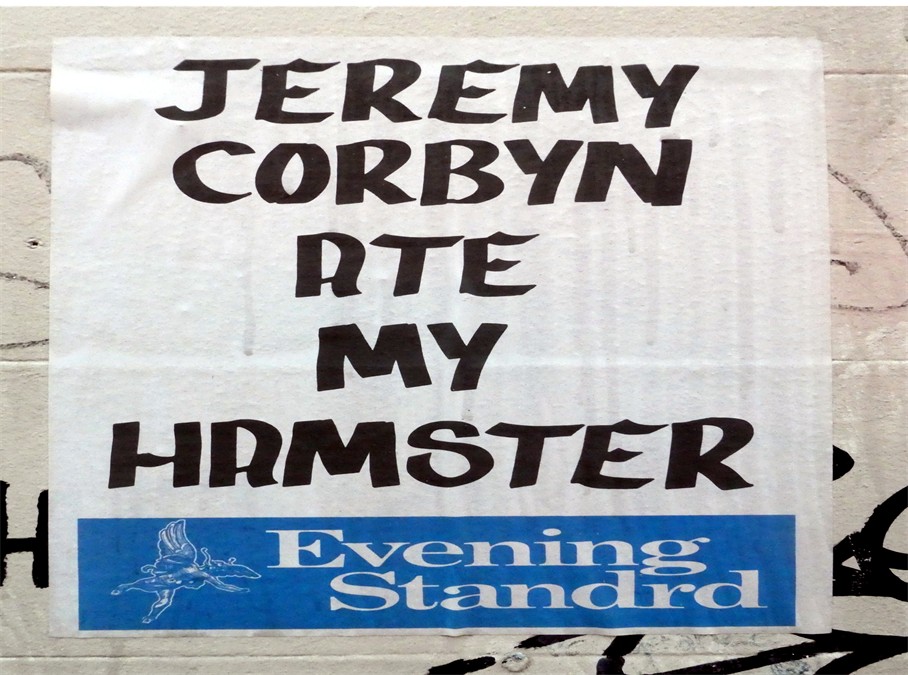
The UK print and television media were also understood as significant veto-players who were generally antipathetic towards Corbyn. This was evidenced by their support for the security orthodoxy, the exploitation of divisions on security policy in the Labour party, and a media discourse that framed Corbyn as unpatriotic and undermining of British values.
Media framings of national security were experienced as critical and hostile. Our research participants understood this to be inextricably linked to the institutional practices of mainstream media where “reporting is dominated by the agenda of mainstream defence establishment” and the “BBC doesn’t try for balance on reporting on foreign policy as it does for domestic issues” underpinned by a “cosy cohabitation” between the media and MPs, especially those journalists in the parliamentary lobby.
The electorate
The media as a veto-player was particularly important because of the contradictory way in which the electorate was understood by our interviewees. On the one hand, it was felt that the public, or at least significant portions of the public, took a different view on key issues to that of the foreign policy and national security orthodoxy. Interviewees argued that when Corbyn’s foreign policies were tested with the public they found broad agreement.
Yet, seemingly in contradiction, Corbyn’s views on foreign policy were often framed as a potential electoral liability. There was a fear of being perceived as ‘weak’ on national security by the electorate, and consequently a fear of transgressing the consensus.
To explain this, we have to go beyond specific policy positions and look instead to the ways in which these positions are framed. There is an important ideational content to the hegemonic national security and foreign policy consensus, one that often is not concerned with policy detail, but with values that privilege ‘strength’ and normalise militarism, nationalism and aggressiveness, and an identity framing centred on patriotism and Britishness.
["Jeremy Corbyn ate my hamster" by duncan is licensed under CC BY-NC 2.0.]
In conclusion, we feel this case study is important because it reveals the boundaries and limits of the UK’s national security policy orthodoxy precisely because it transgressed them.
The implication of this consensus is that national security is rarely subject to political debate that incorporates a diversity of viewpoints because of cross-party agreement on what constitutes the parameters of a ‘normal’ or ‘acceptable’ UK national security and foreign policy.
This raises fundamental questions about democratic decision-making in this policy area. As one of our interviewees put it: “The bipartisan agreement on foreign policy leads to a breakdown of democratic discourse”. Moreover, “if the main opposition party and the governing party are both in agreement on a bipartisan basis on all the key issues of national security policy, then you could carry on with a kind of state policy, and the issue of public opinion becomes a thing of how do you manage public opinion […] rather than being any kind of determinant of what that policy is”.
The dynamics identified in the article speak to the challenges of articulating alternative approaches to national security. This is especially pertinent to political parties and other key actors of the political ‘left’, which often contain ideological currents opposed to the dominant international security order.
Here, we have demonstrated some of the structural and practical challenges and opportunities for broadening the debate on security and foreign policy. We hope this study can open up an important space for assessing the possibilities of policy change at a time of major transnational security challenges.
You can read the full article at: ‘The limits of national security and foreign policy orthodoxy: Labour’s challenge to UK policy under Jeremy Corbyn’.


Explore

Undergraduate
Postgraduate
Policy
-
Follow us on Social media
-


