

Open Justice Week 2026
Open Justice Week 2026
The Open Justice Centre is pleased to present our ninth annual e-festival of public legal education.
During this week, running from 13th to 17th July 2026, we will be presenting legal education activities which have been written and presented by students of the W360 Justice in Action module and other law students.
Family Law Clinic

During 25-26 the Family Law Clinic again provided students with a number of different opportunities to provide legal advice and information to members of the public about family law. We had 42 students who were divided into nine ‘firms’, and after an initial training case they were allocated clients from either LawWorks or Suffolk Law Centre.
The Family Law Clinic saw 34 members of the public with a variety of family law queries including divorce, separation, child arrangements, financial settlements and domestic abuse. This was 50% increase on the numbers of live client queries we answered last year.
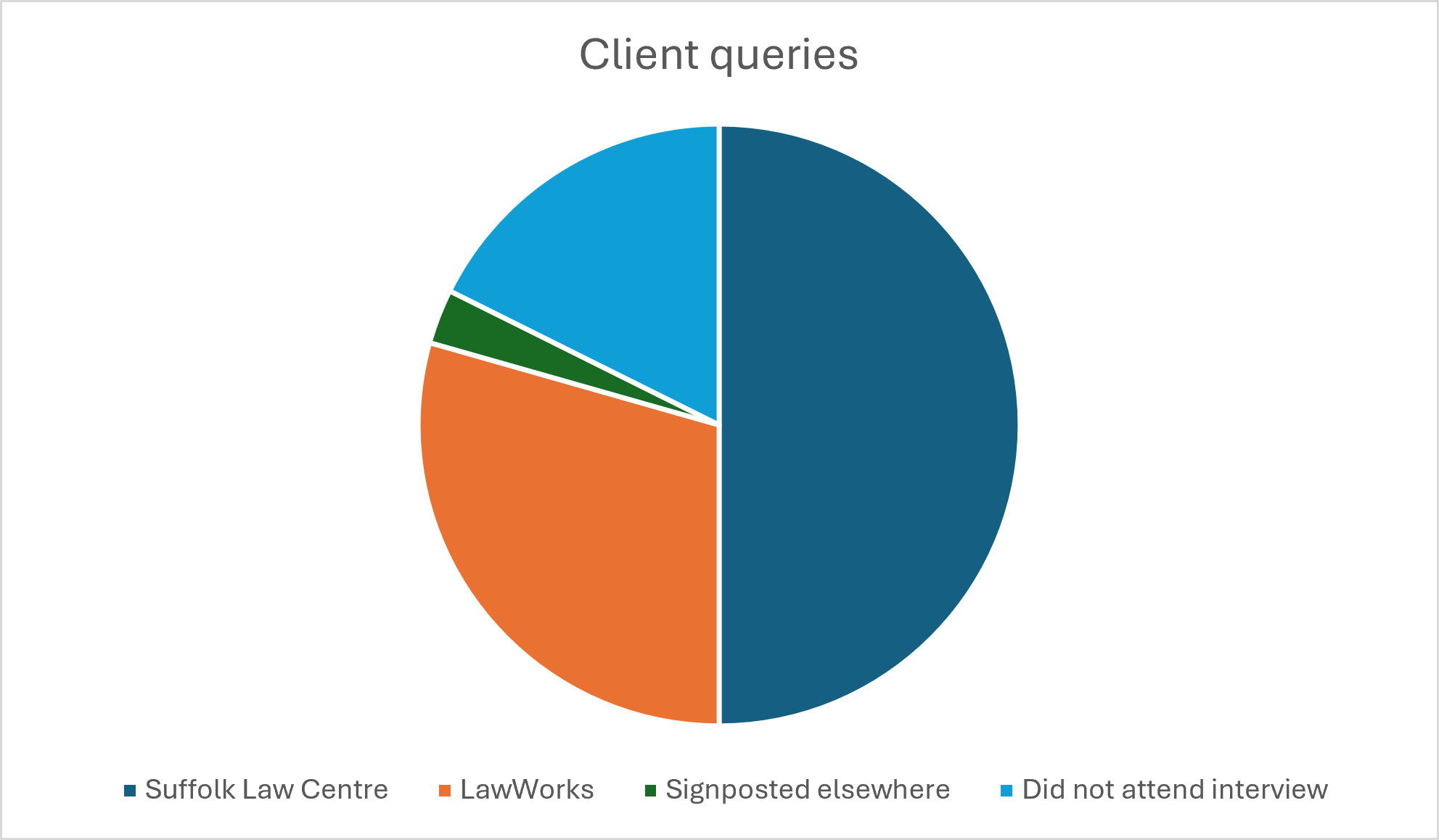
We provided letters of advice to 17 clients from Suffolk Law Centre, ten clients from LawWorks / AnyAnswers website and signposted one client elsewhere for advice. The remaining six clients did not attend the arranged interview.
One student worked on an individual project and drafted a leaflet explaining the recently introduced transparency rules in the family courts, where journalists and authorised bloggers can attend and report on family court proceedings involving disputes over children’s upbringing. This leaflet has been sent to LawWorks for parents and families involved in such proceedings, so they can understand the rules and their rights in the process. You can access the leaflet here.
Eight students who worked in the Family Law Clinic were nominated for inclusion in the Student Clinical Legal Education Recognition List (CLERL) for having spent over 25 hours in pro bono work on the project.
The Vicarious Trauma Project

The Vicarious Trauma project aimed to give students an opportunity to to work on their legal professional practice skills by researching, designing and producing a resource for different parts of the legal profession and criminal justice sector.
The Vicarious Trauma project enabled students to consider the wellbeing of those involved in the legal profession by researching and designing resources to be used to assist various groups with information about vicarious trauma. They designed and developed various materials that assisted with both with knowledge and skills.
The resources that were designed were diverse and will assist various parts of the legal profession going forward. For example one group designed and recorded a podcast and another a video, as well as an app and website to support legal professionals together with training resources and materials to support them. All of this was designed for students to be able to view the legal profession through a different lens.
You can view the video 'Elliot's Story' produced by Jasper Lowrey-Gold, Jordan Young and Joanne Ord below.
The Employment Law Clinic

The Employment Law Clinic (ELC) during 2025/2026 offered students on W360 the opportunity to support the work of the Pan-Lancashire Anti-Slavery Partnership (PLASP). PLASP is a collaboration of organizations working to combat modern slavery and human trafficking in Lancashire and beyond. One of PLASP’s main workstreams is around prevention of exploitation. PLASP are keen, among other things, to improve knowledge of employment rights among young people, as research by, for example, the Equality Trust, has shown that this group are particularly vulnerable to exploitation resulting from lack of knowledge of their employment rights. The overall aim of the ELC Project was for the W360 students to provide PLASP with carefully researched and designed session plans and teaching materials around relevant areas of employment law that could be used by schoolteachers to deliver workshops to secondary school students in years 10 and above (aged 15-18).
The ELC Project began with a briefing in November 2025 by members of the Project Team and a representative of PLASP on the nature and purpose of the Project. Following this, under the supervision of the Project Team, students worked in groups, researching areas of employment law identified by the Project Team. Each group was instructed to draw on their research to design session plans for hour long workshops. For these purposes, they were encouraged to develop interactive activities and resources, employing multi-media, to ensure that the relevant topics were communicated and explored in an engaging and accessible format that would appeal to the target demographic. This provided W360 students with the opportunity not only to develop their knowledge of employment law but to enhance various employability skills, notably research, communication, organisational, teamwork and design skills. Working to a specified timetable, this work was completed in two phases, allowing the students to rotate roles and gain understanding of different areas of law.
The students embraced the opportunities offered by the Project and the resources they produced have already been favourably reviewed by the Project Team, with further feedback to come from representatives of PLASP. The objective is to then pilot use of these resources in schools in Lancashire with which PLASP has connections.

Contact us
Get in touch with the Open Justice Team


Explore

Undergraduate
Postgraduate
Policy
-
Follow us on Social media
-


