
.jpg)
Seminar - Under Pressure: Global Value Chains, Structural Asymmetries and the Political Economy of Industrial Policy
Abstract
Engaging global value chains (GVCs) strategically through industrial policy was and remain central to the experience of late and late-late industrialisers. Despite structural asymmetries, several countries managed to 'break into' the global economy by 'linking up' into GVCs and global markets. A smaller number succeeded in increasing domestic value addition by 'linking back' into the domestic economy; countries that managed to 'keep pace' with technological change are even fewer. South Korea first and China later are the only two countries who acquired global technological leadership in a few sectors and 'compete for innovation'. Today most low and middle-income countries look at these successful experiences of structural transformation and try to replicate their industrial policy while facing enormous pressure. The seminar will discuss why among these countries industrial policies often fail to drive structural transformation and how to overcome such challenges in a fast-changing economic order. First, it will stress the need to broaden the scope for industrial policy and shift the focus from 'standard industrial policy forms' to 'industrial policy functions'. Second, it will highlight the importance of understanding how powerful players - both domestic and international - affect industrial policy design and its functional performance at the implementation and enforcement stages. Third, it will reflect on how large corporations are using their power to shape global markets and industries and, in doing so, end up constraining industrial policy. Insights from field-research, sectoral studies and policy engagement will be used to highlight these industrial policy dynamics, with a particular emphasis on countries in the Southern African region and key sectors and technologies for the green transition.
Speakers
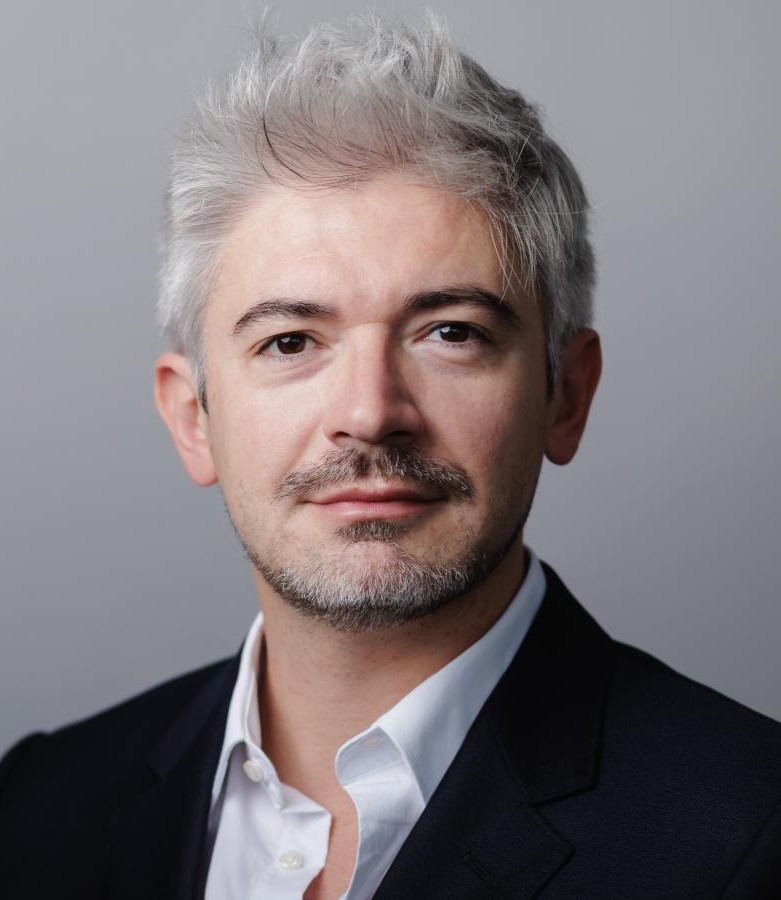
Antonio Andreoni is Professor of Development Economics at the Department of Economics of SOAS University of London and Co-Director of the SOAS Centre for Sustainable Structural Transformation (CSST). Antonio has published extensively on industrial development and policy and conducted extensive fieldwork in Southern and Eastern Africa. For over 15 years he has advised international organisations and governments. Antonio is a Member of the South African Presidential Economic Advisory Council (PEAC).
Discussant
Prof Reena das Nair is the Executive Director of the Centre for Competition, Regulation and Economic Development (CCRED), Associate Professor and Programme Coordinator in the Master of Commerce in Competition and Economic Regulation degree (School of Economics), University of Johannesburg.

Share this page:
Monthly Event Archive
- May 2026 (2)
- April 2026 (1)
- March 2026 (1)
- February 2026 (1)
- January 2026 (1)
- June 2025 (1)
Contact us
To find out more about our work, or to discuss a potential project, please contact:
International Development Research Office
Faculty of Arts and Social Sciences
The Open University
Walton Hall
Milton Keynes
MK7 6AA
United Kingdom
T: +44 (0)1908 858502
E: [email protected]


Explore

Undergraduate
Postgraduate
Policy
-
Follow us on Social media
-


