
Blog post - Help shape the next chapter of CPRL
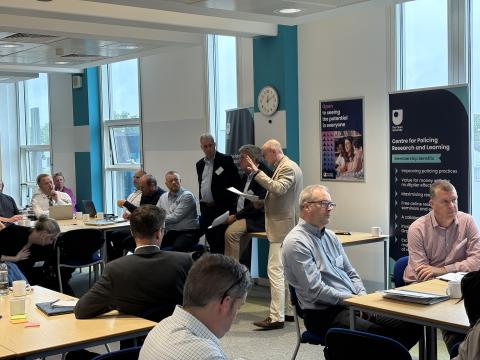
The future of policing will increasingly depend upon its ability to learn, innovate and collaborate.
Rapid advances in technology, evolving patterns of crime and vulnerability, rising public expectations, workforce challenges and increasing organisational complexity are reshaping the environment in which policing operates. Meeting these challenges will require more than operational excellence alone. It will require organisations capable of bringing together research, professional expertise and practical experience to generate new knowledge and translate it into meaningful improvements in policing.
For more than a decade, the Centre for Policing Research and Learning (CPRL) has contributed to that endeavour. As one of the United Kingdom's pioneering policing research centres, CPRL has developed a national and international reputation for research that has informed policing policy, operational practice and professional development.
Today, CPRL is entering an exciting new phase of renewal.
Building on its distinguished history, the Centre has developed an ambitious strategy to strengthen its role as a national partnership for research, innovation and capability-building. Our ambition is not simply to undertake excellent research. It is to connect local operational challenges with shared national priorities, convene expertise from across policing, academia, government and industry, and translate evidence into practical improvements that strengthen policing as a whole.
The issues facing policing increasingly extend beyond the boundaries of any single organisation or discipline. Artificial intelligence, digital transformation, organisational leadership, workforce development, public trust, vulnerability, violence against women and girls, cybercrime, prevention, neighbourhood policing and public order all require collaboration between practitioners, researchers and partners from a wide range of professional backgrounds. CPRL exists to help create those partnerships by supporting policing through research, innovation and collaboration.
Delivering this ambition requires leadership that extends beyond the University itself. It requires senior leaders from across policing - both police officers and senior police staff - who are committed to helping shape the Centre's future and, through it, contribute to the future development of policing.
Building national leadership
To support this next phase of development, CPRL is establishing a strengthened Executive Group, led by an elected Chair.
This reflects our belief that delivering an ambitious national strategy requires a broad leadership team with complementary expertise, experience and perspectives. Alongside the Chair, Executive Group members will work collectively to help shape the Centre's strategic direction, identify emerging priorities, strengthen partnerships, champion innovation and support programmes of research, knowledge exchange and professional learning.
We are deliberately seeking people whose experience reflects the breadth and complexity of modern policing. We welcome applications from senior leaders across UK policing, including serving and retired senior police officers and senior police staff. We are looking for expertise spanning organisational leadership, digital transformation, technology, public protection, neighbourhood policing, public order, workforce development, performance, prevention and other specialist disciplines. Applicants will normally hold, or have previously held, the rank of Superintendent or above, or an equivalent senior police staff role. However, we recognise that strategic leadership and the ability to make a significant contribution are not defined solely by rank, and we welcome applications from individuals who can demonstrate the experience, expertise and leadership required to fulfil the role.
We are equally committed to building an Executive Group that reflects the diversity of modern policing. We recognise that the strongest leadership is built by bringing together people with different professional experiences, backgrounds, lived experiences and perspectives. We therefore encourage applications from individuals whose experiences and perspectives have historically been under-represented within senior leadership, alongside those who have followed more traditional leadership pathways. Diversity is not simply a matter of representation; it strengthens decision-making, challenges established assumptions and creates the conditions for stronger partnerships and more innovative solutions. By building an Executive Group that better reflects both policing and the communities it serves, CPRL will be better placed to identify emerging challenges, develop research and innovation that delivers meaningful impact, and support policing through research, innovation and partnership.
These are active leadership roles rather than honorary appointments. Executive Group members will contribute to the Centre's strategic direction, help shape priorities, participate actively in Executive Group meetings, champion CPRL within their own organisations and professional networks, and support the development of new partnerships and opportunities.
The formal commitment is modest, comprising approximately four Executive Group meetings each year together with occasional involvement in strategic initiatives and Centre activities. However, we are looking for leaders who have the time, organisational support and personal commitment to engage actively throughout their term of office. We encourage applications from individuals who can make a sustained contribution to the Centre's future and from organisations willing to support that commitment.
An opportunity to make a national contribution
Executive Group membership is an unpaid voluntary appointment. In return, it offers significant opportunities for strategic influence, professional development, national networking and leadership exposure across policing and academia.
Members will work alongside senior policing leaders, leading researchers and strategic partners to shape programmes of research and innovation addressing some of the most significant challenges facing policing today. They will influence research priorities, contribute to national conversations, foster new partnerships and help translate evidence into practical improvements that benefit policing across the United Kingdom.
For ambitious leaders, this is an opportunity to extend their influence beyond their own organisation, develop a distinctive national leadership portfolio and make a lasting contribution to the future of policing through research, innovation and partnership.
Who can apply?
Applications are welcomed from senior leaders across policing, whether or not their organisation is currently a CPRL member.
We believe the strongest leadership comes from attracting the best people, wherever they serve. Applicants from organisations that are not currently CPRL members are therefore warmly encouraged to apply. Where an applicant is successful, their organisation will be invited to join CPRL before the appointment is confirmed, enabling them to participate fully in the Centre's governance and strategic leadership.
How to apply
We have deliberately designed the application process to be straightforward and proportionate. Applicants are invited to submit a supporting statement of no more than two sides of A4 outlining:
why they wish to join the Executive Group;
the knowledge, skills and experience they would bring to the role; and
how they believe they can contribute to CPRL's future development.
Applications should be submitted electronically by Friday 4 September.
Further information about the Executive Group, the Chair role and the application process can be found in the accompanying recruitment pack.
We'd be happy to talk
We recognise that prospective applicants may wish to discuss the opportunity before applying.
If you are considering an application or would simply like to learn more about the Executive Group and how it supports CPRL's ambitions, we would be delighted to have an informal conversation with you.
Please feel free to contact Professor Clifford Stott (Academic Director), ACC Nick Caveney (Chair), ACC (Retired) Dr Iain Raphael (External Strategic Lead) or Anita Aldridge (Project Manager) to explore the role, ask questions and discuss how you or your organisation could contribute to CPRL's future development whether directly or via our central email address [email protected]
CPRL has a proud history and an ambitious vision for the future.
If you share our commitment to supporting policing through research, innovation and partnership, we encourage you to apply and become part of the next chapter in the Centre's development. Together, we can help build the capability, partnerships and evidence that policing will need for the future.
Upcoming Events
Membership Group Meeting
Thursday, October 15, 2026 - 10:30 to 12:30
Online, Microsoft Teams
Online seminar: TBC
Tuesday, November 10, 2026 - 13:00 to 14:30


Explore

Undergraduate
Postgraduate
Policy
-
Follow us on Social media
-


