
Franco Gracco
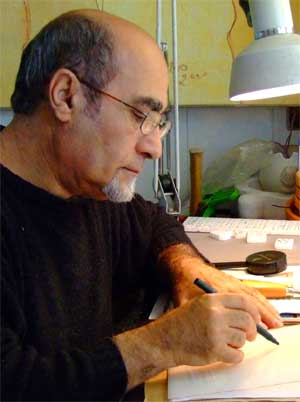
Franco Gracco was born in 1945 in Pinerolo (Turin). He moved with his family to Pompeii as a child and grew up in the shadow of Vesuvius and the ancient ruins. His artistic language is rooted in the techniques and styles of ancient Roman frescoes, and his work reinterprets classical motifs through the lens of Christian spirituality and the local Vesuvian landscape. Over the course of his long career he has exhibited in Milan, London, New York, Tokyo and beyond, while remaining deeply tied to Pompeii, where he founded an art school in 1974 and later established the Gracco Museum of Contemporary Art and Photography. His studio-gallery near the Villa of the Mysteries exhibits both his own works and those of other contemporary artists who share an interest in the dialogue between antiquity and modernity.
This interview with Jessica Hughes was recorded in December 2024 at the Museo Gracco, Pompeii.
JH: Thank you very much for inviting me to your studio and home. We are very close to the archaeological site of Pompeii – just a stone’s throw from the Villa of the Mysteries. What was it like, growing up practically inside the excavations?
FG: When I was a child, I used to go into the excavations and wander around, copying the frescoes that the custodians there would show to me. One of the custodians, Don Salvatore, was something of a philosopher, and he used to explain the hidden meanings of these images to me. There was one fresco in particular that has stayed in my memory all these years, which showed a mountain covered in trees and vineyards, and a valley full of fruit trees, with birds flying around the sky. I’ve never found it again since that time, but Don Salvatore’s interpretation has stayed in my memory. He told me that it was evidence of a lost golden age here in Pompeii — a season of happiness, when these lands flourished in harmony with the volcano. In his story, this golden age was followed by a time of violence, when the people living here discovered fire – they took fire from Vesuvius – and made weapons, and started killing each other. He made all this up, of course! But when I was a child, it helped me to understand that there is a spiritual reality behind the material world, and his words have stayed close to me.
JH: I’m very interested in how your work mixes ancient Greek and Roman myths and images with Christian spirituality. I first came across your work when I was doing research in the Catholic shrine of Pompeii [the shrine of the Blessed Virgin of the Rosary, in the new town of Pompeii, on the other side of the ancient city from the Museo Gracco]. When I was looking around the corridors of ex voto paintings, I came across your large narrative painting which tells the life-story of Bartolo Longo, the founder of the shrine, in thirteen panels. Please could you tell me how you came to paint that?
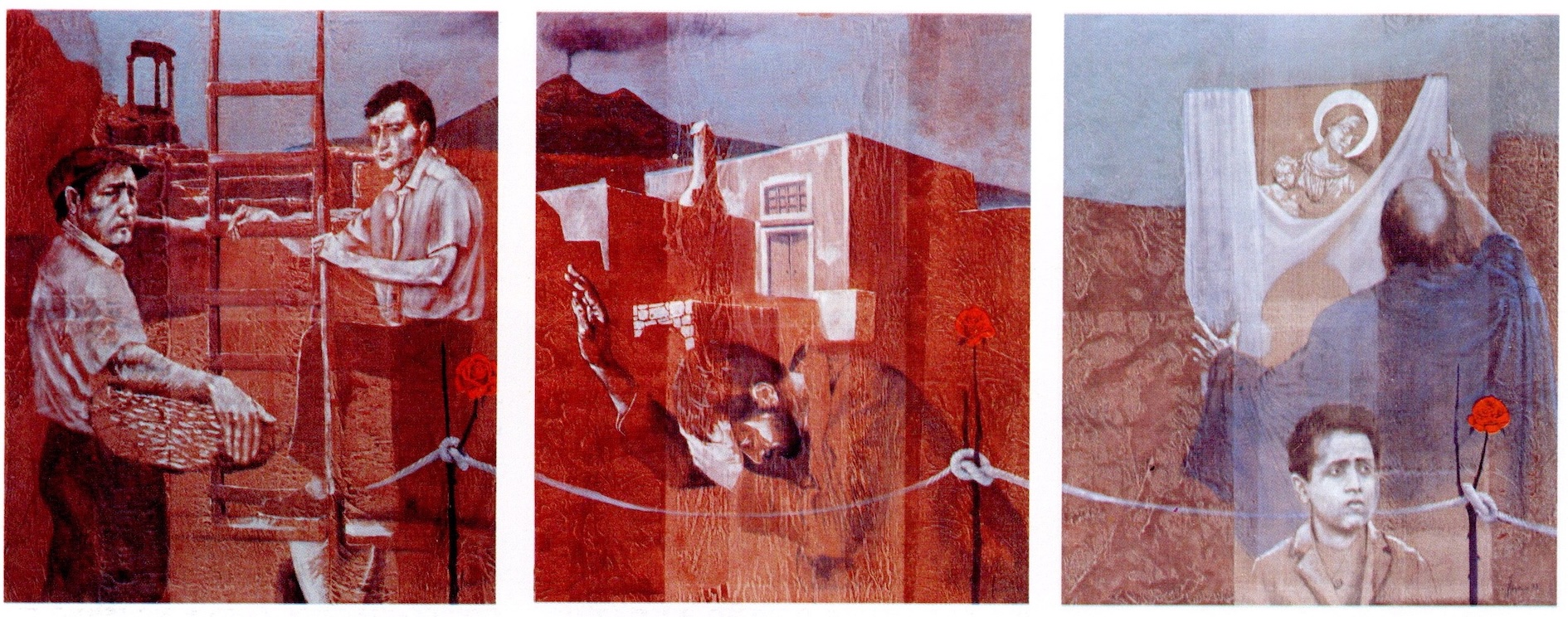
FG: This work was commissioned by the shrine of Our Lady of Pompeii to mark the 125th anniversary of the shrine’s foundation (in 1875). I was delighted to accept this commission, because I’ve always considered Bartolo Longo to be an important figure. He was a man who was blessed by God, but he also understood his era and its social history. He came from an Enlightenment culture, which sought to understand things through careful analysis. And the sum of his experiences led him to this important project – founding the Catholic shrine in Pompeii.
He brought a painting of Our Lady of the Rosary to Pompeii, and there were many accounts of miracles. But the true miracle was that he managed to build a whole city from nothing: there was nothing here beforehand—just a scattering of little houses—not even a village. He drew people from all over the world around this mission of charity, of help, of care for other human beings, for one’s neighbour. That is the message we enact in our own lives: to open ourselves to others and welcome them. That is the message he understood from his experience and wanted to transmit.
JH: This painted frieze is fascinating to me, because it intertwines the two different sides of the city of Pompeii – the ancient site, and the modern town of Pompeii with the Catholic shrine at its centre. The first panel of the frieze shows workers at the archaeological site – this would presumably have been during the early 1870s, just before the shrine was built – and they are carrying baskets of earth, and one of them is stepping onto a ladder, which seems quite a natural part of the scenography here. But now, looking around your studio and the permanent exhibition of your work here, I realise that the ladder is a motif that recurs across a lot of your paintings?
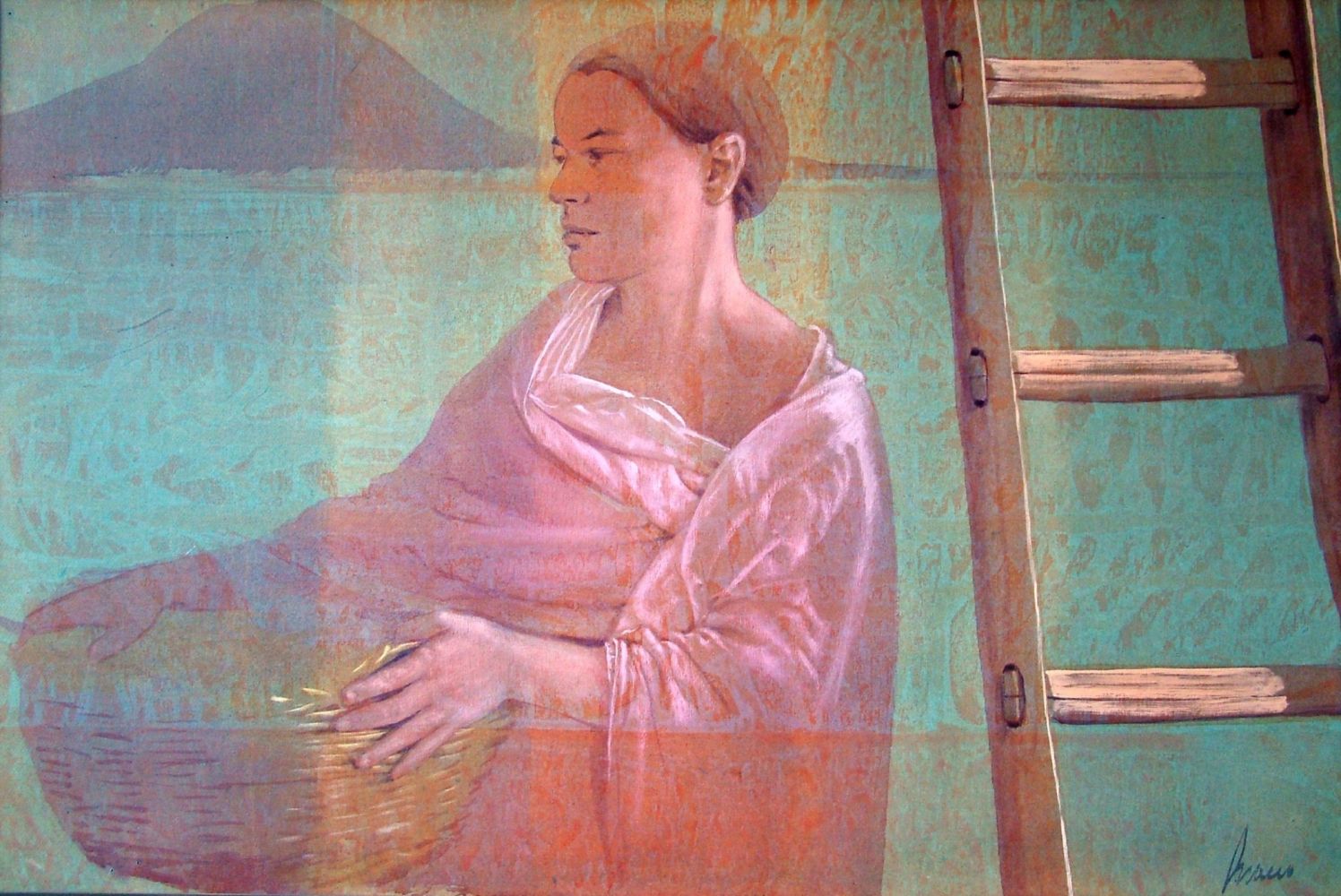
FG: Yes, that’s right, the ladder is a recurring motif in my work. It represents a desire for spiritual ascent, but also cultural ascent. It’s a sign of humanity’s aspiration towards the knowledge of divinity.
The ancients understood that human beings are limited, and that they depend on something greater — the divine, God. Yet the Greeks and Romans divided this power between many gods, each with authority over a particular domain. When St Paul was in Corinth — working with Aquila and Priscilla at their trade of tent-making — he was able to speak so effectively because he understood the philosophy and the ancient culture of that city. He could speak in a way that was immediately understood by the people there, and in the other Greek cities. And he said they were to take off the old self with its practices and clothe yourselves with the new self. This is an idea which provided inspiration for some of my paintings that you see on display here.
JH: Your work is suffused with these ideas and influences drawn from Christianity, while the visual language – the style and technique – is deliberately evocative of older Roman painting. I noticed that outside the studio, in the beautiful garden (which looks like a Pompeian fresco itself!) that you have a collection of ancient pigments, brushes and measuring tools.
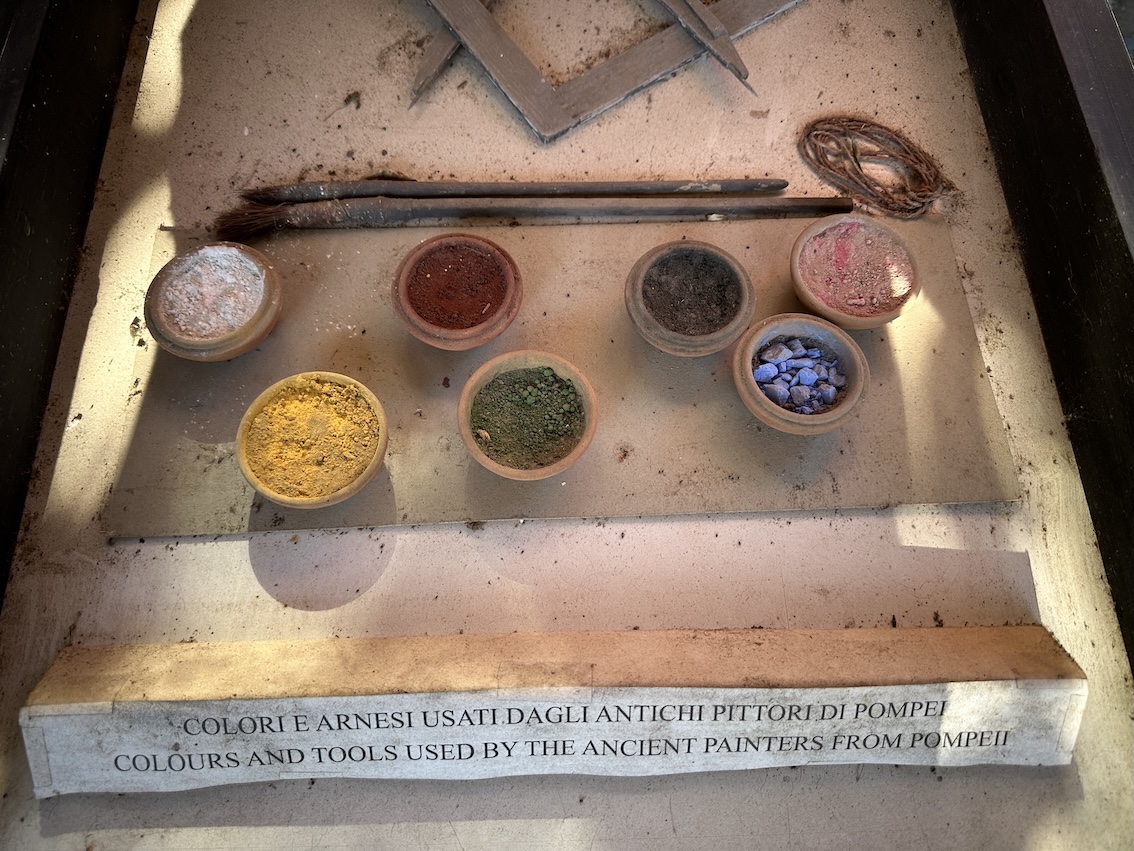
FG: Yes, we’ve made a small exhibit with replicas of the colours that the ancients used— and these are the same colours I work with. They are created using an ancient technique with minerals from the time, and which are connected to daily life and experience.
We’ve used these colours to recreate frescoes from the ancient site. Next to the display of tools, visitors can see a reconstructed fresco of Theseus that was lost shortly after its excavation. This fresco was destroyed, like many others, because the excavators left the paintings exposed to the air after they were unearthed, and they were ruined by the sun and rain. We were able to reconstruct this fresco because some French scholars in the 1800s arranged for a watercolour copy to be made, and this copy was preserved. So from that watercolour, we managed to recreate the fresco.
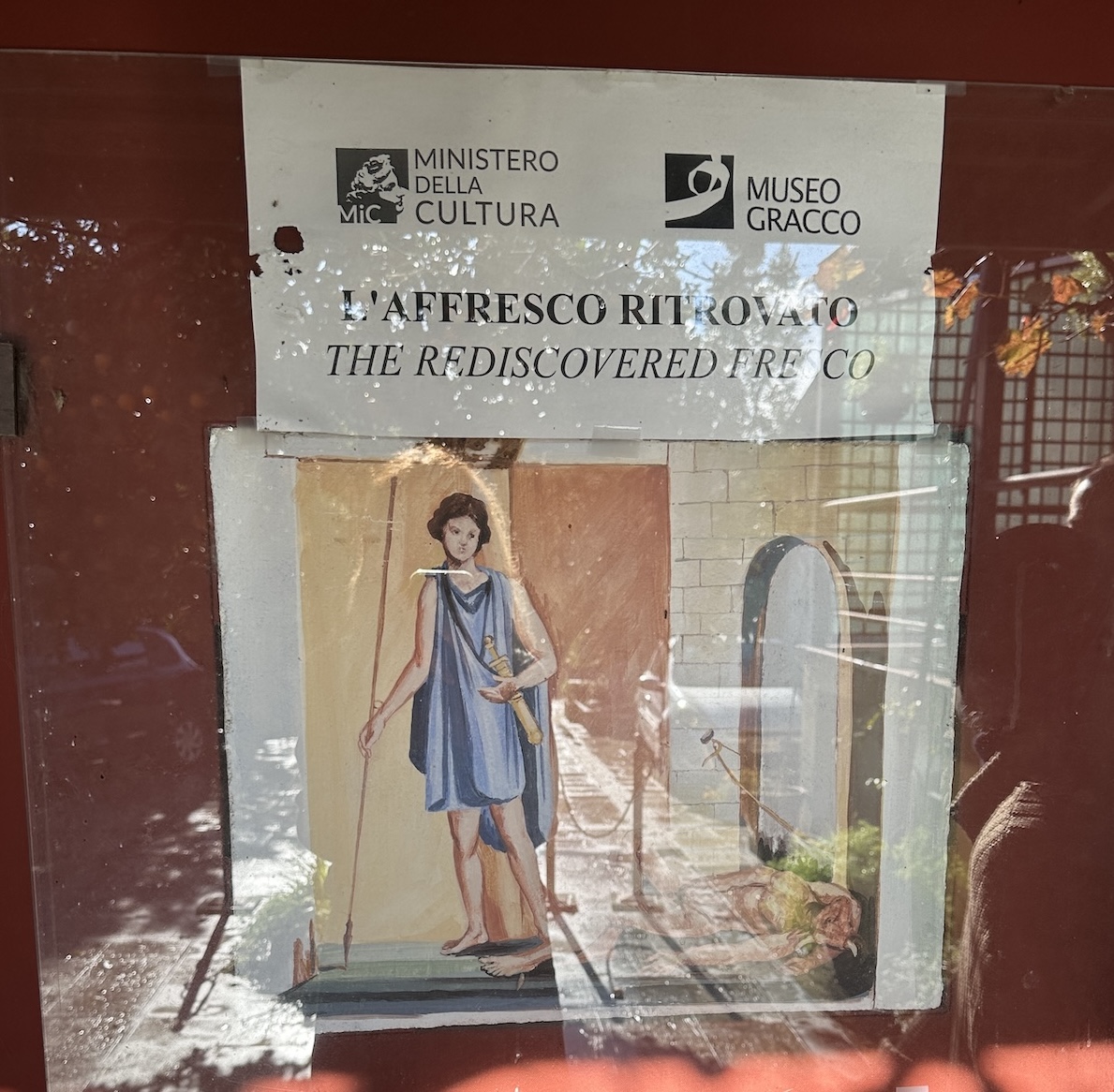
JH: So this is Theseus, just after he’s killed the minotaur?
FG: Yes. It was found in a laundry, a Roman fullonica in Pompeii, on the Via dell’Abbondanza. Theseus and the Minotaur was a subject that was frequently depicted in spaces where young men were present because it was meant as a moral lesson for them. It was meant to make them understand that, during their maturity, they had these primal urges that they needed to suppress.
In the fresco we see Theseus represented as a young man, a boy. In reality, he was an adult, a prince who set off with his people to slay creatures. There’s a hypothesis that they used to stage representations of this myth, perhaps annually, to commemorate this event and explore its meaning. Beautiful. It’s truly beautiful, and relevant, especially for young people.
JH: That’s an interesting symbolic reading of the fresco – the Minotaur as representing ‘primal urges’ that need to be suppressed. Perhaps this is a good point to ask you about one of your major classical works which also has a very strong allegorical tone – Sulle Orme di Enea (‘In the footsteps of Aeneas’). Can you tell me about that work, which is displayed here in the Sala Enea (‘The Aeneas Room’)?
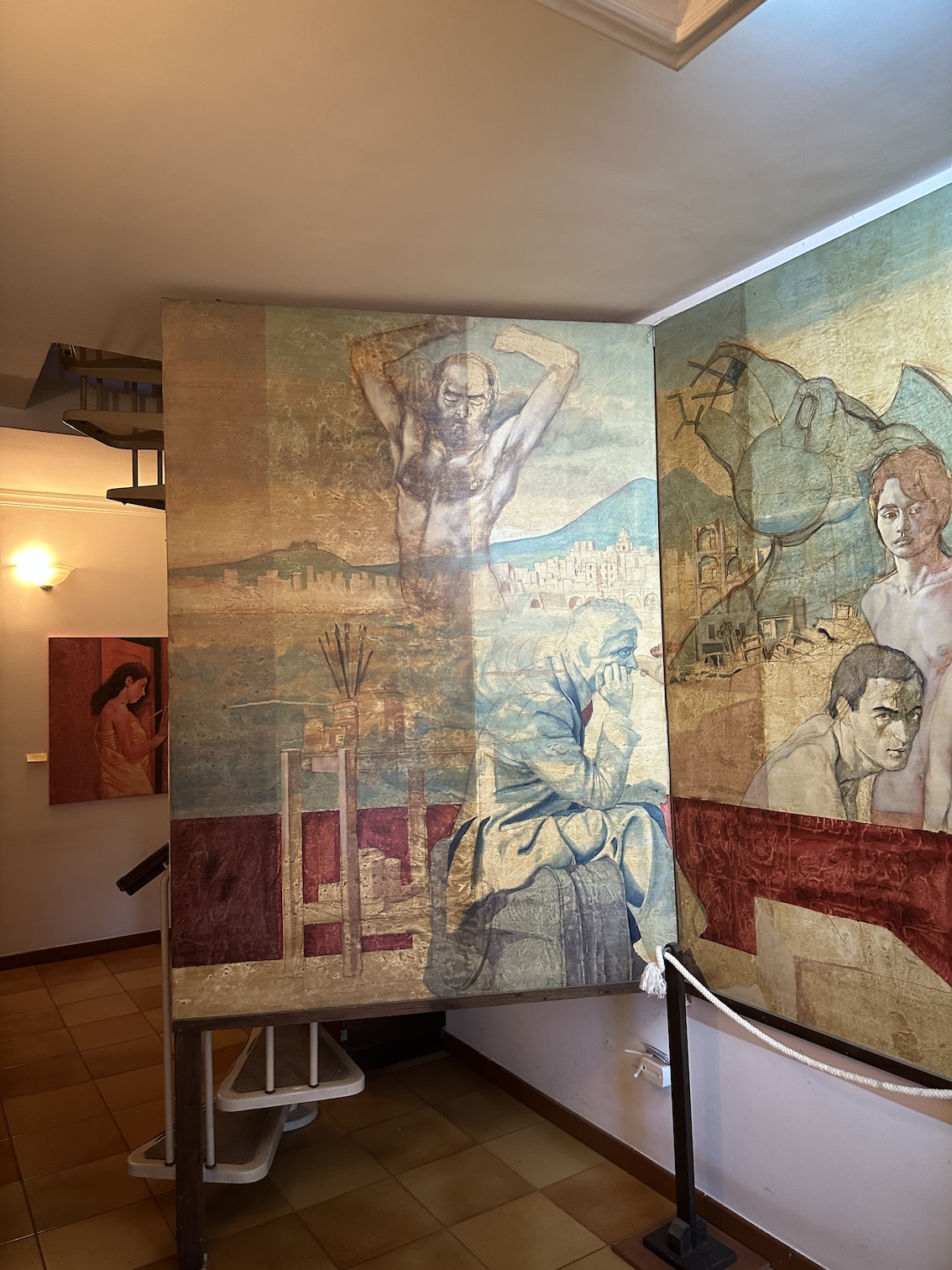
FG: This was part of an exhibition we did at the Palazzo Reale in Milan. There was a catalogue to go with it. It represents the great journey of Aeneas – in some ways, the archetypal journey of classical antiquity. The story is part of the legacy received from Virgil, the poet and philosopher, who transmitted to us the culture and thought of Rome. Virgil told Aeneas’ story in order to demonstrate that Rome – the Julian family – had descended from the Trojan princes. But the story also contains another message, which is all about the journey of man toward maturity.
In Virgil’s text, Aeneas leaves Troy after it has been destroyed. He abandons the old world and carries his father on his shoulders. He also carries with him the family’s relics, meaning the DNA of his lineage. Aeneas embarks on this journey with a group of other young people, and he has all the responsibilities and duties of a prince, of a leader. And you can see, in the painting, some of the challenges he met along the way.
The figure with his arms raised is Neptune, who obstructed Aeneas during his journey, stirring the waters. Neptune here represents the emotions that shake the human soul during a journey like this. And the women here represent Aeneas’ six attempts to land, to settle with his group and establish the future. You can see how he distances himself from these places (wisely, because they are not suitable for him). In the first stop, they land, and the young men break branches to light fires, but voices come from these branches, warning them to leave. So Aeneas and his group leave that island. And then, in another place, they find the Harpies, who were again dangerous enemies.
Do you see the woman in the red dress? Here, we have the Queen of Carthage, Dido. And next to her is Aeneas’ mother, Venus. Venus encouraged Aeneas to stay with Dido in Carthage, where he could have had a stable future. The queen was a widow with wealth and was the ruler of the Mediterranean.
This painting is intertwined with my life, and in particular my own journey to America. So there’s a man shown here, embarking on his journey. This could be Aeneas, or it could be me, or it could be someone else seeking to grow in their work, who is setting off towards a new experience. For me, Carthage was New York – Manhattan.
When you arrive in New York, you get everything you seek—you settle down, you’re comfortable for life. But Aeneas, after experiencing love, questions himself: I am a Trojan prince. I have a responsibility to my people. Can I accept this future? He refuses to marry Dido because it would mean following a life path based on the work of someone else – someone who no longer exists. He decides instead to forge his own path. But to be himself, he must truly know where he comes from, his family heritage.
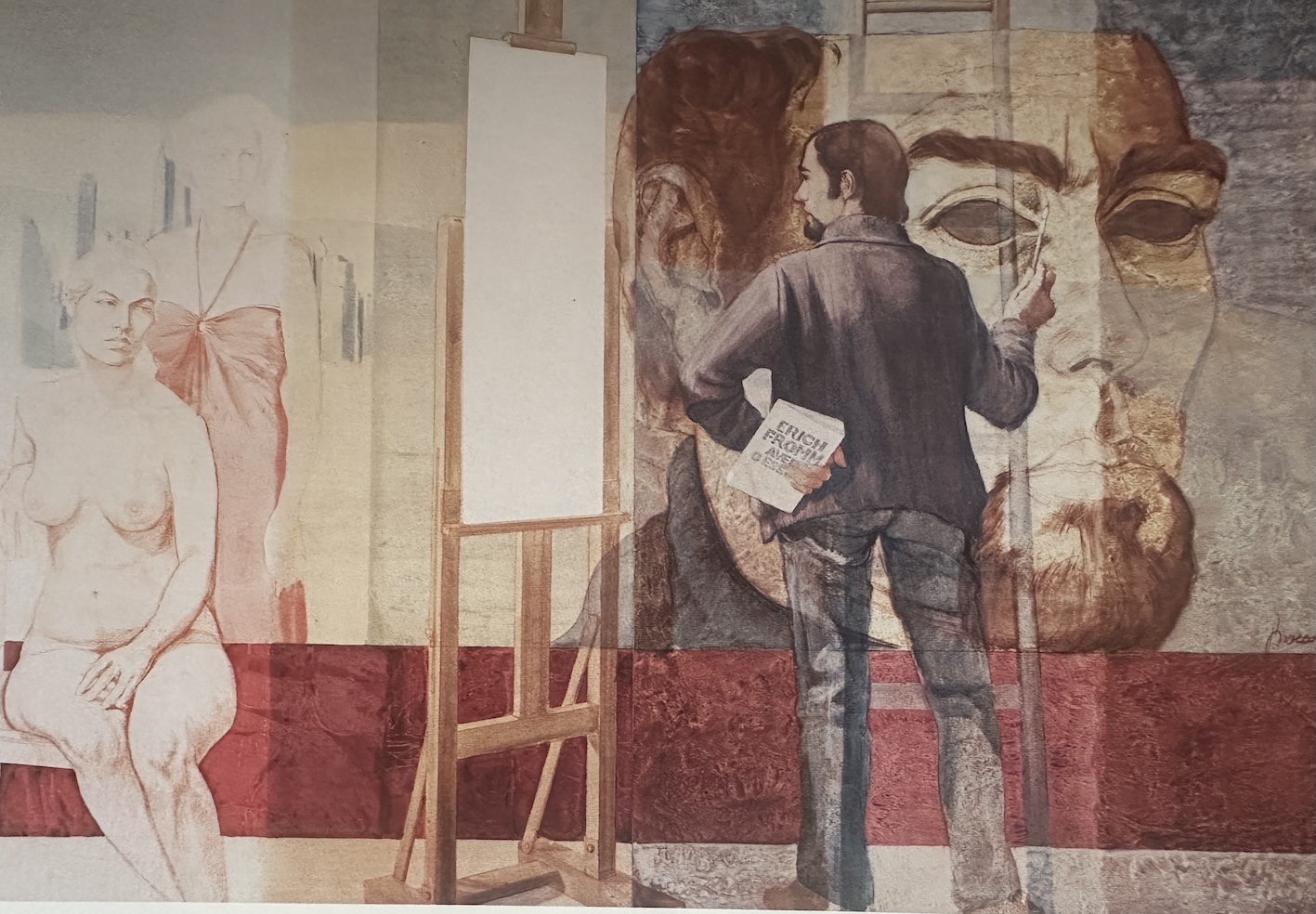
JH: And here we see the ladder again.
FG: Yes, here the ladder descends towards Aeneas, and Aeneas finally understands who he is, and the story ends here. He then arrives in Rome, which is both the end of his journey and the starting point of everything that follows.
JH: For you, ‘Rome’ seems to have been Pompeii, where you returned after your time in the United States. Pompeii has been a constant feature in your painting, in one way or another. Many of your works show Vesuvius, or the Campanian landscape more generally, or the ruins of the ancient city of Pompeii.
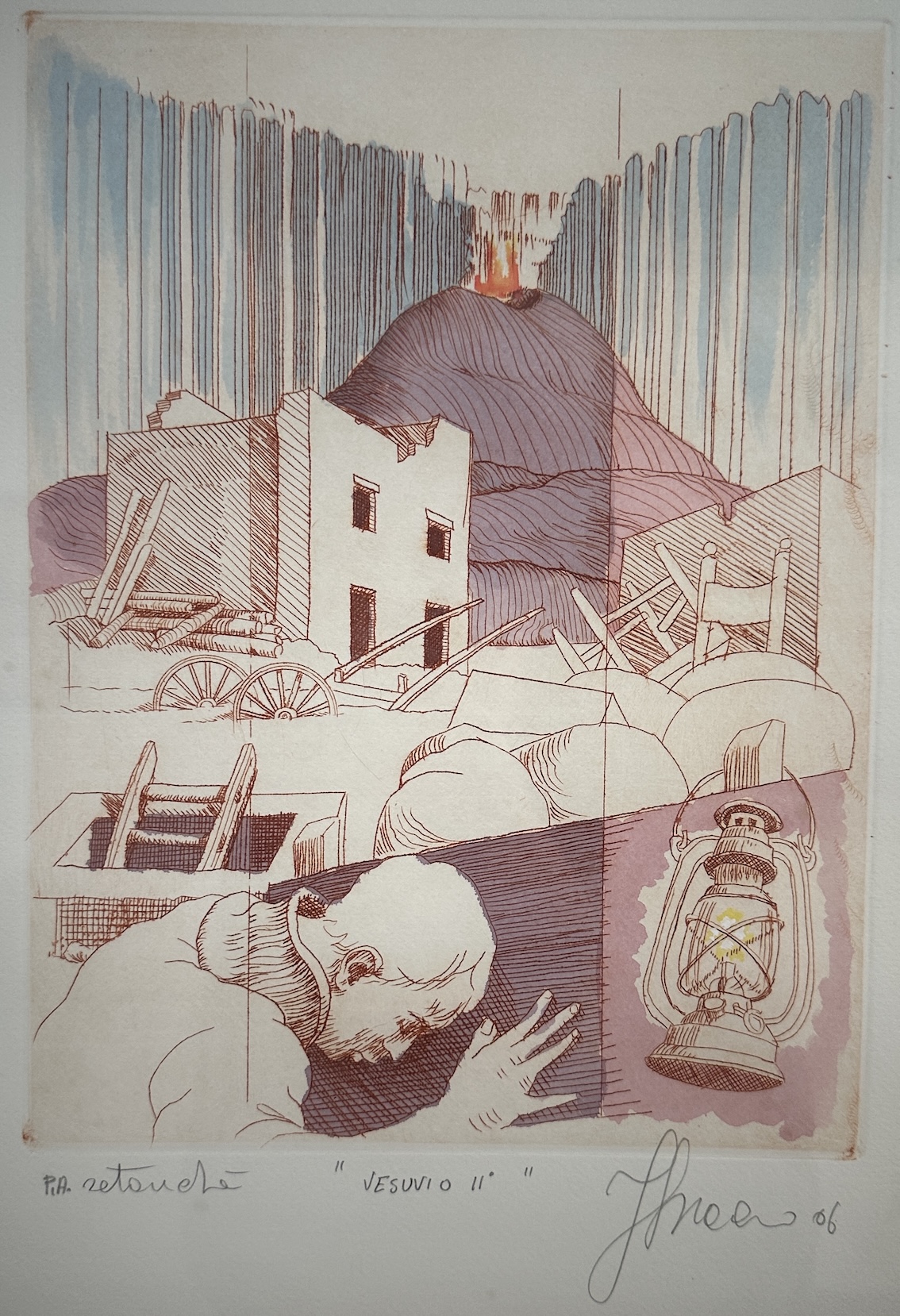
FG: Yes, you can see examples all around the gallery. Over here we have some etchings, for instance – intaglio prints that represent the 1906 eruption of Vesuvius. The eruption is always the same story, though 1906 wasn’t as drastic as the eruption of 79. But we still hear how the lava burst into houses, destroyed them, and people had to flee. Then, after a time, humus formed again on the land and people returned to live there. And yes, as well as the volcano, the ruins of Pompeii also appear a lot in my paintings.
JH. Do you paint these on site, inside the excavations?
FG: I often go to the archaeological site to sketch. I don’t take all my pigments, because you need special permission to do that. I just go and sketch in pencil, and then I apply the colour later, when I’m back in the studio.
JH: As well as your own work, the Museo Gracco also shows the work of other artists who have taken inspiration from Pompeii and the Vesuvian landscape.
FG: Yes, that’s right. We are currently in the part of the museum dedicated to my work – it’s my space. But we have another section where we host other artists, working with a variety of techniques. Right now we have an exhibition which started last year, which exhibits the work of artists who have been influenced by the culture of the ancient world, the culture that we inherit from the Latin tradition. One of the aims of the Museo Gracco is to build a permanent collection of artists—Vesuvian and otherwise—who have passed through Pompeii and left their mark.
We closed the gallery during Covid, and we’re still deciding how exactly to proceed now that we’re open again. Before Covid we were open every day. Now we are open by appointment, and we’re still deciding whether to go back to regular hours, like before. We’ll see!
JH: Many thanks, Maestro Gracco, for this fascinating conversation and for these insights into your work.
Find out more…
Museo Gracco: https://www.museogracco.it


Explore

Undergraduate
Postgraduate
Policy
-
Follow us on Social media
-


