
Twelve Jurors of Christmas
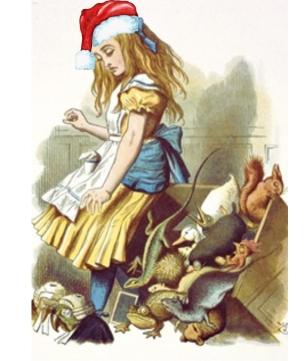
Today's blog post written by Dr Paul Troop reflects on the recent government plans to abolish juries.
David Lammy's seasonal announcement of the planned abolition of juries has set the cat among the pigeons (or, given the season, among the partridge, turtle doves, and French hens). My colleagues in the legal profession, and many of the public, are hugely concerned about the proposal. But is there more to trial by jury than an ancient right? This blog takes a somewhat scientific view.
From one perspective, many cannot see the point of juries. They are expensive, time and personnel intensive, prone to unreliability, and often do not have the education that a professional judge generally has. And for those who believe that decision-making is simply the application of the facts to the law (sometimes called formalists), it doesn't really matter who the decision-maker is. From these standpoints, it seems to make a lot of sense to replace juries with judges.
But is there more to decision-making than this? Anecdotally, we know that judges are often more prone to convict than juries and an accused who is most concerned about this will often elect for trial by jury. We also know that, despite efforts to address the problem, judges (in both the magistrates' and Crown Court) tend to come from an older and more right-wing section of the population. If the formalists are right, this might not matter, but the research suggests otherwise.
Realists are those, originally sceptical practitioners, who question the formalist assumption. Realist intuitions have largely been validated: empirical research suggests that on contentious issues, a decision-makers' outlook affects their decisions (Braman, 2009; Epstein, et al., 2013; Wistrich, et al., 2015). How might this happen? One way is for the decision-maker to interpret ambiguous evidence in a biased way that leads to their favoured outcome (eg, Thompson, 1985). There are other ways. Giving reasons discourages this sort of bias to some degree (Schauer, 1995; Posner, 2008), but it's not a perfect solution.
So we can return to our 12 jurors of Christmas. On the face of it, the fact that jurors don't need to give public reasons for their decision doesn't look terribly promising. But they do need to give reasons to each other, and something magical happens when groups of decision-makers get together. On the one hand, evidence indicates that it only takes a single dissenting voice in a group to significantly discourage the effect of individual outlook (Peresie, 2004; Cox, & Miles, 2008). The larger the group, the larger the prospects of a dissenting voice. Furthermore, drawing on a pool of decision-makers rapidly moderates the influence of extreme views. That is: in a group of 2 or 3, the chances of extreme views is quite likely. But the central limit theorem confirms that a larger pool of decision-makers will soon reflect the outlook of the wider population. It may be no coincidence that 12 jurors is the sweet spot between representativeness and tractability.
So from a scientific outlook, if you care about bias and want decisions to be representative of society, there are reasons to favour a jury.
References
Braman, E. (2009) Law, Politics, and Perception: How Policy Preferences Influence Legal Reasoning. University of Virginia Press (Constitutionalism and Democracy). Available at: http://muse.jhu.edu/book/5263 (Accessed: 13 October 2020).
Cox, A. and Miles, T.J. (2008) ‘Judging the Voting Rights Act’, Columbia Law Review, 108(1), pp. 1–54.
Epstein, L., Landes, W.M. and Posner, R.A. (2013) The Behavior of Federal Judges: A Theoretical and Empirical Study of Rational Choice. Cambridge, Mass: Harvard University Press. Available at: https://www.jstor.org/stable/10.2307/j.ctt2jbs80 (Accessed: 5 February 2021).
Peresie, J.L. (2004) ‘Female Judges Matter: Gender and Collegial Decisionmaking in the Federal Appellate Courts’, Yale Law Journal, 114(7), pp. 1759–1790.
Posner, R.A. (2008) How Judges Think. Cambridge, Mass; London: Harvard University Press.
Schauer, F. (1995) ‘Giving Reasons’, Stanford Law Review, 47(4), pp. 633–659. Available at: https://doi.org/10.2307/1229080.
Thompson, R.S. (1985) ‘Legitimate and Illegitimate Decisional Inconsistency: A Comment on Brilmayer’s Wobble, or the Death of Error’, Southern California Law Review, 59, p. 423.
Wistrich, A.J., Rachlinski, J.J. and Guthrie, C. (2015) ‘Heart Versus Head: Do Judges Follow the Law or Follow Their Feelings?’, Texas Law Review; Austin, 93(4), pp. 855–923.
Image: Alice upsets the jury-box. Image taken from The Nursery :Alice,: containing twenty coloured enlargements from Tenniel's illustrations to :Alice's Adventures in Wonderland - British Library / Universal Images Group


Explore

Undergraduate
Postgraduate
Policy
-
Follow us on Social media
-


