
Tumbleweed, tea and being a team of one
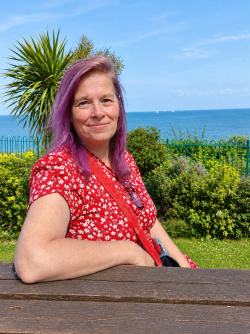
In this reflective blog, Justice in action alumni and Open Justice Award Winner Susan Gowland shares how her Special Educational Needs (SEN) Law Project challenged her assumptions about pro bono work and tested her ability to work with(out) a team.
If you're thinking about signing up for the Access to Justice module, just do it. You never know where it might lead, and you might surprise yourself. Here's my story. When I started the Open Justice SEN Project, I thought I knew what Open Justice was. I didn't.
My rather naïve assumption was that it was basically another form of pro bono work. Students research an area of law, produce something useful for people who might struggle to access legal help and, hopefully, learn something along the way. I remember thinking: ‘what is the difference between pro-bono and access to justice?’ Quite a lot, as it turns out.
One of the things I learned through the project was that Open Justice is not simply about giving people legal help. It is also about making the law more accessible in the first place. Rather than waiting for somebody to have a legal problem and then helping them deal with it, the aim is to make information understandable enough that people can recognise their rights, understand the system and advocate for themselves. That distinction seems obvious to me now, it didn’t at the beginning.
I also expected to be part of a team. I imagined ideas being thrown around, the occasional disagreement with teammates on opposite sides of a virtual boxing ring and a referee somewhere in the middle, everyone bouncing ideas off each other and producing something better because several brains had been involved. And, hopefully, coming out of it with a few friendships that would last beyond the project.
Then I lost my team.
Not in a dramatic Lord of the Flies kind of way. Nobody disappeared into the woods. People just gradually stopped engaging and, by late October, tumbleweed was probably my most reliable colleague.
At first, I admit, I was quite disappointed. Was I really Billy No Mates? Had I somehow inadvertently offended everyone with my perpetual positivity and repeated attempts to get us all together? I had genuinely been looking forward to the teamwork side of the project. But once it became clear that waiting for everyone else wasn't going to get the job done, I decided there was only one thing to do and that was to get on with it.
And, strangely, that's when it became much more interesting. I ended up being the researcher, decision maker, developer, drafter, editor, proof reader and designer. The one advantage was that I avoided the lengthy committee debates about which font to use. I was also the general person responsible for working out what on earth I was doing next. And, naturally, I became the tea maker and supplied my own biscuits, so frankly the employment package left a little to be desired.
I wasn't completely on my own. My tutors became my sounding board when I needed one. There were plenty of occasions when I had gone too far down a particular rabbit hole and needed someone to tell me to climb back out, being able to bounce ideas around, get another perspective and then make my own decision was incredibly valuable.
I also discovered that when you don't have a cohort to talk to, you start using everyone else.
My family became experts in SEN law, my friends quickly learnt not to ask how my project was going unless they were genuinely interested in the latest White Paper, and I suspect the captive audience at the driving test centre, while I waited for son one, left with a considerably greater knowledge of SEN than they had bargained for.
That became useful too. Talking about the project to people who weren't law students forced me to explain things properly. If I couldn't make the "the man on the Clapham omnibus," understand then it probably needed rewriting.
The biggest lesson for me wasn't about working alone. It was trusting my own judgement and believing I knew what I was talking about. Having complete ownership meant making the decisions, solving problems and, in my husband's words, ‘being Susan’ (I hope that's a compliment).
What began as something I hadn't planned for gave me a confidence I hadn't expected. I discovered that I didn't need someone else to validate my decisions; I could assess a problem, find a solution and get on with it.
I went into Open Justice thinking I was signing up for a group project and some pro bono style experience.
I came out understanding much more about access to justice, public legal education, my own ability to work independently and, apparently, how much legal information my friends and family are prepared to tolerate.
I didn't strengthen my teamwork skills in quite the way I expected.
I did, however, become a surprisingly functional one-woman legal department.
With tea.
And biscuits.


Explore

Undergraduate
Postgraduate
Policy
-
Follow us on Social media
-


