
How my experience of studying W360 Justice in Action in prison changed me
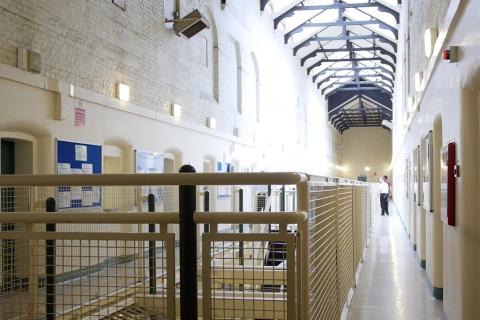
This blog was written by 'Justice in action' student Kevin Braney who writes about his experiences of studying the module whilst in prison and the public legal education project he produced for himself and his peers.
My experience studying W360 Justice in Action differed significantly from previous Open University modules. It offered slightly less traditional academic learning, but a vast amount of practical experience. The module highlighted core aspects of legal professionalism through the lenses of ethics, values, technology, access to justice, and professional identity. In particular, the social aspects of 'Pro bono and Access to Justice', and 'Clinical Legal Education' (CLE) had an exceptionally positive impact on me; so much so that I am currently collaborating with a peer on a new project.
W360 demonstrates the critical need for "Justice in Action" programmes and their diverse delivery methods, such as clinics, workshops, advice centres, and public legal education (PLE) resources. Through my Open Justice Project, I discovered that even small-scale PLE initiatives can deliver immediate and substantial assistance to a specific audience facing unmet legal needs.
It was greatly impactful on learning that my PLE was rare: it was entirely peer-driven, peer-designed, and peer-researched, serving as a one-stop shop for the specific legal interests of my peers. Today, it is actively employed by the resettlement office within the prison complex.
Throughout the development process, I witnessed a profound sense of shared purpose. My peers were enthusiastically motivated by the opportunity to create a practical resource for fellow prisoners. Their active engagement from initial surveying of legal interests and subsequent iterations in drafting the final project, was a true source of personal inspiration. Also, the support and cooperation received from educators, citizens information personnel, and prison authorities demonstrated a powerful, universal commitment of people helping people. The encouraging feedback from my Open University (OU) tutor and the W360 Module Team Chair has instilled in me a strong impetus to explore and develop similar PLE resources.
W360 Justice in Action included legal research as a core component, and unfortunately navigating online research impediments proved challenging. These impediments remain a concern for me going forward, but I hope they can be remedied, as I continue my studies. Notwithstanding that, W360 successfully illustrated hope, compassion, and a deep sense of professionalism within the legal discipline. Despite adversities in accessing justice, these concepts offer genuine solace.
My own Open Justice Project stands testament to the module's premise of providing user-centric legal education, and it continues to offer legal assistance to my peers today: an attribute that cannot be understated. W360 Justice in Action directly accelerated my academic and professional skill set. Engaging in adaptable, collaborative activities while researching sensitive unmet legal needs involves a deep sense of ethical responsibility.
This experience has now led me and my peer, who is currently completing a master’s in education, to co-design a three-day, 2.5-hour workshop aimed at encouraging education among our peers. Our target audience are men who have recently been committed but not yet engaging with education. Our goal is to highlight the numerous benefits of learning and the post-release support available for educational courses. We plan to present this design to the Governor shortly to secure permission to begin.
Workshop Proposal Synopsis:
Participant Selection: Resettlement officers will identify 4 to 5 potential students, preferably individuals who have been in custody for at least 6 months and have a minimum of 2 years remaining on their sentence. This window ensures the individual has adapted to prison life while retaining ample time to commit to study.
Participants may be vulnerable and at any level of academic ability, we will promote all stages of education, from basic literacy to higher third level education. Also, both academic and practical learning will be encouraged.
Approach: Potential students will be informed that the workshop contains no mandatory educational or study material: it is strictly a peer-to-peer conversation with no obligatory commitment.
Session Schedule:
Introduction & Benefits: Monday (2:30pm to 4.30pm)
My peer and I will introduce ourselves and open the floor to anyone who wishes to speak. We will explain the workshop's purpose and discuss the holistic benefits of prison education: improved time management, mental health, family contentment, and academic achievement. We will also outline the support systems available for continuing education upon release. At the end of the session, we will distribute a handout featuring three questions to be discussed on Friday. Students can also write down any immediate questions they have, giving us time to gather accurate information before the final session: What do you hope to gain from this class? What obstacles do you envisage if you decide to engage with education? Do you think other people in your life will benefit from your participation in education?
Pathways & Structure: Wednesday (2:30pm to 4.30pm)
We will explore potential classes, Open University modules, and other educational pathways. Discussion will focus on course structures, available support systems, and potential career or personal outcomes.
Reflection & Next Steps: Friday (2:30pm to 4.00pm)
We will review and discuss the responses to Wednesday's handout. To conclude, we will distribute a self-reflective letter and an envelope to each student. They will be asked to write a letter to their future selves, to be left sealed and unopened until the end of the term, fostering a mindset of personal and educational growth.
As peers, we act as credible advocates. By sharing our own experiences, fears, trials, hopes, achievements, and aspirations we hope to break institutional barriers and encourage others to seriously consider educational pathways that might have been previously dismissed.
This educational workshop could be adopted and adapted for female prisoners with an emphasis on family law, coercive control and/or domestic violence against women. This is an example of how W360 Justice in Action has the ability to inspire people across many different facets of life, it did for me.


Explore

Undergraduate
Postgraduate
Policy
-
Follow us on Social media
-


