

Thinking spatially in turbulent times
Engineering water into financial flows: lessons from the UK, USA, and Chile
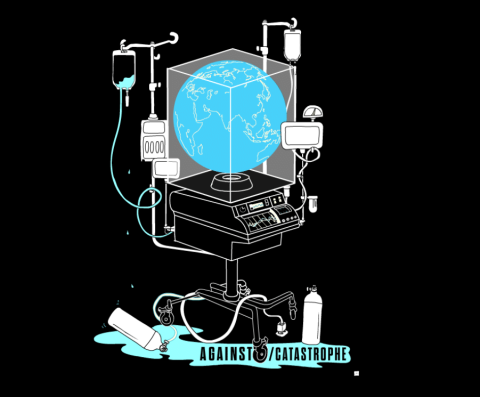
OpenSpace member, Professor Michael Pryke, has written a short essay entitled "Engineering water into financial flows: drawing lessons from the UK, US, and Chile", part of a special issue on "Reclaiming futures: water sovereignties" as part of the Against Catastrophe initiative.
Water Sovereignties is the first of three installments of the online exhibition Reclaiming Futures, which showcases seven works by creative practitioners from around the world commissioned by the Against Catastrophe project; these practitioners critically examine how design, architecture, and technology are imbricated in producing catastrophic eco-social realities but also present tools with which to imagine and build more equitable, democratic, and sustainable worlds. Commissioned practitioners include Solveig Qu Suess, Antonia Hernández, Dele Adeyemo, Michaela Büsse, Paulo Tavares, Bahar Noorizadeh, and Yelta Köm and Agit Özdemir from the collective Arazi Assembly.
You can read a short extract of his essay below:
"Water is not what it used to be. Increasingly, around the world, water is being mixed with private finance and practices often referred to as ‘financialization.’ Such practices, frequently enabled by the privatization of water, have seen the arrival of a range of intermediaries - from financial actors to lawyers - able to turn water and its supply to households into a globally attractive investment opportunity.
Whilst different models of financialization are applied around the world, given the peculiarities of specific contexts, there are nonetheless overlapping trends that reflect the integration of global financial flows underlying the process of financialization. In this regard, the text will draw lessons from the UK, where the household has been turned into a ‘revenue stream;’ the USA, where a desalination plant was ‘translated’ into a collection of investment assets, made attractive globally; and Chile, which offers an interesting tale of entwining pension payments in the Global North to privatized and financialized water in the Global South. Though the contexts vary, common to each, as this suggests, is the centrality of households or water rate payers; without them, financialized calculations could not be imagined. Sketching these histories and geographies underlying the financialization of water raises important questions, such as who benefits, who pays, and how we can imagine and build alternative water infrastructures."
You can also read the related co-authored publication Contested geographies of water financialisation in the ‘global South’ which was published in GeoForum


Explore

Undergraduate
Postgraduate
Policy
-
Follow us on Social media
-


